
Taps
The right tap does more than control water. It contributes to how a bathroom looks, how naturally the space functions and how well different fixtures work together. Whether you are planning a new bathroom, updating a basin or replacing an existing fitting, choosing the right type of tap is an important part of the overall design.
The Jaquar UK tap collection brings together basin mixers, bath mixers, bath and shower mixers, sink mixers, bidet mixers, wall mounted basin mixers, bath spouts, sensor taps, Pressmatic taps and concealed in wall tap fittings. The collection is available across a selection of established ranges, giving homeowners, designers and bathroom professionals flexibility when creating bathrooms with different layouts and visual styles.
From a compact cloakroom basin to a family bathroom or a more considered master bathroom, the tap should be selected according to the basin or bath it is being paired with, the available installation space, the desired style and the way the bathroom will be used.
Choosing the right tap for your bathroom
A bathroom tap is a practical fitting, but it is also one of the details that can influence the character of a room. The size of the basin, the position of the tap hole, the height and shape of the basin, the surrounding worktop and the intended style of the bathroom all have a role in determining which tap is appropriate.
There is no single tap type that is right for every bathroom. A compact basin may benefit from a straightforward mono basin mixer, while a countertop basin can require a different arrangement depending on its height and installation. A wall mounted basin mixer can be useful where a cleaner arrangement around the basin is preferred, while a three hole basin mixer can provide a more traditional composition.
For baths, the choice depends on the bath design and the intended installation. A bath mixer, bath and shower mixer, bath filler or bath spout may each suit different bathroom layouts.
Understanding these distinctions before selecting a fitting can help avoid installation issues and create a more balanced result.
Basin taps for everyday bathroom use
The basin is often one of the most frequently used fixtures in a bathroom, so the tap needs to be practical as well as visually appropriate.
The current collection includes mono basin mixers, extended mono basin mixers, three hole basin mixers and wall mounted basin mixer options. These formats provide different approaches to basin installation and bathroom design.
Mono basin mixers
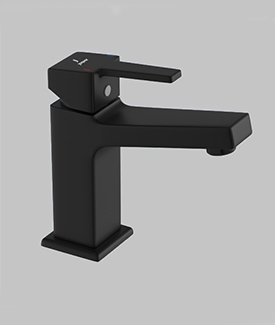
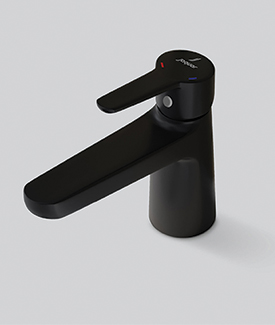
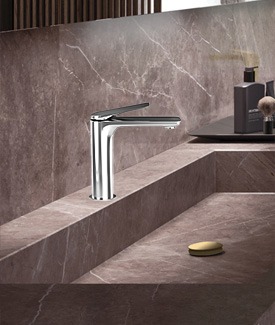
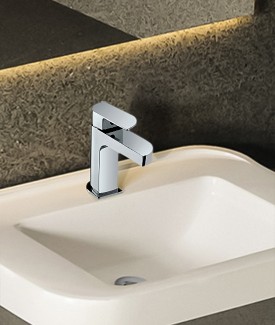
A mono basin mixer combines the controls and water outlet into one fitting. It is a widely used format for contemporary bathrooms because it creates a relatively simple arrangement around the basin.
Mono basin mixers can work particularly well with vanity basins and standard bathroom basins where the tap is designed to sit directly on or around the basin or worktop. Before choosing one, check the basin's tap hole arrangement and the available space around the installation point.
The visual character of a mono mixer can also influence the bathroom. A rounded design can complement softer bathroom forms, while a more geometric design can work naturally with contemporary sanitaryware and furniture.
The Jaquar collection includes mono basin mixers across several ranges, giving users the opportunity to coordinate the tap with other bathroom fittings rather than treating it as an isolated component.
Extended mono basin mixers
An extended mono basin mixer provides a different proportion from a standard mono mixer and can be considered where the basin design or installation arrangement calls for a longer reach.
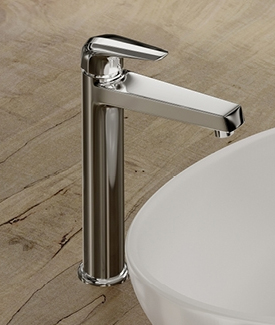
This type of fitting can be particularly relevant when selecting a tap for a countertop basin. However, compatibility should always be checked rather than assuming that every extended mixer will suit every countertop basin.
The position of the water outlet should allow water to fall naturally into the basin without creating unnecessary splash. Basin depth, tap position and spout reach should therefore be considered together.
Three hole basin mixers
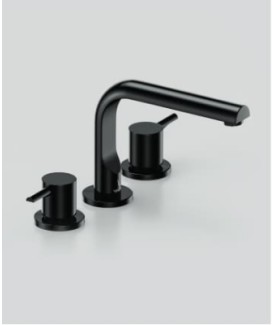
Three hole basin mixers separate the controls and water outlet into multiple components. They can create a more defined arrangement around the basin and are available in contemporary and more traditional bathroom designs within the collection.
The three hole format is particularly important to consider when replacing an existing tap. A basin designed for a single tap hole cannot automatically accommodate a three hole fitting without the appropriate installation arrangement.
When selecting this type of mixer, measure the available space carefully and consider the position of the basin, vanity and surrounding wall.
Wall mounted basin mixers
Wall mounted basin mixers are installed on the wall rather than directly on the basin or worktop. This can create a visually clean arrangement and can be useful where the basin design allows for wall mounted installation.
The installation position needs to be planned before the wall is finished. The height and reach of the fitting should be considered in relation to the basin so that water enters the bowl naturally.
Wall mounted fittings can work especially well as part of a carefully planned bathroom where the basin, tap, mirror and vanity are designed as one composition.
Bath taps and bath mixers
Bath fittings need to be considered differently from basin taps because the bath has a larger water volume and different installation requirements.
The Jaquar UK collection includes bath mixers, bath and shower mixers, bath fillers, floor mounted single lever bath mixer options, bath spouts and related fittings across its ranges.
The correct choice depends on the bath itself, the installation position and whether showering is intended to be part of the same fitting.
Bath mixers
A bath mixer brings water together through a mixer fitting and is designed for bath installations. Depending on the particular configuration, bath mixers can be installed in different ways.
When choosing a bath mixer, consider the bath's tap holes, deck space and surrounding clearance. The tap should also be proportionate to the size and shape of the bath.
A fitting that looks appropriate in a large bathroom may appear visually dominant in a compact space. Conversely, a small fitting may look out of proportion alongside a larger freestanding or generously proportioned bath.
Bath and shower mixers
A bath and shower mixer combines bath filling with showering functionality within the same installation arrangement. The current UK collection includes two hole bath and shower mixers and other bath and shower mixer formats across selected ranges.
This can be useful in bathrooms where one installation needs to support both bathing and showering.
Before selecting a bath and shower mixer, consider where the bath is positioned, how the shower will be used and whether the surrounding bathroom layout provides enough space for comfortable operation.
Bath fillers
Bath fillers are another option within the collection. Their purpose is straightforward: providing a dedicated outlet for filling the bath.
The installation requirements vary according to the fitting and bath arrangement, so the product documentation and installation requirements should always be checked before work begins.
Bath spouts
A bath spout provides the water outlet for a bath installation and can form part of a broader bath fitting arrangement.
The collection includes bath spouts across several Jaquar ranges.
A bath spout should be selected according to the installation system it is intended to work with. Its position and reach should also be appropriate for the bath so that water enters the bath correctly.
Sink mixers
Although bathroom taps are often associated with washbasins, the collection also includes sink mixers within selected ranges. Florentine Prime, for example, currently includes mono sink mixers and single lever sink mixer options.
A sink mixer should be selected according to the sink or basin it will serve, the available tap hole arrangement and the amount of clearance around the fitting.
For a bathroom with coordinated fixtures, keeping the visual language of the sink mixer aligned with the basin and other fittings can help create a more consistent overall design.
The same principle applies when selecting taps for utility or other suitable sink applications. Practical compatibility should always come before appearance alone.
Bidet mixers
Bidet mixers are another tap category represented within the Jaquar UK collection. Florentine Prime and Laguna, for example, currently include mono bidet mixer options.
A bidet mixer should be selected specifically for the bidet installation rather than treating it as a substitute for a basin mixer. The fitting needs to correspond with the sanitaryware and available installation arrangement.
Where multiple bathroom fittings are being selected together, choosing taps from the same or visually compatible range can help maintain consistency across the room.
Sensor taps
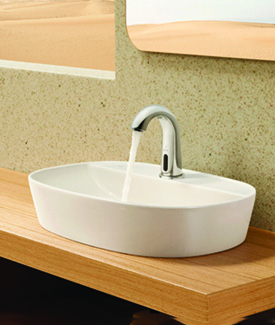
Sensor taps offer a different method of operating the water flow. The current UK collection includes sensor tap options for washbasins, including deck mounted and wall mounted formats.
These fittings can be considered where touch free operation is appropriate for the bathroom environment. They may be relevant in settings where frequent hand washing makes touch free operation useful.
The current range includes high neck sensor taps as well as other deck mounted and wall mounted sensor formats.
When considering a sensor tap, installation requirements should be reviewed carefully. The tap needs to be suitable for the basin, installation position and intended environment.
Sensor taps can also be considered for bathrooms where maintaining a clear and uncluttered basin area is important. Their suitability ultimately depends on the specific layout and the requirements of the people using the space.
Pressmatic taps
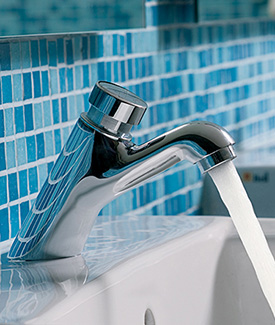
Pressmatic taps provide a straightforward alternative to conventional manual tap operation. The current Jaquar UK collection includes a non concussive basin tap within its Pressmatic range.
This type of tap can be particularly relevant for high use bathroom environments where a simple operating method is preferred.
The important consideration is whether the operating format suits the intended users and environment. Pressmatic taps are not necessarily the right choice for every domestic bathroom, but they can be useful where their method of operation aligns with the requirements of the space.
Concealed in wall tap fittings
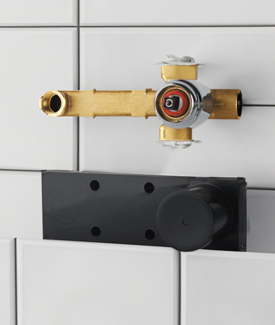
Concealed in wall tap fittings provide another approach to bathroom tap installation. Instead of having all components visible on the basin or bath deck, parts of the installation are positioned within the wall.
The current UK collection includes concealed in wall tap fittings for wall mounted basin mixer arrangements as well as fittings associated with floor mounted bath mixer installations.
Concealed installation needs to be planned before the wall is closed or finished. The position of the controls and outlet needs to be established in relation to the basin or bath.
This makes concealed fittings particularly relevant to new bathroom projects or renovations where the plumbing layout is being planned from the beginning.
They can create a more visually ordered bathroom because fewer components are visible around the basin or bath. However, the installation should be planned carefully and carried out in accordance with the relevant installation instructions.
Choosing a tap for a small bathroom
Small bathrooms and cloakrooms require more attention to proportion and available space.
For a compact basin, the first consideration should be whether the selected tap is compatible with the basin and whether its reach is appropriate. A fitting that extends too far into a shallow basin can affect usability and may contribute to splashing.
Wall mounted basin mixers can be worth considering where the bathroom layout supports this type of installation. They can leave more of the basin deck visually open and may work well with carefully planned vanity arrangements.
For cloakrooms, the visual simplicity of a mono basin mixer can also be useful. The most suitable option will depend on the basin and the available installation arrangement.
Choosing taps for a larger bathroom
A larger bathroom provides more freedom, but the same principles still apply.
The tap should relate to the scale of the basin, bath and surrounding furniture. Larger sanitaryware can accommodate more substantial fittings, while delicate basin designs may benefit from a more restrained tap.
If several taps are used in the same bathroom, consistency becomes particularly important. Matching or complementary forms can help the basin, bath and other fittings feel like part of the same design.
The Jaquar collection includes ranges with different visual directions, including contemporary and traditional styles. Queens Prime, for example, is categorised on the UK site as a traditional range, while Kubix Prime and Opal Prime are categorised as contemporary.
How to match taps with bathroom style
The tap is a relatively small component, but its shape can have a noticeable effect on the overall appearance of a bathroom.
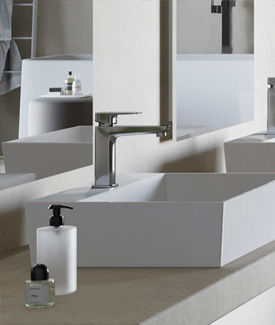
For contemporary bathrooms, geometric or cleanly defined forms can complement modern basins, furniture and shower fittings. Kubix Prime is an example of a range categorised as contemporary and square in form on the UK website.
For bathrooms with softer forms, rounded tap designs can create a more cohesive appearance. Opal Prime is categorised as contemporary with a round shape on the UK site.
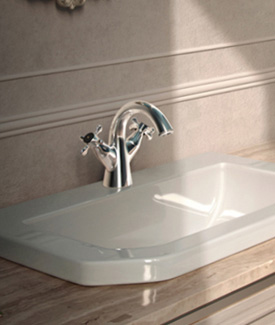
For a more traditional bathroom, the proportions and detailing of the tap become particularly important. Queens Prime is listed as a traditional range, making it relevant to bathrooms where a more classic visual direction is desired.
The aim should not be to make every fixture identical. Instead, look for relationships between shapes, proportions and finishes.
Choosing the right tap finish
Finish is one of the most visible aspects of a tap and should be considered alongside the other bathroom fittings.
The UK collection includes chrome and selected alternative finishes across certain ranges. Current product listings show options including black matt, black chrome, brass matt, antique bronze, antique copper and PVD finishes on selected collections.
Chrome remains a versatile choice because it can work with a wide range of bathroom styles and materials. Alternative finishes can be considered when the bathroom design calls for a stronger visual contrast or a coordinated finish across multiple fixtures.
It is important to check the finish available for the specific tap and range rather than assuming that every finish is offered across the complete collection.
When coordinating a bathroom, consider the finish of the shower fittings, accessories, waste fittings and other visible metal elements. A consistent approach usually creates a more considered result.
What to check before buying a bathroom tap
Choosing a tap should begin with compatibility rather than appearance.
First, identify the type of sanitaryware the tap will be installed with. A basin, bath, bidet and sink each require different considerations.
Next, check the tap hole arrangement. A mono basin mixer, three hole basin mixer and wall mounted basin mixer are installed differently, so the basin and tap must be compatible.
The available space should also be measured. Check the tap height, reach and position in relation to the basin or bath.
For replacement projects, examine the existing installation before purchasing a new fitting. Changing from one installation format to another may require additional plumbing work.
For concealed fittings, installation planning becomes even more important because the position of the concealed components needs to be established before the wall is completed.
It is also sensible to consider the rest of the bathroom before making a final decision. If the shower, basin, bath and accessories are already selected, the tap should complement those elements rather than being chosen independently.
Tap selection for new bathroom projects
A new bathroom provides greater flexibility because the plumbing and sanitaryware can be planned together.
Start with the basin and bath positions, then establish where the taps need to be installed. This makes it easier to decide between deck mounted, wall mounted and concealed arrangements.
For a basin, consider whether the design calls for a mono basin mixer, extended mono basin mixer, three hole basin mixer or wall mounted mixer.
For a bath, establish whether a bath mixer, bath and shower mixer, bath filler, bath spout or another suitable arrangement is required.
If a more specialised operating format is required, sensor and Pressmatic options can be considered where appropriate.
Planning these decisions early helps the tap become part of the bathroom design rather than an afterthought.
Tap selection when replacing existing fittings
Replacing a tap can be simpler when the new fitting uses the same installation arrangement as the existing one.
Before ordering, inspect the existing tap and identify how it is installed. Check the number and position of tap holes, the available space and the connection arrangement.
If the replacement involves changing from a deck mounted tap to a wall mounted tap, or from one multi hole arrangement to another, additional work may be required.
For this reason, it is useful to confirm compatibility with a qualified bathroom installer or plumber when the existing installation is unclear.
The product installation documentation should always be consulted for the specific fitting being installed.
Coordinating taps across the bathroom
A well designed bathroom usually feels coherent because its individual components relate to one another.
Using taps from a coordinated range can make this easier. The current collection includes multiple ranges that cover different bathroom applications, allowing users to select compatible fittings for basins, baths and other installations where available.
This does not mean every fitting needs to be identical. A bathroom can use different tap types while maintaining consistency through shape, finish or design language.
For example, a mono basin mixer can be paired visually with a bath mixer from the same design family. A wall mounted basin mixer can also be coordinated with other fittings through a shared finish.
The most successful bathroom designs generally balance consistency with practicality.
Why tap quality matters
A tap is used repeatedly, often every day for many years. Its suitability therefore matters beyond its initial appearance.
The construction, installation, operation and maintenance of a tap all influence the long term ownership experience. Choosing an appropriate fitting for the application is an important first step.
The current Jaquar UK tap range states that its cartridges are tested for 500,000 cycles and that the taps are covered by a 10 year warranty. These are specific claims made by the brand and should be considered alongside the warranty terms and product documentation applicable to the individual fitting.
Quality should also be considered in practical terms. A well chosen tap should be appropriate for the basin or bath, suitable for the installation arrangement and consistent with the way the bathroom is used.
Bathroom taps for UK homes
Bathrooms in the UK vary considerably. A compact cloakroom, Victorian terrace, modern apartment, family home and large new build may all require very different tap arrangements.
This is why choosing taps based only on appearance can lead to poor results. The installation environment, sanitaryware, available space and user requirements should all be considered.
In a small London or Manchester bathroom, for example, space and proportion may be particularly important. In a larger home in Birmingham, Leeds, Edinburgh or Bristol, the bathroom layout may allow greater flexibility in choosing between deck mounted and wall mounted arrangements.
Regardless of location, the fundamental selection process remains the same. Identify the sanitaryware, understand the installation arrangement, check compatibility and then select the design that works with the wider bathroom.
For renovation projects across the UK, local water conditions, existing plumbing and installer requirements can also influence the final choice. Where there is uncertainty, professional advice can prevent compatibility problems before installation begins.
Explore the Jaquar tap collection
The current Jaquar UK collection covers a broad selection of tap formats and design ranges, including ACE, RIO, Florentine Prime, Continental Prime, Opal Prime, Kubix Prime, Ornamix Prime, Queens Prime, Laguna and Alive. The collection also includes Pressmatic Taps, Sensor Taps and Concealed In Wall Tap Fittings.
Rather than choosing a tap simply because it looks attractive, start with the practical requirements of the bathroom. Determine the type of fitting required, check the installation arrangement and consider the basin or bath it will be paired with.
From there, shape, finish and overall design can help narrow the choice.
A considered tap selection can make a bathroom easier to use while contributing to a cohesive and well planned interior. The best choice is not necessarily the most elaborate fitting. It is the one that works naturally with the sanitaryware, installation and design of the space.
Explore the available collection and select a tap that is appropriate for your bathroom, your installation and the way you use the space.
How to Choose Bathroom Taps That Work for Your Space
Bathroom taps are among the most frequently used fittings in a home. Their position, operation and compatibility with the surrounding sanitaryware influence how comfortably a bathroom works every day. When choosing a new tap, it is worth looking beyond appearance to consider the basin or bath, available mounting space, water connections and the requirements of the installation.
Whether you are updating a cloakroom, renovating a family bathroom or planning a complete bathroom project, the right tap should work naturally with the space around it. A considered selection can help create a consistent interior while avoiding problems with installation, clearance and everyday use.
1. Start with the Basin or Bath, Not the Tap
One of the most important decisions when choosing a bathroom tap is identifying the fixture it will serve. A tap that suits one basin may not be suitable for another, even if both products have a similar appearance.
The height, reach and mounting position of the tap need to correspond with the basin or bath. The number and position of tap holes, the available installation surface and the location of the water connections also influence which fitting is appropriate.
Choosing a tap for a countertop basin
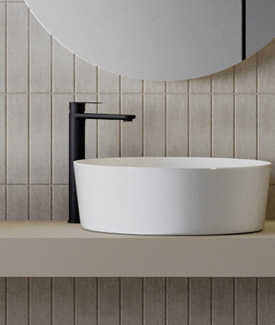
A countertop basin sits on top of a vanity surface or worktop. Depending on its design, it may require a taller basin mixer or a wall-mounted tap to provide suitable clearance above the bowl.
Check the basin's height and depth alongside the proposed tap dimensions. The spout should extend far enough over the bowl to provide a practical water outlet position, while leaving sufficient room for everyday handwashing.
Do not select an extended basin mixer based on height alone. Its spout reach, mounting arrangement and compatibility with the basin should also be considered.
Choosing a tap for a wall-hung basin
A wall-hung basin can help create an open appearance, particularly in a compact bathroom or cloakroom. The appropriate tap depends on whether the basin has a suitable tap hole or the design requires a wall-mounted fitting.
For wall-mounted basin taps, the position of the outlet needs to be planned in relation to the finished basin height and projection. If the plumbing is concealed within the wall, the tap position and compatible components should be established before the wall is finished.
Explore the available bathroom basins to compare installation styles before finalising your tap selection.
Choosing a tap for a bath
Bath taps need to be selected according to the bath's configuration and the intended installation. A deck-mounted bath mixer, wall-mounted fitting and bath spout arrangement can have different requirements.
Check the position of the bath rim, the location of the water connections and the available mounting surface. The selected spout must be suitable for the bath and the intended outlet position.
For a freestanding bath, planning is especially important because the tap may need to be positioned separately from the bath itself. Confirm the appropriate installation arrangement before purchasing the fittings.
2. Understand Tap Mounting and Connection Requirements
The mounting method determines how a tap connects to the basin, bath, worktop or wall. It also affects the preparation required before installation.
Deck-mounted taps
Deck-mounted taps are installed through the designated tap holes in a basin, bath or suitable worktop. Before ordering, confirm the number of holes required and check that their positions correspond with the chosen fitting.
A mono basin mixer typically uses a single mounting point, while a three-hole mixer requires a different arrangement. A multi-hole bath mixer may also need a specific layout, so the product dimensions and installation instructions should be reviewed before work begins.
Wall-mounted taps
Wall-mounted taps can create a clean visual appearance by keeping the basin or worktop surface clear of the tap body. However, the outlet height, projection and concealed plumbing must be planned carefully.
The final position should allow water to enter the basin appropriately without making the fitting difficult to operate. Consider the basin's shape, the distance between the wall and the bowl, and the position of any mirror or shelf.
Wall-mounted taps are not suitable for every existing installation without modification. If you are replacing a deck-mounted tap, the change may require additional plumbing work.
Concealed tap components
Some installations use concealed components behind the finished wall, leaving only the intended visible parts exposed. These systems need to be specified as compatible arrangements rather than assembled by appearance alone.
Check which concealed body, outlet and operating components are required for the selected tap. The installation depth, pipe connections and maintenance access should be addressed before the wall is closed.
For renovation projects, establish whether the existing plumbing can support the new fitting before deciding to change the mounting style.
3. Consider Tap Height, Reach and Clearance
Tap dimensions influence the practical relationship between the fitting and the basin or bath. Two taps that look similar in photographs may have different heights, projections and operating clearances.
Height determines how much space is available beneath the spout. This is particularly relevant for countertop basins, where the basin itself adds height above the worktop.
Spout reach describes how far the outlet extends from the tap body or wall. It should be assessed against the basin's dimensions so that the water outlet is positioned appropriately over the bowl.
Handle clearance matters when the tap is installed close to a wall, mirror, splashback or another fitting. The handle should be able to operate without obstruction.
Mounting space should be checked before installation. Ensure that the tap body, connections and any required components can be accommodated beneath the basin or within the wall.
For a double-basin vanity, also consider the distance between the two taps and the space available for everyday use. A well-proportioned installation should feel comfortable as well as visually balanced.
Always use the exact product dimensions rather than estimating compatibility from a photograph.
4. Choose the Operating Style That Suits Everyday Use
Different tap operating formats serve different preferences and installation requirements. The most appropriate option depends on the type of fitting, the intended user and the way the bathroom will be used.
Single-lever mixers
A single-lever mixer allows the user to control the water flow and temperature through one lever. This can be a practical choice for a contemporary basin or bath installation where straightforward operation is preferred.
Before selecting a mixer, check the position and movement of the lever. It should have sufficient clearance from the wall, mirror or any nearby object.
Separate hot and cold controls
Some tap designs use separate controls for hot and cold water. The appropriate arrangement depends on the individual product and the intended basin or bath installation.
When comparing these designs, consider the operating method as well as the overall appearance. Check the product details to understand how the fitting is installed and controlled.
Sensor taps
Sensor taps use a sensing mechanism to control water delivery on compatible products. They may be relevant for certain residential, commercial or shared bathroom environments where the intended use and installation requirements support this type of fitting.
Before selecting a sensor tap, check its specific operating requirements and connection details. Do not assume that all sensor taps use the same power arrangement or offer identical functions.
Pressmatic taps
Pressmatic taps use a push-operated mechanism on compatible models. They can be considered for settings where this operating style is suitable for the intended use.
The operation, installation requirements and suitability of a particular Pressmatic tap should be confirmed using its product information.
The objective is to select a fitting that suits the users and the space, rather than choosing an operating style simply because it is different.
5. Match the Tap to the Water Supply
Water supply conditions are a key part of tap selection. A fitting should be compatible with the property's plumbing arrangement and the requirements stated in its product documentation.
Before choosing a tap, review the manufacturer's technical information for the specified operating pressure, connection requirements and any relevant installation limits.
If you are replacing an existing fitting, do not assume that a new model will operate in the same way simply because it can be connected to the existing pipework. Different taps can have different technical requirements.
If the water flow from an existing tap is weaker than expected, identify the cause before purchasing a replacement. The issue may relate to the supply, plumbing connections, the existing fitting or another part of the installation. A qualified plumber can assess the system and advise on a suitable solution.
For new bathroom projects, discuss the proposed fittings with the installer before the plumbing is completed. This is especially important for concealed and wall-mounted taps, where changes after finishing the wall may be more involved.
6. Coordinate Taps with Shower Fittings
The basin tap and shower fittings often appear within the same visual space, particularly in an ensuite or a compact family bathroom. Coordinating their design and finish can help the bathroom feel consistent.
Consider the tap alongside the shower controls, shower head, shower arm and any visible accessories. The fittings do not necessarily need to be identical, but their relationship should feel deliberate.
For example, a bathroom with a clear geometric design may benefit from coordinating tap shapes and shower controls. A softer interior scheme may call for a different visual balance.
When selecting shower fittings, remember that compatibility is a technical consideration as well as a design decision. The shower head, valve and other components must be appropriate for the intended installation.
Explore the shower collection to consider the different components alongside your chosen bathroom taps.
7. Select a Finish That Works with the Wider Interior
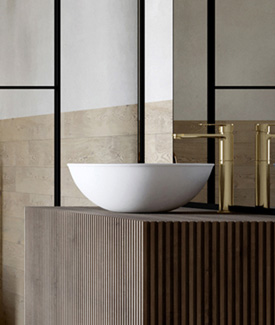
The tap finish can influence the overall character of a bathroom. Chrome offers a versatile appearance, while selected Jaquar collections include alternatives such as Black Matt, Black Chrome, Brass Matt, Antique Bronze, Antique Copper and PVD finishes.
Availability varies by range and product, so check the individual listing before making a final decision.
Create a consistent finish scheme
Start by identifying the most prominent finishes in the room. These may include the tap, shower controls, basin waste, bath fittings and visible accessories.
You can repeat one finish across the principal fittings to create a coordinated look. Alternatively, selected contrasting finishes can introduce definition when they are used with a clear design intention.
Avoid assuming that products with similar finish names will have exactly the same appearance across different ranges or manufacturers. Where possible, compare the actual products or samples in the context of the planned bathroom.
Consider the surrounding materials
Tiles, worktops, sanitaryware and lighting can affect how a tap finish appears. A metallic finish may look different under natural daylight than under artificial bathroom lighting.
For this reason, assess the tap as part of the complete scheme rather than making a decision based only on a product photograph.
The aim is to choose a finish that works with the room's materials and design, while remaining practical for the intended installation.
8. Think About Water Use and Everyday Operation
Water use should be considered alongside the design and operating characteristics of a tap. However, performance and consumption depend on the specific product and the conditions in which it is installed.
When comparing products, review any published flow-rate information and technical specifications. Do not assume that all mixer taps use the same amount of water or that a particular operating style automatically guarantees lower consumption.
Good everyday habits also matter. Turning off the tap when running water is not required can help avoid unnecessary use.
If you are selecting taps for a property with several bathrooms, compare the requirements of each installation rather than automatically specifying the same model everywhere. A cloakroom basin, a family bathroom basin and a bath may have different needs.
For commercial or shared facilities, consider how frequently the fitting will be used and whether its operating style is suitable for that environment. Confirm the manufacturer's instructions and any applicable project requirements before specifying the products.
9. Plan Replacement Taps Carefully
Replacing a tap can be straightforward when the new fitting is compatible with the existing installation. However, a change in mounting type or configuration may require additional work.
Before ordering a replacement, check:
-
The number and position of the existing tap holes.
-
The available space around the basin or bath.
-
The height and reach of the proposed tap.
-
The existing water connections and any stated product requirements.
-
Whether the new fitting needs additional installation components.
-
Whether the existing waste and surrounding fittings remain suitable for the updated arrangement.
If you are changing from a deck-mounted tap to a wall-mounted model, establish the plumbing and wall preparation requirements before purchasing. The same principle applies when changing from a single-hole mixer to a multi-hole fitting.
It is also worth checking the condition of the existing connections while the fitting is being replaced. If there is evidence of leakage, corrosion or another plumbing issue, ask a qualified plumber to assess it.
The best replacement is not necessarily the one that looks most similar to the old tap. It is the one that suits the intended fixture and can be installed correctly.
10. Maintain Your Taps According to the Product Guidance
Regular care helps maintain the appearance of bathroom fittings. The appropriate cleaning method depends on the specific product and finish, so always follow the manufacturer's instructions.
Avoid assuming that abrasive pads, strong cleaning chemicals or general-purpose descalers are suitable for every tap. Some finishes may require particular care, and an unsuitable cleaning method could affect the surface.
Pay attention to areas where water residue may accumulate, including around the base of the tap, the spout and the operating controls. Use the recommended cleaning method rather than relying on aggressive products to remove deposits.
If a tap becomes difficult to operate, leaks or develops an unexpected change in performance, consult the product guidance or a qualified plumber. Do not dismantle the fitting without understanding the manufacturer's instructions and the relevant water isolation procedure.
For a coordinated bathroom, consider the maintenance needs of the tap alongside the basin, shower fittings and other visible components. Choosing suitable cleaning methods for each product can help preserve the appearance of the complete installation.
11. Complete the Basin Area with Compatible Fittings
A tap is only one part of a functional basin area. The basin waste, overflow arrangement, mounting surface and surrounding fittings also need to work together.
Before finalising the specification, check whether the basin requires a particular waste type and whether the selected tap installation leaves enough room for the necessary connections beneath the basin.
If the basin has an overflow, confirm that the selected waste is appropriate for that configuration. Basins without an overflow may require a different waste arrangement. Product compatibility should always be checked rather than assumed.
Consider the space available inside the vanity unit as well. Pipework, traps and tap connections can affect the storage space and the position of drawers or shelves.
For a complete bathroom design, explore the wider bathroom accessories collection to coordinate practical details with the main fittings. Select each component according to its intended function and the requirements of the installation.
12. A Practical Checklist Before Choosing a Bathroom Tap
Before ordering, use this checklist to confirm that the selected fitting is suitable for the project.
-
Identify the fixture: Establish whether the tap is intended for a basin, bath or another application.
-
Confirm the mounting type: Check whether the installation is deck-mounted, wall-mounted or concealed.
-
Measure the space: Compare the tap height, spout reach and operating clearance with the surrounding fixtures.
-
Check the connections: Review the product's water connection and operating requirements.
-
Confirm compatibility: Check the basin or bath tap holes and any required installation components.
-
Coordinate the design: Consider the tap's shape and finish alongside the shower fittings and other visible details.
-
Review maintenance guidance: Confirm the recommended care method for the selected product and finish.
-
Consult the installer: Where the installation or compatibility is uncertain, obtain professional advice before purchasing.
These checks can help prevent avoidable changes during installation and make the final selection more suitable for the bathroom.
Frequently Asked Questions About Bathroom Taps
1. How do I choose the right bathroom tap?
Start with the basin or bath the tap will serve. Check the mounting type, tap-hole arrangement, height, spout reach and available space. Then review the product's water connection requirements and choose a design and finish that suit the wider bathroom.
2. What is the difference between a basin mixer and a bath mixer?
A basin mixer is designed for use with a basin, while a bath mixer is intended for a bath installation. Their dimensions, outlet arrangements and mounting requirements can differ. Always select a fitting for its intended application and confirm compatibility with the basin or bath.
3. Can I replace a deck-mounted tap with a wall-mounted tap?
Potentially, but it depends on the existing plumbing and the new installation requirements. A wall-mounted tap may require changes to the pipework and wall preparation. Check the selected product's instructions and consult a qualified plumber before proceeding.
4. How do I know whether a tap is suitable for my water pressure?
Check the manufacturer's technical information for the specific tap's operating pressure and connection requirements. Do not assume that every tap is suitable for every plumbing system. If you are unsure about the property's water supply, ask a qualified plumber to assess it.
5. How should I clean bathroom taps without damaging the finish?
Follow the cleaning instructions provided for the exact product and finish. Avoid abrasive materials and cleaning chemicals unless they are recommended by the manufacturer. If the tap develops a leak or an operating problem, consult the product guidance or a qualified plumber.
.png)


