
Bathroom Accessories
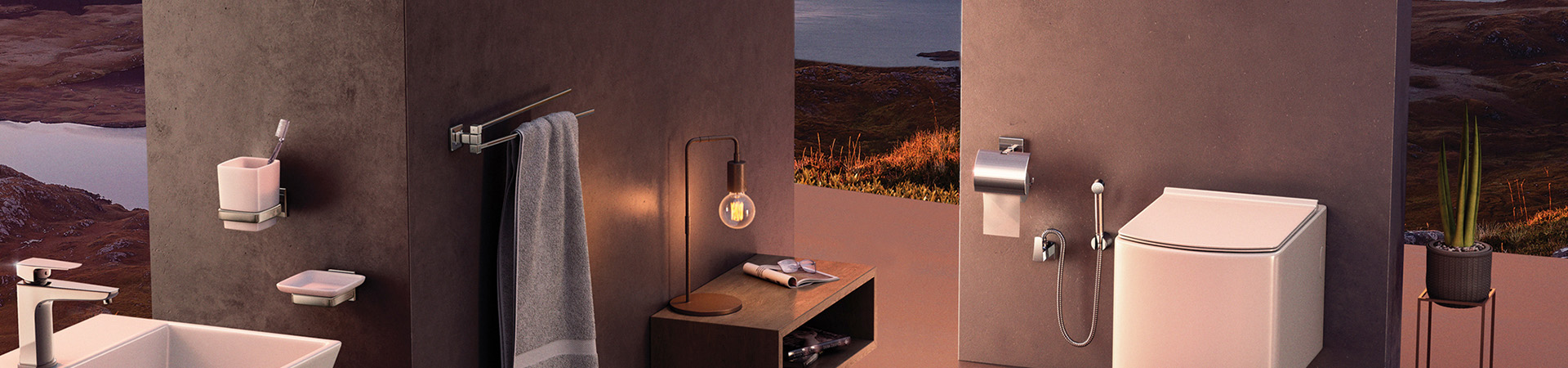
Bathroom accessories are essential for creating a functional, organized space. The right choices create a cohesive design – think of them as the jewellery that complements your bathroom's outfit. Mismatched elements can throw the entire look off balance.
Jaquar, a premium global brand for bathware solutions offers sleek designs in towel holders, soap dispensers, multi-purpose tumbler holders, toilet paper holders, and many more accessories to organize your bathroom both aesthetically and functionally. Organize your space while making it look spectacular with decorative bathroom accessories from Jaquar for a complete transformation.
What are the Types Of Bathroom Accessories?
Towel Holders
- Towel bars are used to hang bath towels. For Eg. Round Shower Arm
- Towel rings for hanging hand towels. For Eg. Continental Towel Ring Round
Soap Dispensers and Dishes
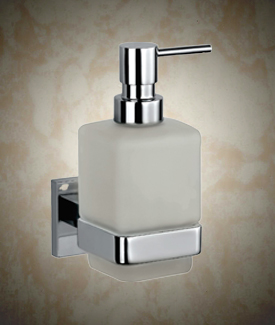
- Soap dispensers hold liquid soap or hand sanitizer.
- Soap dishes keep bar soap dry and within reach. For Eg. Soap Dish for Shower
Toothbrush Holders
- They are designed to store toothbrushes and toothpaste.
- Some toothbrush holders may have separate compartments for multiple products. For Eg. Tumbler with Towel Holder
Bathroom Shelves
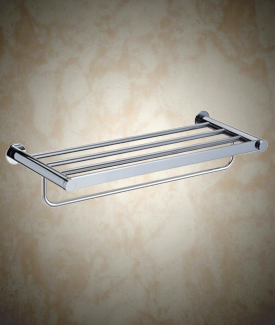
For storage and display, you can choose a wall-mounted or freestanding shelf which is Ideal for keeping toiletries organized. For Eg. Stainless Steel Shelf
Toilet Paper Holders
Bathroom wall accessories are incomplete without Wall-mounted or freestanding holders for toilet paper rolls. For Eg. Toilet Paper Holder with Lid
Toilet Brushes and Holders
Used for toilet bowl cleaning and maintenance. For Eg. Toilet Brush Holder with Shelf
Safety Grab Bars
Installed for added safety, especially in shower and bath areas. For eg. Slide Rail-Gold bright
Hooks
Robe Hooks are suitable for hanging robes or smaller towels. For Eg. Double Swivel Coat Hook
What are the Factors To Choose Bathroom Accessories?
- Bathroom Size: Consider the size of your bathroom. In smaller spaces, opt for space-saving accessories and multipurpose items.
- Design and Style: Choose accessories that complement the overall design and style of your bathroom. Consider the colour scheme, materials, and finishes.
- Functionality: Prioritize functionality. Select accessories that serve a practical purpose and enhance the bathroom's usability.
- Budget: Determine your budget before shopping for accessories. This will help you narrow down options and prevent overspending.
- Maintenance and Cleaning: Consider how easy it is to clean and maintain the accessories. Choose materials and finishes that are resistant to water damage and easy to wipe clean.
- Durability: Invest in durable accessories that can withstand a bathroom's humid and damp conditions. Look for high-quality materials that resist corrosion and wear.
- Installation and Mounting: Check if the accessories are easy to install and mount.
- Storage Needs: Assess your storage needs and choose accessories that help organize and declutter the space. Consider shelves, cabinets, and other storage solutions.
- User-Friendly Features: Look for accessories with user-friendly features. For example, easy-to-use soap dispensers or towel bars facilitate quick and convenient access.
- Theme and Ambiance: Consider the theme and ambience you want to create in your bathroom. Decorative Bathroom accessories can contribute to a spa-like, modern, traditional, or eclectic atmosphere.
- Space Utilization: Maximize space utilization by choosing accessories that make the most of available wall space, corners, and niches.
- Coordination: Ensure coordination between different modern bathroom accessories for a cohesive look. Matching or complementary colours, finishes, and styles can tie the design together.
- Accessibility: If the bathroom is used by individuals with varying levels of mobility, consider accessibility features such as grab bars or easy-to-reach accessories.
Why Choose Jaquar for Complete Bathroom Accessories?
- Finishes: Jaquar offers a wide range of bathroom accessories in various finishes like gold bright, antique bronze, antique copper, black chrome, black matt, and many more chrome bathroom accessories. You can personalize your home according to your taste and style from the premium selection of finishes
- Longer Life: It is known worldwide that high-quality products are durable compared to mediocre-quality ones. Jaquar is renowned for using premium-quality materials that can easily endure daily wear and tear.
- Unmatched Warranty:With its extensive warranty feature of 2-10 years on bathroom accessories, Jaquar has become the number one brand in bathware solutions.
- Jaquar Care : The customer care services provided go from the point of choosing the right product to after-sale services too. Get guidance in making the right decision at every step of the way
Planning Bathroom Accessories Around Your Daily Routine
Bathroom accessories play an important role in how a bathroom functions from morning to evening. Their placement affects how easily everyday essentials can be reached, how comfortably people move around the room and how efficiently the available space is used. A successful arrangement considers the bathroom as a complete environment rather than a collection of individual fittings.
When planning a new bathroom or updating an existing one, begin by identifying the activities that take place in each area. The basin area needs convenient access to handwashing essentials, the shower and bath areas require practical places for towels and toiletries, and the WC area benefits from carefully positioned essentials. Organising these zones before selecting individual products can help create a more considered layout.
Establishing a Practical Bathroom Layout
The first step is to understand how people move through the bathroom. Consider the route from the entrance to the basin, shower, bath and toilet, and identify where accessories can be positioned without obstructing access.
In a family bathroom, several people may use the room at different times of day. Everyday items should be easy to reach without requiring someone to cross a wet floor or move around an open door. In an en suite, where space is often more restricted, the placement of each fitting may have a greater impact on the overall usability of the room.
Create a simple plan showing the principal sanitaryware, furniture, doors and existing plumbing positions. Mark the proposed locations of wall-mounted accessories on this plan. This helps identify potential conflicts before drilling, tiling or fitting products.
For example, a towel rail placed behind an opening door may be difficult to use, while a shelf positioned too far from the basin may be inconvenient during handwashing. Similarly, accessories positioned close to a shower entrance should be considered in relation to water spray and the available standing space.
The objective is not to add an accessory to every available wall. It is to select the items that genuinely improve the room's functionality and position them where they can be used comfortably.
Choosing the Right Position for Wall-Mounted Accessories
Wall-mounted bathroom accessories can help keep frequently used items organised without occupying the basin or vanity surface. Their usefulness, however, depends on their location and the suitability of the wall behind them.
Before installation, check the manufacturer's fitting instructions and establish the type of wall construction. A tiled wall may conceal plasterboard, masonry, pipework or electrical services, so the fixing method must be appropriate for the substrate and the accessory being installed.
Do not assume that a tile alone provides adequate support for every fitting. Use the specified fixings and installation method, and have concealed services checked before drilling. Where the wall construction or service positions are uncertain, consult a competent installer.
Height and reach should also guide placement. Consider who will use the accessory and whether it can be reached without stretching or bending unnecessarily. A robe hook intended for everyday use should be positioned conveniently, while a shelf needs to remain accessible without interfering with the basin, shower or other fittings.
For accessories fitted near a shower or bath, follow the product's installation guidance and consider the surrounding wet-area requirements. The position should support convenient use while allowing the room to be cleaned and maintained properly.
Coordinating Accessories with Basin and Vanity Areas
The basin area often contains several everyday essentials, making it especially important to balance accessibility with an uncluttered surface. Soap, toothbrushes and hand towels should be easy to reach, but their placement should not interfere with the basin, tap operation or cleaning.
Begin by reviewing the size and position of the basin and the available surrounding surface. A compact basin may offer limited room for freestanding items, making suitable wall-mounted accessories a useful option. In a larger bathroom, there may be more flexibility to incorporate a combination of wall-mounted and surface-based storage.
The position of the tap also matters. Check that a soap dispenser, tumbler holder or shelf will not obstruct the tap handles, water flow or normal handwashing movements. Avoid placing accessories where they are likely to collect splashes unnecessarily or make the basin difficult to wipe down.
Explore the available basins when planning the relationship between the basin, its supporting furniture and nearby accessories. The dimensions and installation style of the selected basin will influence the amount of practical space available.
The same principle applies to the taps. Their design and position should be considered alongside nearby accessories, particularly where the basin area has limited clearance. Planning these elements together helps the finished arrangement feel deliberate rather than crowded.
Creating a Well-Organised Shower and Bath Area
The shower and bath areas need particular attention because accessories must remain convenient without interfering with the use of the bathing space. Towels, toiletries and other essentials should be positioned according to the layout, the direction of water spray and the available wall space.
For a shower, assess where the user stands, where the shower controls are located and how the door or enclosure opens. Accessories should not obstruct access to the controls or interfere with the movement of an enclosure door. Items placed close to the showering area should also be suitable for the conditions in which they will be used.
For a bath, consider how people enter and leave the bathing area and where towels can be reached afterwards. A towel holder placed at a convenient distance can support the routine without requiring the user to move across the room while wet.
When planning a complete showering area, review the showers available from Jaquar UK alongside the proposed accessory positions. The location of the shower head, controls and enclosure will help determine where practical storage and towel-hanging points can be installed.
Avoid overcrowding the walls with fittings simply to match a particular design scheme. A smaller number of well-positioned accessories can be more useful than numerous items that compete for space.
Selecting Finishes for a Cohesive Bathroom Scheme
Bathroom accessories are relatively small compared with a basin, bath or shower enclosure, but their finish can influence the appearance of the entire room. The most effective approach is to consider accessories as part of the overall material and colour scheme.
Start by identifying the principal finishes already present in the bathroom. These may include the taps, shower fittings, flush plate, door hardware, tiles and furniture handles. Decide whether the accessories should coordinate closely with these elements or introduce a deliberate contrast.
Chrome can complement a range of bathroom schemes, while darker or warmer metallic finishes may create a different visual effect. Jaquar's accessory collections include a range of finishes, with availability depending on the product and range. Confirm the finish options for the specific item rather than assuming every accessory is offered in every finish.
Matching every component is not essential. A mixed-finish scheme can work when the contrast is intentional and repeated thoughtfully across the room. For example, one finish may be used for the main fittings and another for selected details. The important consideration is whether the combination looks consistent within the overall design.
Shape is equally relevant. Accessories with rounded forms may complement curved basins and taps, while more geometric designs may suit a bathroom with defined edges and straight lines. These are design considerations rather than strict rules, and the right choice depends on the proportions and style of the room.
Planning Accessories for Compact Bathrooms
In a small bathroom, every fitting needs to justify the space it occupies. Accessories should support the daily routine while preserving clear movement around the basin, WC and shower.
Start by identifying which items are used regularly and which can be stored elsewhere. Keep the essentials within convenient reach and avoid filling limited wall space with accessories that serve little practical purpose.
Wall-mounted fittings can free up the basin surface, while carefully positioned hooks and towel holders can make use of otherwise underused areas. However, their dimensions and projection from the wall should be checked to ensure that they do not obstruct movement or create awkward contact points in a narrow room.
Consider the full dimensions of an accessory, not just its width. A projecting shelf may reduce usable clearance, and a towel rail positioned near a doorway may interfere with movement. Check the relationship between the accessory, the open door and the person using the space.
A compact bathroom can also benefit from a consistent visual approach. Limiting the number of finishes and avoiding unnecessary decorative elements may help the room feel more organised. The priority should remain practical placement, safe access and a layout that can be cleaned easily.
Considering Shared and Accessible Bathrooms
Bathrooms used by children, older people or individuals with different mobility requirements need additional attention to reach, access and the intended use of each accessory.
Think about the people who will use the room regularly. Everyday essentials should be positioned at suitable heights, with enough surrounding space to approach and use them comfortably. A fitting that is convenient for one person may be difficult for another to reach.
Where grab bars or other support accessories are being considered, their selection and installation require particular care. Check the product's intended purpose, installation instructions and fixing requirements. The wall construction and the proposed location must be suitable for the intended use; decorative accessories should never be treated as substitutes for purpose-designed support fittings.
For bathrooms being adapted to meet specific accessibility needs, seek advice from a suitably qualified professional who can assess the layout and the user's requirements. Access, circulation space, transfer needs and the position of sanitaryware should be considered together rather than addressed through accessories alone.
The toilets range can also be reviewed as part of the wider layout, particularly when the bathroom is being redesigned to improve access or make everyday routines more convenient. Product suitability should be established from the relevant specifications and installation requirements.
Cleaning and Caring for Bathroom Accessories
Accessories are exposed to regular handling, splashes, soap residue and the humid conditions associated with bathroom use. A suitable cleaning routine helps maintain their appearance and makes it easier to identify wear or damage.
Follow the care instructions supplied for each product and finish. Use an appropriate soft cloth and a compatible cleaning product, and avoid abrasive pads or harsh chemicals unless the manufacturer confirms they are suitable. Cleaning methods that work for one finish may not be appropriate for another.
After cleaning, remove excess moisture where recommended and ensure that surfaces are left in accordance with the product's care guidance. Regular attention can help prevent residue from accumulating around joints, mounting points and frequently handled areas.
Pay particular attention to accessories located near the basin, bath and shower, where water and product residue may collect. Clean these areas without pulling on the fittings or disturbing their fixings.
During routine cleaning, check for movement, loose mounting points, damaged surfaces or other visible changes. If a wall-mounted fitting becomes unstable, stop using it until the cause has been assessed and the fitting has been made secure. Do not attempt to compensate for an unsuitable fixing by simply tightening a component without checking the manufacturer's guidance.
Planning Accessory Installation During a Bathroom Renovation
A renovation provides an opportunity to position accessories more thoughtfully than may be possible when working around an established layout. Even so, the installation plan should be completed before the relevant walls are finished.
Review the bathroom layout and mark the proposed accessory positions before tiling or drilling. Confirm the required fixing method, the wall construction and the likely location of concealed services. Where accessories are intended to be installed on tiled walls, the installer should use an appropriate method that protects the finished surface and provides suitable support.
If the bathroom includes new furniture, a replacement basin or a different shower enclosure, confirm the final dimensions and positions of these items before fixing accessories. Changes to the layout can affect clearances and make an initially suitable location inconvenient.
It is also helpful to coordinate the accessories with the wider bathroom installation sequence. Establish which items need to be fitted before others and which locations must remain accessible during the work. Keep product information and fitting instructions available so that the installer can check the correct method for each component.
For a refresh rather than a full renovation, assess the existing fittings before replacing them. Some accessories may remain suitable for the updated layout, while others may need to be repositioned to work with new sanitaryware or a different design scheme.
Building a Consistent Accessory Schedule
For a bathroom with several accessories, a simple schedule can help prevent omissions and make the final design easier to coordinate. List each required item, its intended location, the chosen range and finish, and any relevant installation considerations.
For example, the schedule might identify the towel holder near the shower, the soap dispenser beside the basin and the toilet roll holder within convenient reach of the WC. Record the proposed positions on the bathroom plan and check them against the dimensions of the surrounding fittings.
Where several accessories belong to the same design range, verify the exact product references and finish availability before ordering. Similar-looking products may have different dimensions or mounting requirements, so confirm the specification for each item.
A schedule is particularly useful for projects involving more than one installer or a phased renovation. It gives everyone a consistent reference for the intended layout and helps reduce the likelihood of accessories being fitted in unsuitable positions.
Making Informed Choices for a Finished Bathroom
The value of bathroom accessories lies in how well they support everyday routines while contributing to a considered design. Their placement, dimensions, finish and fixing method all influence how effectively they work within the room.
By planning accessory locations alongside the basin, taps, toilet and shower, homeowners and professionals can create a more coherent layout with fewer practical compromises. Attention to installation requirements, accessibility and routine care also helps ensure that the chosen fittings remain suitable for everyday use.
Jaquar UK offers accessory collections in a variety of designs and finishes, allowing different elements to be considered as part of a coordinated bathroom scheme. The most appropriate selection is the one that suits the room's dimensions, the needs of its users and the technical requirements of the installation.
Frequently Asked Questions
1. Where should bathroom accessories be positioned?
Position accessories according to how the bathroom is used. Keep handwashing essentials near the basin, towels accessible from the shower or bath, and WC essentials within convenient reach. Check door movement, available wall space, access requirements and the location of concealed services before installation.
2. Should all bathroom accessories have the same finish?
No. Matching finishes can create a consistent appearance, but a carefully planned combination of finishes can also work well. Consider the taps, shower fittings, sanitaryware and other visible details together, and confirm the available finishes for each specific product before ordering.
3. Are wall-mounted bathroom accessories suitable for small bathrooms?
They can be useful in compact bathrooms because they can free up surface space and help keep everyday items organised. However, the dimensions, projection and position of each fitting should be checked to ensure that it does not obstruct movement, access or the use of nearby sanitaryware.
4. How should bathroom accessories be cleaned?
Follow the care instructions supplied for the particular product and finish. A suitable soft cloth and compatible cleaning product are generally preferable to abrasive tools or harsh chemicals. Pay attention to areas where soap residue or moisture can collect, and check fittings periodically for looseness or visible damage.
5. What should I check before installing bathroom accessories?
Confirm the accessory's dimensions, intended position, fixing method and compatibility with the wall construction. Check for concealed pipework and electrical services before drilling, and use the specified fixings. For grab bars or other support fittings, ensure the product and installation are appropriate for the intended use and seek professional advice when needed.
.png)


