
Standard Bathtub Sizes -Which Bathtub Dimension Is Best for Your Bathroom?
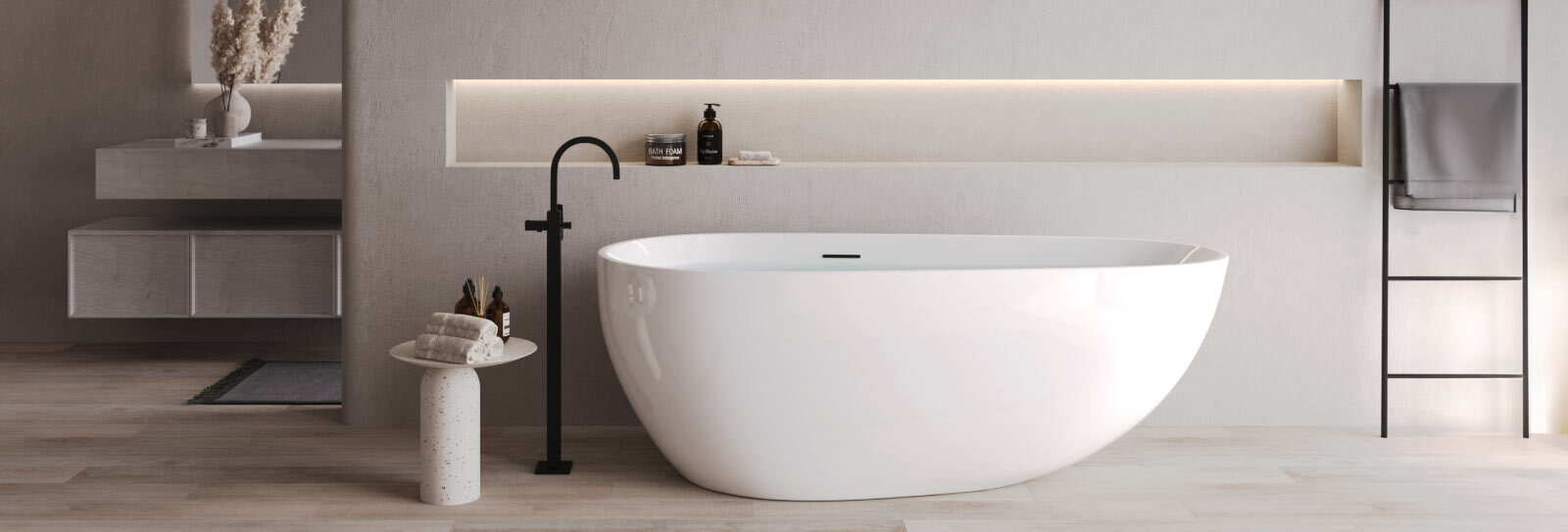
Table of Contents
Are you ready to make your bathroom a peaceful retreat? Choosing the right bathtub size is the key! From built-in beauties to freestanding masterpieces, discover the perfect tub that harmonizes style and functionality for a truly blissful bathing experience.
Common Bathtub Sizes
1. Freestanding Bathtubs
Freestanding tubs are an elegant, eye-catching option for larger bathrooms. The typical tub dimensions are between 55 and 72 inches in length, 27 to 32 inches in width, and 15 to 20 inches in height. Freestanding bathtubs such as Oliv can be placed anywhere in the bathroom. These are available in a variety of shapes, such as oval and rectangle, which add a touch of luxurious and contemporary feel to the room.
2. Built-In Bathtubs
Built-in bathtubs are a versatile and space-efficient option. Typically installed along a wall or into a corner, these bathroom tub sizes are between 60 to 72 inches in length, 30 to 36 inches in width, and 14 to 20 inches in height. This tub's standard dimensions and design allow for easy installation and maximise the use of bathroom space, making it ideal for smaller bathrooms or practical layouts. Built-in bathtubs such as Fonte often include integrated storage for bath products, making them both functional and aesthetically pleasing.
3. Single-Ended Bathtubs
Single-ended bathtubs have one sloped end for reclining and a faucet at the opposite end. The bathroom tub dimensions are typically, 60 to 70 inches in length and 27 to 32 inches in width. The standard height of the bathtub is 14 to 20 inches. These tubs such as the Kubix Prime Bath are a classic choice, providing comfort and simplicity, ideal for bathrooms of all sizes.
4. Double-Ended Bathtubs
Double-ended bathtubs are perfect for those seeking a more luxurious bathing experience. Unlike single-ended tubs, they feature sloped edges at both ends, allowing two people to recline comfortably. These bathtubs such as Kubix Prime are generally larger. The measurements of a standard bathtub are 60 to 75 inches in length and 30 to 36 inches in width. Heights usually fall between 18 and 22 inches. This design is ideal for spacious bathrooms where comfort is the priority.
How to Measure Your Bathroom Before Choosing a Bath
Selecting the right bath size starts with measuring the room accurately, rather than choosing a model based on standard dimensions alone. Even a bath that fits the available floor area on paper may create difficulties if there is insufficient space for the entrance, taps or other bathroom fittings.
Begin by measuring the length and width of the area where the bath will be installed. Record the distance between finished walls, allowing for tiles, wall panels and any boxed-in pipework that may reduce the usable space. If you are replacing an existing bath, measure the bath itself as well as the surrounding alcove. The existing dimensions can provide a useful starting point, but they should not be treated as the only possible option.
Next, consider the bath's projection into the room and the space needed to move around it comfortably. Check that doors, shower screens and nearby drawers can open without obstruction. In a compact bathroom, even a small change in bath width or position can affect access to the basin and toilet.
Understanding Internal Bath Dimensions
The external dimensions of a bath do not tell you exactly how much space you will have for bathing. The usable internal length, width and depth can vary considerably depending on the shape of the sides, the slope of the backrest and the design of the base.
For example, a bath with steep sides may provide a different bathing area from one with a more pronounced internal curve, even if both have similar external measurements. The position of the waste and overflow can also influence the usable space.
When comparing models, review the manufacturer's technical drawings and product specifications. Consider the internal dimensions alongside the overall size, particularly if comfort is a priority. A longer bath is not necessarily the most comfortable option for every user, while a deeper design may require more water to fill.
Which Bath Size Works Best for Different Households?
The most suitable bath depends on who will use it and how it will be used. A standard-sized bath may be sufficient for everyday family use, while a larger design could be preferable for someone who values a more spacious bathing experience.
In a family bathroom, consider the ease of getting in and out, the stability of the surrounding surfaces and the practicality of cleaning the bath. A design with a comfortable internal shape and a suitable height may be more useful than choosing the largest available model.
For an en-suite, a compact bath can preserve valuable floor space while still providing the option of a full bath rather than a shower alone. In a larger main bathroom, a freestanding design can create a focal point, provided there is sufficient room around it for cleaning and access.
The best choice balances bathing comfort, room dimensions and everyday convenience rather than relying on a single standard measurement.
Check Plumbing and Installation Requirements
Before ordering a new bath, establish whether the existing plumbing arrangement will suit the selected model. The position of the waste outlet, overflow, hot and cold water supplies and bath taps can all affect the installation.
A replacement with a similar footprint and waste position may require fewer alterations. However, a different bath shape or a move to a freestanding design could require changes to pipework and the surrounding floor or wall finishes.
Freestanding baths deserve particular attention because their position may expose plumbing that would otherwise remain concealed. Confirm how the waste and water connections will be routed and whether the installation provides adequate access for future maintenance.
If the new bath is significantly larger or deeper than the existing one, consider its filled weight, including the weight of the bathwater and the person using it. A suitably qualified installer can assess whether the floor and installation arrangement are appropriate, particularly in older properties or where structural changes are planned.
Bath Depth, Water Capacity and Everyday Practicality
Bath depth influences how much water the bath holds and how it feels during use. However, a deeper bath is not automatically better for every household.
A larger water capacity can increase the amount of hot water required, which may be important if your home has a limited hot water supply. The actual amount of water used will depend on the bath's internal shape, the fill level and the user's preferences.
Consider the height of the bath sides as well. A high-sided design may be more difficult for some people to enter and leave, particularly children, older adults or anyone with restricted mobility. The lowest or most spacious-looking bath is not necessarily the most suitable either; the overall design should support comfortable and safe access.
If accessibility is a concern, consider the entry height, available support and surrounding floor space before selecting a model.
Coordinating Bath Taps and Surrounding Fittings
Bath dimensions should be considered alongside the taps and other fittings rather than in isolation. The tap arrangement needs to suit the bath's rim, the available mounting surface and the location of the water connections.
Some baths accommodate deck-mounted taps, while others may require wall-mounted fittings or a separate floor-mounted tap. The correct option depends on the bath design and the manufacturer's installation requirements.
Review the bath collection when comparing different bath styles and consider how each model will work with your planned layout. You can also explore the bathroom tap collection to compare designs and check the relevant fitting requirements.
Common Bath-Sizing Mistakes to Avoid
Before confirming your purchase, check the measurements one final time. A few common oversights can lead to installation problems or additional expenditure.
-
Measuring the existing bath without accounting for tiles, wall finishes or boxed-in pipework.
-
Comparing external dimensions without checking the internal bathing space.
-
Forgetting to check door openings, shower screens and access to nearby fittings.
-
Assuming that the existing waste and water connections will suit the replacement.
-
Choosing a deeper or larger bath without considering hot water capacity and filled weight.
-
Overlooking access for cleaning, servicing and future maintenance.
A final check against the manufacturer's installation drawings can help identify potential problems before delivery.
Ultimately, choosing the right bath size is about finding a practical balance between available space, bathing comfort, installation requirements and long-term usability. Accurate measurements and careful planning will help you select a bath that fits your bathroom properly and supports the way your household uses the space.
Which Bathtub Size is Best for Your Bathroom?
The dimensions of an average bathtub depend on the size of your bathroom and your personal bathing preferences. Standard bathtub length and width can affect the entire layout of your bathroom drastically.
Built-in and single-ended bathtubs are the most practical for small to medium-sized bathrooms, offering an efficient use of space while providing a comfortable bathing experience. Built-in models are ideal for maximising functionality, while single-ended tubs offer a simple, classic design.
For larger bathrooms or those who want to add a touch of luxury, double-ended and freestanding bathtubs are excellent choices. These larger tubs provide more space for relaxation and can become the focal point of the bathroom. However, be sure to measure your space carefully and leave enough room for easy movement around the tub.
Choose from the wide range of bath and wellness products from Jaquar, a global brand for premium bathware solutions. Renowned globally for its trusted 5 -10 years warranty, Jaquar provides premium quality bathware solutions. Finally, make sure to consider both your bathroom layout and personal needs to find the bathtub that best suits your space.


