
Soaking Tub vs Regular Bath: What Is the Difference and Which Should You Choose?
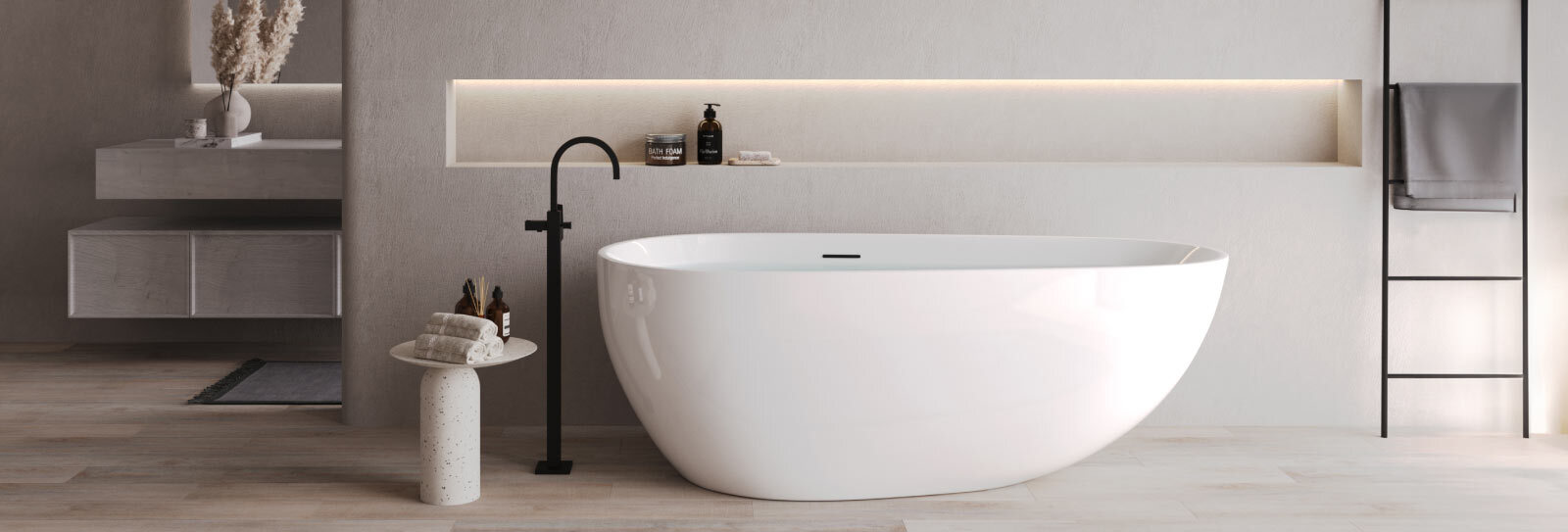
A bath can be more than a practical bathroom fixture. For some households, it is part of an everyday routine. For others, it is a place to slow down, enjoy a longer soak and create a more relaxing end to the day.
If you are planning a bathroom renovation, you may have come across the terms soaking tub and regular bath. Although both serve the same basic purpose, they can differ in their internal depth, proportions, shape and intended bathing experience.
A regular bath is generally designed to provide a practical balance between everyday bathing, available space and ease of installation. A soaking tub places greater emphasis on immersion, often using a deeper bathing area to allow more of the body to sit beneath the water.
However, the distinction is not always absolute. Some conventional baths offer a comfortable depth, while certain soaking tubs may have a relatively compact footprint. The actual dimensions and internal shape of a product matter more than its label alone.
This guide explains the difference between a soaking tub and a regular bath, compares their practical advantages, and explores the dimensions, installation requirements and design considerations that matter when choosing a bathtub for a UK home.
What Is a Soaking Tub?
A soaking tub is a bathtub designed primarily to provide a more immersive bathing experience. Its defining characteristic is generally the usable internal depth, which can allow the bather to sit with more of the body submerged in warm water.
Unlike a conventional bath, where the design often balances everyday washing with space efficiency, a soaking tub places greater emphasis on the experience of sitting in the water for longer periods.
Depending on the model, a soaking tub may have a deep, compact form, a sculpted interior or a shape designed to support a comfortable seated position. Some designs are freestanding, while others may be integrated into a more structured bathroom layout.
The term does not describe one universally standardised set of dimensions. Two products marketed as soaking tubs can have different lengths, widths, heights and internal capacities.
When comparing products, look beyond the name and examine the internal bathing depth, the shape of the backrest, the usable seating area and the overall dimensions.
A soaking tub may be particularly appealing if you prefer a more immersive bath and have the space and hot water capacity to accommodate it.
What Is a Regular Bath?
A regular bath is a conventional bathtub designed to meet the everyday needs of a household. It typically balances bathing comfort with practical dimensions, efficient use of floor space and straightforward integration into the bathroom.
In the UK, a bath measuring approximately 1700mm long by 700mm wide is a familiar reference point for a standard bathroom layout. However, regular baths are available in a range of sizes, including shorter models for compact rooms and larger options for more spacious bathrooms.
Common configurations include single-ended baths, double-ended baths and built-in designs.
A single-ended bath usually has a sloping end for reclining, with the taps and waste positioned towards the opposite end. A double-ended bath generally has sloping ends at both sides, allowing the bather to recline in either direction.
Regular baths can also be used for showering when the installation is designed to accommodate a suitable shower and bath screen.
The main advantage is versatility. A conventional bath can serve different household needs without requiring the deeper or more specialised form that some soaking tubs use.
Soaking Tub vs Regular Bath: Key Differences
The main difference lies in the intended bathing experience, but dimensions, water requirements and installation also matter.
|
Feature |
Soaking tub |
Regular bath |
|
Primary purpose |
More immersive bathing |
Versatile everyday bathing |
|
Internal depth |
Often prioritises greater immersion |
Varies by model and design |
|
Overall size |
Can be compact, deep or generously proportioned |
Available in a broad range of standard sizes |
|
Bathing position |
May favour a more upright seated position |
Often supports a reclining position |
|
Water requirement |
Can be higher if the internal capacity is larger |
Depends on the dimensions and water depth |
|
Bathroom layout |
Requires careful assessment of height and footprint |
Often straightforward to integrate into conventional layouts |
|
Shower compatibility |
Depends on the shape and installation |
Many suitable designs can accommodate an overhead shower |
|
Best selection criteria |
Internal depth, comfort and water capacity |
Versatility, dimensions and everyday practicality |
These are general distinctions rather than fixed rules. A regular bath may be deeper than another product marketed as a soaking tub, so the manufacturer's technical specifications should guide the final decision.
1. Bathing Depth: The Most Important Difference
If you are comparing a soaking tub with a regular bath, start by looking at the internal bathing depth.
A deeper bathing area can allow more of the body to be immersed while sitting in the tub. This can create a different experience from a conventional bath in which the bather reclines with part of the upper body above the water.
However, external height and internal depth are not the same measurement.
External height describes the distance from the floor to the top edge of the bath once installed. Internal depth refers to the usable depth inside the bathing area, although the exact measurement convention can vary between manufacturers.
A bath with high external sides does not necessarily provide a proportionately deeper bathing area. The shape of the base, the thickness of the bath structure and the slope of the sides can all influence the usable interior.
When comparing products, check:
-
The stated internal bathing depth, where provided.
-
The overall height of the bath.
-
The shape and slope of the interior.
-
The usable area for sitting or reclining.
-
The manufacturer's recommended installation arrangement.
If a deeper soak is your priority, these measurements are more useful than relying on the product category alone.
2. Comfort and Bathing Position
A soaking tub and a regular bath can create different bathing positions.
Some soaking tubs are designed around a more upright seated posture, with a relatively deep interior that supports immersion without requiring a particularly long footprint. This can be useful for people who prefer sitting in the water rather than stretching out horizontally.
A conventional bath often provides more room to recline, depending on its length and internal contours. Its sloping end can support the back while leaving enough space for the legs.
Neither configuration is automatically more comfortable. The right option depends on your height, preferred bathing position and the internal shape of the product.
For taller users, a longer bath may provide more room to stretch out. For someone who prefers a seated soak, a deeper design may be more relevant than the overall length.
Consider how you actually use a bath before deciding which format to choose.
3. Water Capacity and Hot Water Requirements
Water capacity is an important consideration when choosing a deeper bathtub.
A soaking tub with a larger internal volume may require more water to reach the desired bathing level. However, the actual requirement depends on the interior shape, the depth to which the tub is filled and the space occupied by the bather.
A conventional bath can also require substantial water, particularly if it is wide, deep or long. The label alone does not determine how much water a product uses.
Before selecting a bath, consider the home's hot water system and the amount of water available for filling it comfortably.
If you are considering a deeper model, check whether your hot water system can supply enough hot water for the intended use. This is particularly important in households where several people may need hot water within a short period.
Do not assume that a soaking tub always uses more water than a regular bath. Compare the product's stated capacity where available and consider how much water is likely to be used during a typical bath.
4. Soaking Tub vs Regular Bath for Small Bathrooms
A deeper bath can sometimes offer an immersive bathing experience without requiring the length of a conventional reclining bath. However, this depends on the specific product dimensions.
For a small UK bathroom, the first step is to measure the available footprint. Consider the length, width and height of the proposed bath alongside the position of the basin, WC, door and shower area.
A compact soaking tub may suit a layout where depth is more important than stretching out. A conventional bath may be more practical if the room needs to support both bathing and showering.
Built-in baths are often useful in compact bathrooms because they can be installed against walls, making efficient use of the available floor area. Freestanding baths require more consideration of the space around the product, particularly where access and cleaning are concerned.
Explore the Jaquar UK bathtub collection to compare available bathing options and identify designs that suit your layout.
The key is to choose the bathing experience you want without compromising the usability of the rest of the room.
5. Freestanding Soaking Tubs and Conventional Built-In Baths
The installation style can influence how a bath looks and functions, although freestanding and built-in are not exclusive to one type of bathing experience.
Freestanding baths
A freestanding bath is positioned as a separate element within the room rather than being fitted into a conventional wall enclosure. It can become a focal point in a larger bathroom and allows the surrounding floor and wall finishes to remain visible.
The main consideration is space. You need enough room around the bath for access, cleaning and the other bathroom fittings.
Freestanding models can also have wider external dimensions than expected, so the full footprint should be checked against the proposed layout.
Built-in baths
A built-in bath is installed against walls or within a designated enclosure. This can make efficient use of space and provide a practical arrangement for everyday bathing.
The surrounding structure can also accommodate a shower screen or integrate the bath into a coordinated layout.
For compact family bathrooms, a built-in design may offer a useful balance between bathing comfort and efficient use of floor space.
Which installation is better?
Neither is inherently better for a soaking tub or a regular bath. Choose according to the product's dimensions, the room's layout and your preferred design.
A freestanding bath may suit a spacious bathroom where the tub can be positioned as a central feature. A built-in model may be more practical where the room needs to accommodate several fixtures within a limited area.
6. Which Is Better for a Family Bathroom?
A regular bath is often a versatile choice for a family bathroom because it can accommodate a range of everyday routines.
It may be used for bathing children, occasional longer soaks and showering when the installation allows for it. A conventional rectangular shape can also make it easier to coordinate the bath with the rest of the bathroom layout.
A soaking tub may suit a household that places greater emphasis on longer, more immersive baths. However, a deep design is not automatically the most practical option for every family member.
Consider the height of the bath rim, the ease of getting in and out, the internal shape and whether the tub needs to accommodate different users.
For households with children, older adults or people with limited mobility, access and ease of use deserve particular attention.
The best choice is the one that fits the needs of the people who will use it, rather than the one with the most distinctive product label.
7. Which Bath Is Better for Relaxation?
A soaking tub is often selected for its emphasis on immersion. The deeper interior can create a bathing environment suited to sitting in warm water and taking time away from daily routines.
A regular bath can also provide a relaxing experience. Its comfort depends on the internal shape, the reclining angle, the available space and the temperature and depth of the water.
If relaxation is your main priority, compare the dimensions and form of the actual products rather than assuming one category is always superior.
Look at how the backrest is shaped, how much room is available for your legs and whether the bath allows you to sit or recline in the position you prefer.
The surrounding bathroom design can also contribute to the experience. Lighting, the placement of fittings and the overall organisation of the room can help create a comfortable bathing environment without requiring a particular bath type.
8. Installation Requirements to Consider
Before buying either type of bathtub, check the installation requirements carefully.
A deeper bath may have a higher rim or a different support arrangement from a conventional model. The final installed height can affect access, while the internal volume can influence the water supply requirements.
For either type, check the following:
-
Overall length, width and height.
-
Internal dimensions and bathing depth.
-
Waste and overflow positions.
-
Tap or bath-filler compatibility.
-
Support frame or feet requirements.
-
Available plumbing connections.
-
Floor space and circulation around the bath.
-
Access through doors, hallways and staircases.
-
The manufacturer's installation instructions.
If you are replacing an existing bath, do not assume that a new model with the same nominal length will fit without changes. The waste position, width, rim height and support arrangement may differ.
A qualified installer should review the technical drawing and proposed layout before work begins.
9. How to Choose the Right Bath Size
The right size depends on the space available and the way you intend to use the bath.
In many UK bathrooms, approximately 1700mm by 700mm is a familiar reference size for a conventional bath. However, smaller and larger options are available, and the ideal dimensions vary between rooms.
When comparing soaking tubs and regular baths, assess the following measurements separately.
Length: Determines how much room the bath occupies along the wall or across the floor. It can also influence how comfortably you can recline.
Width: Affects the footprint and the space available for bathing. A wider bath can feel more spacious but may reduce circulation around other fixtures.
External height: Influences the finished rim height and how easily you can get in and out.
Internal depth: Helps determine how much of the body can be immersed when the bath is filled.
Internal shape: Affects the space available for sitting, reclining and stretching out.
For further guidance, read Jaquar UK's guide to standard bathtub sizes. It explains common UK bath dimensions and the measurements that should be checked before installation.
10. Cleaning and Maintenance
Both soaking tubs and regular baths need routine cleaning. The most appropriate method depends on the material, surface finish and design of the particular product.
Use cleaning products recommended for the bath's material, and follow the manufacturer's care instructions. Avoid abrasive tools or aggressive chemicals that could damage the surface.
After bathing, remove standing water and soap residue where appropriate. Regular cleaning helps maintain the appearance of the bath and prevents deposits from accumulating.
For freestanding baths, remember to clean the floor and accessible surfaces around the tub. For built-in models, pay attention to the joints between the bath and adjoining walls or panels.
Inspect the sealant around the bath periodically. Damaged or deteriorating joints may allow water to penetrate surrounding areas and should be repaired appropriately.
Good maintenance helps preserve the finish and keeps the bathing area ready for everyday use.
11. Can a Regular Bath Provide a Soaking Experience?
Yes. A conventional bath can provide a comfortable soaking experience if its internal depth, shape and dimensions suit your preferences.
The term soaking tub generally emphasises the product's intended bathing experience, but it is not a guarantee of a particular depth or capacity.
A well-proportioned regular bath may provide enough immersion for your needs without requiring a specialised design. Conversely, a bath labelled as a soaking tub may not be suitable if its internal shape or dimensions do not fit your preferred position.
This is why the manufacturer's measurements should always take priority over general descriptions.
If you are choosing a bath primarily for longer soaks, compare the internal dimensions, water capacity where available and the shape of the bathing area. These details will provide a clearer picture of how the product is likely to work for you.
12. Soaking Tub vs Regular Bath: Which Should You Choose?
The decision becomes easier when you start with your priorities.
Choose a soaking tub if you want to prioritise a deeper, more immersive bathing experience and have a layout that can accommodate the product's dimensions and installation requirements.
Choose a regular bath if you want a versatile solution for everyday use, particularly where the bathroom needs to support both bathing and showering or accommodate several household members.
A regular bath may also be preferable when the room is designed around a conventional wall-mounted installation. A soaking tub may be worth considering where immersion is a major priority and the chosen design fits the available space.
There is no universal winner. The most suitable option is the one that provides the comfort you want while working with your bathroom's practical requirements.
Explore Bathtub Options at Jaquar UK
Choosing a bathtub is an opportunity to consider both the way you use your bathroom and the overall design of the space.
Jaquar UK's wellness collection includes bathtub options for different layouts and preferences, including freestanding baths and built-in configurations. The wider collection can help you compare styles while planning the rest of the bathing area.
Explore the Jaquar UK bathtub and wellness collection to review the available options.
If you are planning a more structured installation, the built-in bath collection provides another starting point for comparing configurations suited to wall-positioned layouts.
Once you have shortlisted suitable models, check the individual product specifications, technical drawings and installation requirements. These details will help you establish whether the dimensions, internal shape and water requirements suit your bathroom.
Frequently Asked Questions
What is the main difference between a soaking tub and a regular bath?
A soaking tub generally prioritises a deeper, more immersive bathing experience. A regular bath is designed for versatile everyday use. However, actual depth and comfort vary by model, so compare the manufacturer's specifications rather than relying only on the name.
Is a soaking tub deeper than a regular bath?
Often, a soaking tub is designed with greater usable internal depth, but this is not a universal rule. Some conventional baths are relatively deep, and some soaking tubs may have a compact design. Check the internal bathing depth of each product.
Does a soaking tub use more water?
It can, particularly if the tub has a larger internal capacity or is filled to a greater depth. However, water use depends on the shape, dimensions and actual fill level. Compare product capacity where available and consider your home's hot water supply.
Is a soaking tub suitable for a small bathroom?
It can be, depending on the dimensions and layout. A compact design may provide a deeper bathing experience without requiring a long footprint. Check the external width, rim height, access and the space needed around the bath before choosing one.
Can you shower in a soaking tub?
That depends on the bath's shape and installation. A conventional rectangular bath may be easier to combine with an overhead shower and a suitable bath screen. A deeper or specially shaped soaking tub may not be designed for the same arrangement.
Is a freestanding bath always a soaking tub?
No. Freestanding describes how a bath is installed, while soaking describes the intended bathing experience. A freestanding bath may prioritise design and reclining comfort without necessarily having an unusually deep interior.
What is the standard bath size in the UK?
Approximately 1700mm long by 700mm wide is a familiar reference size for a conventional UK bath. Actual products vary, and the right size depends on the available space, internal dimensions and installation requirements.
What should I check before buying a soaking tub?
Check the overall dimensions, internal bathing depth, rim height, water capacity where available, waste position, support requirements and installation instructions. Consider whether the tub suits your preferred bathing position and whether your hot water system can fill it comfortably.
Is a regular bath better for families?
A regular bath can be a versatile choice for households with different bathing needs, particularly when it also accommodates showering. However, suitability depends on the bath's dimensions, access and the needs of the people using it.
How do I decide between a soaking tub and a regular bath?
Start by identifying your priorities. If greater immersion is important, compare deeper designs and their internal measurements. If everyday versatility and space efficiency matter more, consider a conventional bath that suits your layout. In both cases, check the product specifications before purchasing.
Final Thoughts
The difference between a soaking tub and a regular bath comes down to the balance between immersion, comfort, versatility and available space.
A soaking tub may suit people who prefer a deeper bathing experience, while a conventional bath can provide a practical solution for everyday routines and family use. Neither option is automatically better, and the product's actual dimensions matter more than the label alone.
Before making a decision, measure the room, compare internal bathing depth, review the water requirements and check the installation details. Consider how the bath will work alongside the basin, shower, WC and other fittings.
With a clear understanding of your priorities and the available product specifications, you can choose a bathtub that complements your bathroom layout and supports the bathing experience you want.


