
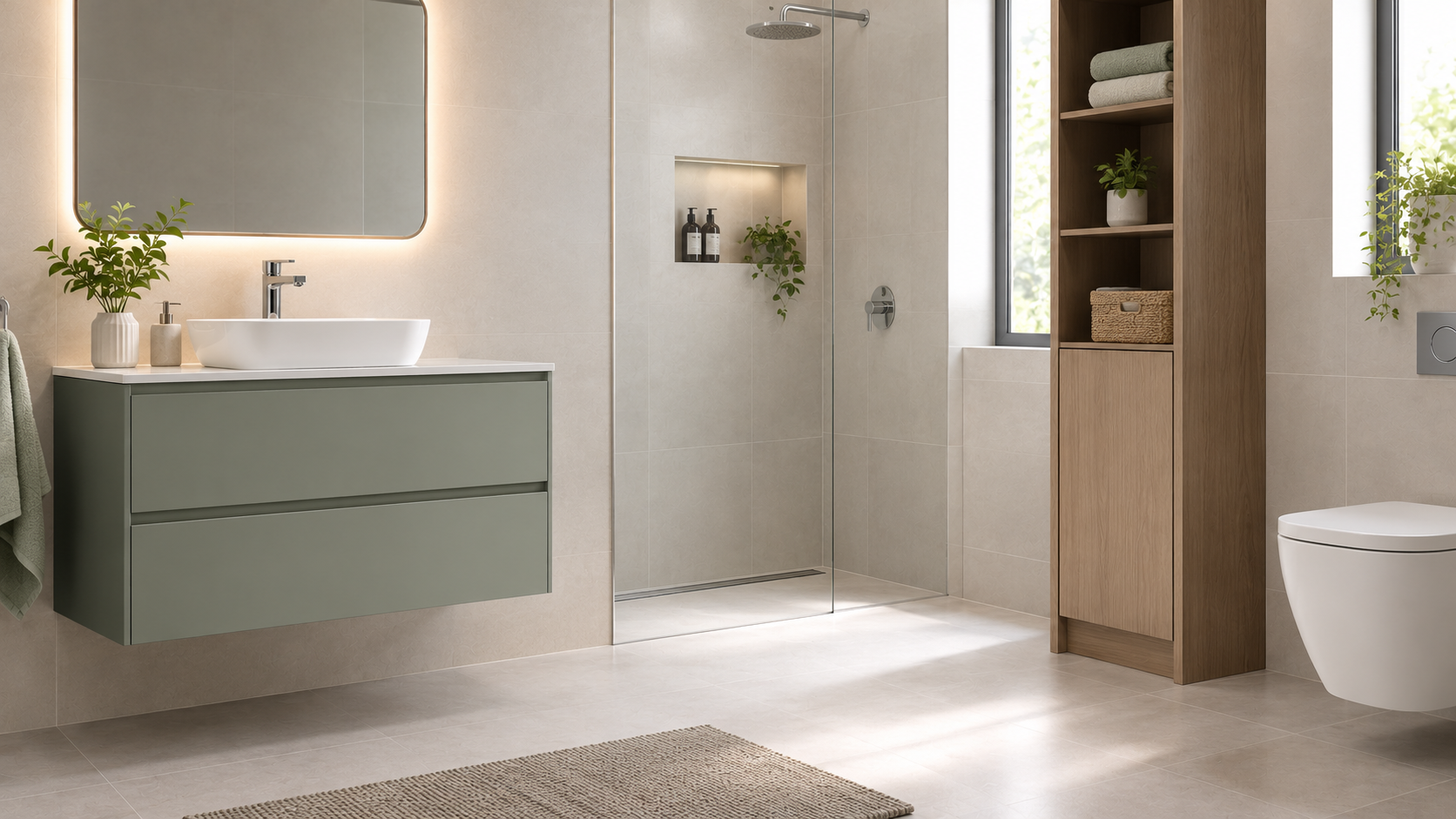
A well-organised bathroom can make everyday routines easier, create a more relaxing atmosphere and help even a compact space feel more spacious. However, bathrooms often need to accommodate a surprising number of essentials, including towels, toiletries, skincare products, cleaning supplies and everyday accessories. Without a thoughtful storage plan, worktops become cluttered, cupboards fill up quickly and useful space can go to waste.
The good news is that creating a tidy bathroom does not always require a complete renovation. From wall-mounted cabinets and vanity storage to recessed shelves and clever ways to use awkward corners, there are plenty of bathroom storage ideas to suit different layouts, budgets and design preferences.
Whether you are planning a new bathroom or looking for practical ways to improve your existing space, these ideas will help you make better use of the room you have.
1. Install a Bathroom Vanity Unit with Built-In Storage
A vanity unit is one of the most practical bathroom storage solutions because it makes use of the space beneath the basin. Instead of leaving the area empty, you can use it to store toiletries, spare hand towels, toilet rolls and other everyday essentials.
Choose a vanity unit with drawers if you want to organise smaller items separately. Deep drawers can accommodate larger bottles, while shallow compartments are useful for skincare products, toothbrushes and grooming accessories.
Before choosing a unit, measure the available floor space and check the position of the basin, waste pipework and water connections. The internal layout matters just as much as the external appearance.
For a coordinated bathroom design, explore the Jaquar UK basin collection and consider how your chosen basin, tap and surrounding storage will work together.
2. Make Use of Wall-Mounted Bathroom Cabinets
Wall-mounted cabinets create useful storage without taking up additional floor space. They are particularly helpful in smaller bathrooms, where every centimetre can make a difference.
Install a cabinet above the basin or along an available wall to keep everyday products within easy reach. Closed cabinets are ideal for items you would rather keep out of sight, helping the room look calmer and less cluttered.
When choosing a cabinet, consider its depth. A shallow design may be sufficient for toiletries, while a deeper cabinet can hold larger bottles and folded face towels.
Position the cabinet carefully to ensure that its doors open comfortably and do not interfere with taps, mirrors or other fittings. If the cabinet is installed above a basin, allow enough space for comfortable use of the sink.
3. Choose a Mirrored Bathroom Cabinet
A mirrored cabinet combines two essential bathroom features in one fitting. It provides a reflective surface for daily grooming while offering concealed storage behind the mirror.
This is particularly useful in compact bathrooms, where installing a separate mirror and storage cabinet might make the wall feel crowded.
Use the cabinet for toothbrushes, skincare products, shaving essentials and other frequently used items. Keeping these products behind closed doors also reduces the number of objects visible around the basin.
For a more cohesive finish, coordinate the cabinet's shape and proportions with your basin and taps. A simple rectangular design often complements contemporary bathrooms, while rounded edges can soften a room with angular tiles and fittings.
4. Add Open Shelves Above the Toilet
The wall above the toilet is often overlooked, even though it can provide valuable storage space.
Install one or two shelves above the cistern or use a suitable freestanding shelving unit around the toilet, provided there is enough clearance. These shelves can hold folded towels, toilet rolls, small baskets and decorative accessories.
Open shelving makes frequently used items easy to access, but it also means everything remains visible. Avoid overcrowding the shelves with too many products. A few carefully arranged essentials will usually look better than a collection of mismatched packaging.
If you are considering a wall-hung toilet, plan storage around the concealed cistern and its access requirements. Any shelving or cabinetry should preserve access to the necessary maintenance points.
5. Create a Recessed Shower Storage Niche
A recessed shower niche provides storage within the wall rather than projecting into the showering area. It is an excellent option for bathrooms where a conventional shower caddy would take up too much room.
Use the niche to hold shampoo, conditioner, body wash and other shower essentials. Dividing the space into separate sections can make it easier for different household members to organise their products.
A recessed niche is usually easiest to plan during a bathroom renovation because it may require changes to the wall structure and waterproofing. Its location should be selected carefully, taking account of pipework, the shower controls and the height at which the products will be used.
For a coordinated showering area, explore the Jaquar UK shower collection and shower enclosure options when planning the overall layout.
6. Use a Slim Storage Unit in Narrow Spaces
A narrow gap between the basin and wall, beside a vanity or near the bathroom door can often accommodate a slim storage unit.
Look for a design with shelves, drawers or small compartments that can hold toilet rolls, toiletries and cleaning products. A tall, narrow unit is particularly useful when floor space is limited but there is enough vertical room.
Before buying one, measure the gap at several points. Check that the unit will not obstruct a door, restrict access to the toilet or make the bathroom difficult to move around in.
Choose a moisture-resistant finish and avoid placing products where they could easily be knocked onto the floor. A well-positioned slim unit can provide additional storage without dominating the room.
7. Install Floating Shelves
Floating shelves offer a flexible way to add storage to an otherwise unused wall. Their minimal appearance works well in contemporary bathrooms, and they can be installed at different heights to suit the items you need to store.
Use them for neatly folded hand towels, small baskets, spare toiletries or a few decorative objects. Shelves near the basin can hold items you reach for regularly, while higher shelves are better suited to products used less frequently.
The key is to avoid treating every shelf as a display area. Too many decorative objects can reduce the practical storage available and make the bathroom feel busy.
Choose suitable wall fixings for the wall construction and the expected load. Keep shelves away from areas where direct water exposure could damage the material or stored products.
8. Make Better Use of the Space Under the Basin
If your bathroom has a wall-mounted or pedestal basin, the space underneath may be underused.
Depending on the plumbing layout, you could introduce a small open shelf, a compact storage basket or a purpose-designed unit that fits around the pipework. This creates a place for everyday essentials without requiring a complete change to the basin arrangement.
Measure the available height and width before selecting a storage solution. Make sure it leaves enough room for cleaning the floor and does not interfere with the waste pipe or water connections.
For a particularly compact bathroom, a wall-mounted basin can preserve a more open floor area. Explore the Jaquar UK basin range to compare different basin styles when planning your space.
9. Use Baskets to Group Bathroom Essentials
Storage baskets are a simple way to organise items that might otherwise end up scattered across shelves and worktops.
Use separate baskets for spare toiletries, haircare products, cleaning cloths, hand towels or children's bath products. Labelling them can make it easier for everyone in the household to return items to the right place.
Woven baskets can introduce texture into a bathroom, while plastic or other washable containers are often more practical for damp environments. Whichever material you choose, make sure it can be cleaned easily and does not remain wet for long periods.
Baskets are especially useful inside larger cupboards because they allow you to group related items together. Instead of searching through a crowded shelf, you can simply remove the relevant basket.
10. Add Storage Behind the Bathroom Door
The back of the bathroom door can offer useful storage space without occupying the walls around the basin or shower.
An over-door organiser, hanging rack or suitable row of hooks can hold dressing gowns, towels and lightweight accessories. Some organisers also include small pockets for hairbrushes and other personal-care products.
Check the door's clearance before installing anything. The added storage should not hit a wall, obstruct a nearby fitting or prevent the door from opening fully.
For a neat appearance, choose a finish that complements the door hardware and other bathroom accessories. If the bathroom is shared, assign individual hooks or sections to different household members to keep belongings organised.
11. Fit Hooks Instead of Using a Bulky Towel Stand
Hooks are an efficient alternative to freestanding towel stands, especially in small bathrooms.
Install them behind the door, beside the shower or on a suitable wall near the basin. They can hold bath towels, hand towels and dressing gowns without taking up valuable floor space.
For a family bathroom, consider separate hooks at convenient heights for different users. Make sure wet towels can hang freely rather than remaining bunched together, as this helps them dry more effectively.
The positioning is important. Avoid placing hooks where dripping towels can wet electrical fittings, wooden furniture or areas that are difficult to dry.
Coordinating the hooks with the finish of your taps and shower fittings can also help create a consistent visual style.
12. Choose a Tall Bathroom Storage Cabinet
A tall cabinet uses vertical space to provide storage for items of different sizes. It can be particularly useful in a family bathroom, where spare towels, toiletries, toilet rolls and cleaning supplies all need a designated place.
Choose a design with adjustable shelves if you want flexibility. Shorter compartments can accommodate small bottles and folded cloths, while taller sections can store larger containers.
A tall cabinet may work well in an unused corner or beside the vanity, but it should not make the room feel cramped. Check the door swing, circulation space and access to plumbing before deciding where it belongs.
For safety, secure tall freestanding cabinets to the wall using suitable fixings, following the manufacturer's installation instructions.
13. Make Use of Bathroom Corners
Corners are often difficult to furnish, but they can be useful storage locations when planned carefully.
A corner shelf can hold a few toiletries, while a purpose-designed corner cabinet may provide concealed storage for smaller items. In the shower, a suitable corner caddy can keep products organised without taking up the central standing area.
Choose the type of storage according to the location. Materials and fittings used in a shower must be suitable for regular water exposure, while storage elsewhere in the room may offer a wider choice of finishes.
Avoid filling every corner with furniture. Keeping some areas open helps preserve a sense of space and makes the bathroom easier to clean.
14. Organise the Inside of Vanity Drawers
A large drawer is not necessarily an organised drawer. Without internal compartments, small products can quickly become mixed together.
Use drawer dividers or removable organisers to separate skincare, dental care, grooming tools and other everyday essentials. Keep the most frequently used products towards the front and reserve less accessible sections for occasional-use items.
Measure the internal drawer dimensions before buying organisers, allowing enough clearance for the drawer to open and close smoothly.
It can also help to review the contents every few months. Dispose of expired products appropriately and move duplicate or rarely used items into separate storage. A well-organised drawer makes daily routines quicker without requiring more furniture.
15. Introduce a Storage Ladder
A storage ladder offers a lighter alternative to a conventional cabinet or shelving unit. Its vertical shape makes it suitable for bathrooms where a large storage piece would feel too heavy.
Use the rungs to hang towels or add suitable baskets for lightweight accessories. Some designs include deeper shelves that can hold folded towels and small containers.
Choose a ladder made from materials appropriate for the bathroom environment and position it on a stable, level surface. Avoid overloading it or placing it where it could be knocked over easily.
A storage ladder is most effective when it serves a clear purpose. Keep the arrangement simple, with a few towels and essential items rather than filling every available space.
16. Use a Compact Trolley for Flexible Storage
A small rolling trolley can provide extra storage that moves when you need to clean or rearrange the bathroom.
Use its shelves for toiletries, spare toilet rolls, haircare products or towels. If several people share the bathroom, the trolley can also act as a dedicated station for items used by one household member.
Before choosing a trolley, measure the route it will need to move through. It should fit comfortably around the toilet, basin and shower without blocking access.
Wheels with locking mechanisms can help keep the trolley in place. Choose a finish that is easy to wipe clean, and avoid storing electrical items or products that could be damaged by water in exposed areas.
17. Build Storage into a Bathroom Renovation
If you are planning a larger renovation, consider storage before finalising the bathroom layout.
A bespoke vanity, recessed shelving, a tall cabinet or a built-in niche can make better use of the available dimensions than furniture added later. Planning these features early also helps coordinate them with plumbing, lighting, ventilation and waterproofing.
Think about how the bathroom will be used every day. A household with children may need more accessible storage for frequently used products, while a guest bathroom may require little more than a place for hand towels and spare toiletries.
It is also worth planning for future needs. Adjustable shelving, accessible compartments and clear routes around the room can make the bathroom easier to use over time.
For additional inspiration, explore Jaquar UK's bathroom products when considering how your basin, taps, shower and other fittings will work together.
18. Add Storage Around the Bath
Bathing areas can become cluttered with shampoo, bath products, children's toys and other essentials. A carefully chosen storage solution can keep these items organised without interrupting the appearance of the room.
Depending on the layout, you could use a suitable bath-side organiser, a wall-mounted shelf or a recessed niche. Keep products within easy reach while ensuring that shelves and containers do not create sharp edges or obstruct access to the bath.
Any storage exposed to splashes should be made from materials suitable for damp conditions. Avoid leaving products on the floor, where they can become tripping hazards or collect standing water.
If you are redesigning the bathing area, consider storage and access together rather than treating them as separate decisions.
19. Store Spare Towels Above Eye Level
Extra towels take up considerable cupboard space, but they do not all need to remain within immediate reach.
A high shelf or upper cabinet can store clean towels and spare bathroom linens, freeing lower storage for products used every day. Keep frequently used towels at a comfortable height and reserve higher shelves for less frequently needed items.
Fold towels consistently so that the shelf remains tidy and available space is used efficiently. If the shelf is open, consider placing spare linens in a washable or suitable enclosed container to protect them from dust and splashes.
Avoid placing heavy stacks too high. Storage should remain safe and practical, particularly when items need to be retrieved regularly.
20. Use Matching Containers for Everyday Products
Bathroom worktops can look cluttered when they hold a mixture of bottles, packets and loose accessories. Matching containers help create a more consistent appearance while keeping essentials accessible.
Use a soap dispenser, toothbrush holder, small tray and a few containers for frequently used items. Grouping products on a tray also makes it easier to move them when cleaning the basin area.
Choose materials that can tolerate regular cleaning and the moisture levels in the room. Containers with removable inserts or wide openings are often easier to maintain.
Keep only the items you use daily on the worktop. Store backups, spare packaging and occasional-use products inside a drawer or cabinet to preserve valuable surface space.
21. Create a Dedicated Storage Area for Cleaning Products
Cleaning supplies are easy to overlook when planning bathroom storage, yet they need a secure and accessible home.
Use a designated cupboard or closed container for cloths, brushes and suitable cleaning products. Keep chemicals in their original labelled packaging and follow the storage instructions on each product. Store them securely away from children and pets, and never mix cleaning chemicals.
If the bathroom does not have a suitable cupboard, consider a compact unit in another appropriate storage area of the home. There is no need to sacrifice valuable bathroom space if the products can be stored safely elsewhere.
Separating cleaning supplies from personal-care products also makes the bathroom easier to organise and maintain.
22. Make Small Bathrooms Feel Larger with Minimal Storage
In a small bathroom, adding more furniture is not always the best solution. The goal is to increase useful storage while keeping the room comfortable to move around in.
Start by identifying what you actually need to store in the bathroom. Move infrequently used items elsewhere, then prioritise a few effective solutions, such as a mirrored cabinet, a vanity drawer and one or two wall shelves.
Wall-mounted fittings can preserve visible floor space, while lighter finishes and simple shapes can help the room feel less crowded. Keep the area around the basin clear and avoid installing cabinets that make the entrance or shower feel restricted.
For further inspiration, read Jaquar UK's guide to small bathroom ideas, which can help you consider layout, fittings and available space together.
23. Choose Storage That Complements Your Bathroom Design
Storage should be practical, but it also contributes to the overall look of the bathroom.
For a contemporary space, consider clean-lined cabinets, simple shelving and understated hardware. In a more traditional bathroom, furniture with framed doors or warmer finishes may feel more appropriate.
Think about how the storage finish works with your tiles, basin, taps and other fittings. Coordinating every item exactly is not essential, but repeating a small number of materials or finishes can help the room feel considered.
Explore the Jaquar UK taps collection when planning your basin area. The relationship between storage, taps and the basin can influence both the visual balance and everyday usability of the space.
24. Use Vertical Space from Floor to Ceiling
When floor space is limited, the walls can provide some of the most useful opportunities for additional storage.
A combination of lower cabinets, mid-height shelves and upper cupboards can accommodate items with different access requirements. Everyday products should remain within comfortable reach, while spare towels and less frequently used items can be stored higher up.
Do not install shelves simply because there is an empty patch of wall. Check that each one has a purpose and that the overall arrangement leaves enough room for mirrors, lighting and other fittings.
Before drilling into bathroom walls, check for concealed pipework and electrical cables. Choose fixings suitable for the wall material and the weight the shelf will carry.
25. Declutter Regularly to Keep Storage Effective
Even the best bathroom storage will become difficult to use if it fills up with items that are no longer needed.
Set aside time every few months to review toiletries, skincare products, medicines and cleaning supplies. Dispose of expired or unwanted items in accordance with relevant product and local disposal guidance. Keep medicines in an appropriate, secure place rather than automatically storing them in a warm or humid bathroom.
Return products to their designated locations after use and avoid buying additional organisers before checking whether you already have enough space.
A simple system is often the most effective: keep everyday essentials accessible, group similar items together and store occasional-use products separately. This approach makes it easier to maintain a tidy bathroom without constant rearranging.
How to Choose the Right Bathroom Storage Ideas
With so many possible solutions, choosing the right combination starts with understanding the space and how it is used.
Measure the Available Space
Record the width, depth and height of the areas where storage might fit. Include door swings, drawer openings, plumbing positions and the clearance needed to use the toilet, basin and shower comfortably.
Decide What Needs to Be Stored
Separate everyday essentials from spare products, towels and cleaning supplies. This helps you work out whether you need accessible drawers, concealed cabinets, open shelves or a combination of different storage types.
Consider Moisture and Ventilation
Bathrooms are exposed to humidity and occasional splashes. Choose materials and finishes suitable for their intended location, and ensure that the room is adequately ventilated. Wipe away standing water and avoid keeping damp towels in enclosed spaces for extended periods.
For further guidance on maintaining a healthier bathroom environment, read Jaquar UK's article on how to remove bathroom mould.
Balance Open and Concealed Storage
Open shelves are convenient for frequently used items and decorative touches, while closed cupboards help keep less attractive essentials out of sight. A mixture of the two can provide flexibility without making the bathroom look overcrowded.
Plan Accessibility and Safety
Frequently used items should be easy to reach without stretching or climbing. Secure wall-mounted storage properly, anchor tall furniture where appropriate and keep floors and walkways clear.
Coordinate Storage with Your Bathroom Fittings
Storage works best when it is considered alongside the basin, taps, shower and other fixtures. Check that cabinets do not obstruct taps or mirrors, shelves do not interfere with shower controls, and drawers can open fully.
Jaquar UK's bathroom basin collection is a useful starting point if you are planning to update the basin area as part of a wider storage improvement.
Frequently Asked Questions About Bathroom Storage
1. What is the best way to add storage to a small bathroom?
Start with solutions that use existing or overlooked space. A mirrored cabinet, vanity drawers, floating shelves and over-door hooks can add storage without taking up much floor area. Avoid adding several large units if they make the room difficult to move around in.
2. How can I create bathroom storage without renovating?
Use baskets, drawer dividers, slim freestanding units, over-door organisers and suitable shelving. You can also rearrange existing cupboards and move rarely used products to another storage area. These changes can improve organisation without altering plumbing or wall structures.
3. How do I keep bathroom worktops clutter-free?
Keep only daily essentials on the worktop and group them on a small tray. Store backup products and less frequently used items in drawers or cabinets. Matching containers can also create a more consistent appearance.
4. Are open shelves a good idea in bathrooms?
Yes, when used thoughtfully. Open shelves provide convenient access to towels and toiletries, but they require regular organisation and cleaning. Keep them away from direct splashes unless the materials and stored items are suitable for that environment.
5. What should I store under the bathroom basin?
The space can hold toiletries, spare hand towels and other everyday essentials, provided there is sufficient clearance around the plumbing. Use a suitable vanity unit or storage organiser and keep cleaning products separate from personal-care items.
6. How can I make use of awkward bathroom corners?
Consider a corner shelf, a suitable corner cabinet or a shower caddy designed for the available space. Measure carefully and make sure the storage does not obstruct access to the shower, toilet or basin.
7. What materials are suitable for bathroom storage?
Choose materials and finishes designed to tolerate bathroom humidity and the level of water exposure in their intended location. Proper ventilation, regular cleaning and wiping away standing water also help storage furniture remain in good condition.
8. How high should bathroom shelves be installed?
There is no single height that works for every bathroom. Position shelves according to what they will hold, who will use them and how they relate to nearby fittings. Everyday products should be easy to reach, and shelves should not obstruct mirrors, lighting or shower controls.
9. How can I organise a shared family bathroom?
Give different categories of products their own drawers, baskets or shelves. Use separate sections for individual household members where possible, and keep shared essentials such as hand towels and toilet rolls in accessible locations. Store cleaning products securely away from children.
10. Should bathroom storage be planned before or after choosing the fittings?
Ideally, plan storage alongside the bathroom layout and fittings. This helps ensure that cabinets, drawers and shelves do not interfere with plumbing, taps, mirrors or movement around the room. Recessed niches and built-in storage are particularly important to consider before renovation work begins.
Final Thoughts
A well-organised bathroom is not necessarily the one with the most cupboards. It is the one where the available space is used thoughtfully and everyday essentials have a clear place.
From vanity drawers and mirrored cabinets to recessed shower niches, floating shelves and compact storage units, the right combination depends on your room dimensions, daily routine and design preferences. Start with the areas that become cluttered most often, measure before buying new furniture and choose solutions that are easy to maintain.
By combining practical storage with carefully selected bathroom fittings, you can create a space that feels more organised, comfortable and visually balanced. Explore Jaquar UK's bathroom products for inspiration when planning a bathroom that brings together thoughtful design and everyday functionality.


