
How to Bleed a Radiator: A Complete Step-by-Step Guide
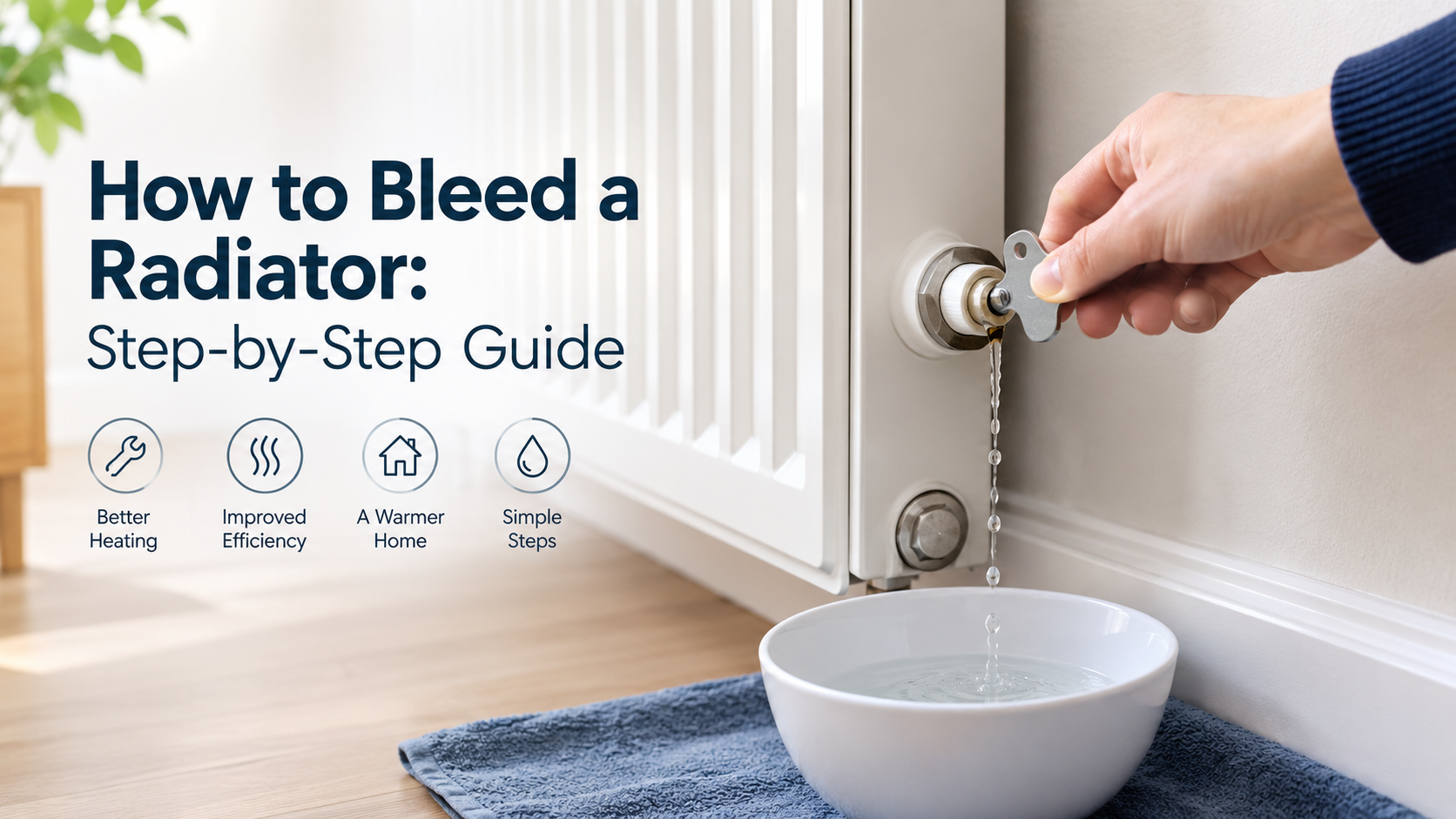
If your radiators are taking longer to warm up, making gurgling noises, or feel cold at the top and warm at the bottom, the cause is almost always trapped air - and the fix is a five-minute job called bleeding a radiator. It requires no plumbing experience, no specialist tools beyond a small radiator key, and no call-out fee.
Quick answer: To bleed a radiator, turn off your central heating and let the radiators cool. Locate the bleed valve at the top corner of the radiator, insert a radiator key (or a flat-head screwdriver on older valves), and turn it slowly anticlockwise until you hear air hissing out. Hold a cloth underneath, and as soon as water starts to trickle out steadily, close the valve firmly clockwise.
This guide walks through exactly why radiators trap air, a full step-by-step method for bleeding them safely, how often you should do it, and what to do if cold spots persist even after bleeding.
What Does "Bleeding a Radiator" Actually Mean?
Central heating works by circulating hot water from your boiler through a sealed network of pipes and radiators. Over time, small pockets of air can become trapped inside a radiator, usually rising to the top of the panel since air is lighter than water. This trapped air stops hot water from reaching that part of the radiator, so heat output drops even though the boiler is working normally.
"Bleeding" simply means releasing that trapped air through a small valve — the bleed valve — fitted to the top corner of almost every radiator, opposite the thermostatic radiator valve (TRV) or manual valve at the bottom.
Signs Your Radiator Needs Bleeding
| Symptom | What It Usually Means |
|---|---|
| Cold at the top, warm at the bottom | Air trapped in the upper section of the radiator |
| Gurgling or bubbling noises from pipes | Air moving through the system as water circulates |
| Radiator takes longer to heat up | An air pocket is restricting hot water flow |
| Uneven heating across the room | Reduced radiator surface area is actually heating |
| Higher heating bills for the same comfort | The boiler is working harder to compensate for inefficiency |
| Boiler losing pressure repeatedly | Often linked to frequent bleeding or a system leak |
If more than one radiator in the house shows these signs, it's worth bleeding the whole system in one go rather than tackling them one at a time as symptoms appear.
Why Do Radiators Get Air Trapped Inside Them?
- Corrosion inside pipework — over years, steel components inside a heating system react with water and produce small amounts of hydrogen gas, which collects in radiators.
- Topping up the system — every time you or an engineer refills the heating system via the filling loop, a small amount of air enters with the water.
- New or recently drained systems — after any work on the boiler or pipework, trapped air is almost guaranteed and radiators should be bled as a matter of course.
- A faulty automatic air vent — some systems have an automatic air release valve; if it's stuck or failing, air builds up in radiators that would otherwise self-purge.
Tools You'll Need to Bleed a Radiator
| Tool | Purpose |
|---|---|
| Radiator bleed key | Turns the square bleed valve pin (sold cheaply at any DIY/hardware store) |
| Flat-head screwdriver | An alternative on older-style slotted valves |
| Old cloth or towel | Catches drips and protects flooring/skirting |
| Small container or bowl | Collects the water that escapes |
| Thick gloves (optional) | Protects hands if the radiator hasn't fully cooled |
How to Bleed a Radiator: Step-by-Step
- Turn off your central heating and allow radiators to cool for at least 30 minutes. Bleeding a hot, pressurised radiator risks a scalding water spray.
- Identify which radiators need bleeding by feeling for cold top / warm bottom, or simply plan to bleed all radiators as routine annual maintenance.
- Protect the surrounding area by placing a cloth or towel beneath the bleed valve, and have your container ready to catch drips.
- Locate the bleed valve — the small, square-pinned valve at the top corner of the radiator, opposite the thermostatic or manual valve.
- Insert the radiator key (or screwdriver) onto the valve.
- Turn anticlockwise, a quarter-turn at a time. You should hear a hissing sound — this is the trapped air escaping.
- Keep the cloth in place as the air continues to escape; a little water may spit out with it.
- Wait for a steady trickle of water with no more hissing — this means all the air has been released.
- Close the valve immediately by turning it clockwise, firmly but without overtightening.
- Wipe away any water and check the valve for drips once the system is back under pressure.
A useful order to work in: bleed radiators on the lowest floor first, and within each floor, start with the radiator furthest from the boiler. This mirrors the natural direction of water flow and air movement through the system.
Bleeding Radiators on a Combi Boiler System
Most UK homes now run on a combi boiler with a sealed heating system. Releasing water while bleeding radiators lowers the overall system pressure, so once you've bled every radiator:
- Check the boiler pressure gauge — it should typically read between 1 and 1.5 bar when the system is cold (always confirm the exact figure in your boiler's manual, as it varies by model).
- If pressure has dropped below this range, use the filling loop to top the system back up slowly until the gauge reaches the correct level.
- Turn the heating back on and check each radiator heats evenly from top to bottom.
How Often Should You Bleed Your Radiators?
As a general rule, bleed every radiator in the house once a year, ideally in September or October, just before the heating season begins in earnest. If you find yourself bleeding the same radiator every few weeks, that's not normal — it usually points to a corrosion issue, a failing automatic air vent, or a slow system leak, and is worth having checked by a heating engineer.
Bleeding a Radiator vs Powerflushing: What's the Difference?
These two tasks are often confused, but they solve different problems.
| Bleeding a Radiator | Powerflushing | |
|---|---|---|
| Fixes | Trapped air causing cold top / warm bottom | Sludge, rust, and debris causing cold patches or blockages |
| Who can do it | Any homeowner | A qualified heating engineer |
| Time required | A few minutes per radiator | Several hours for the whole system |
| Frequency | Roughly once a year | Typically every 5–6 years, or when sludge is confirmed |
| Sign it's needed | Cold top, warm bottom | Cold patches in the middle of the radiator, discoloured bleed water |
What If Bleeding Doesn't Fix the Cold Spots?
If a radiator is cold in the middle rather than just at the top, bleeding alone won't help — this is a classic sign of sludge (magnetite) build-up settling at the bottom of the radiator over years of use. In this case:
- A powerflush by a qualified engineer clears accumulated sludge from the whole system.
- Fitting a magnetic filter (installed on the pipework near the boiler) catches debris on an ongoing basis and significantly reduces how often radiators need bleeding or flushing in future.
- A persistently faulty pump, closed lockshield valve, or blocked pipe elsewhere in the system can also mimic the symptoms of trapped air, so if bleeding brings no improvement, it's worth having the wider system checked.
Safety Tips When Bleeding a Radiator
- Never bleed a radiator while the heating is on or the water is still hot.
- Keep the process slow — opening the valve too far too quickly can cause water to spray out under pressure.
- Keep any nearby electrical sockets, cables, or appliances well clear of the work area.
- If your boiler pressure won't hold, or you're not confident handling the filling loop, contact a Gas Safe registered engineer rather than continuing to top up the system repeatedly.
Protecting the Rest of Your Home's Water System
Bleeding your radiators is a great prompt to run a quick check across the rest of your home's plumbing at the same time — particularly in the bathroom, where consistent water pressure and temperature control matter just as much as they do in your heating system. A dripping tap, a shower that takes a while to settle at the right temperature, or scale build-up around a mixer valve are the bathroom's equivalent of a radiator needing attention.
This is where a well-specified bathroom makes ongoing maintenance far simpler. Jaquar's thermostatic showers and mixers are engineered to hold a precise, stable water temperature in the same way a properly bled radiator delivers even heat across its surface — reducing the fiddly adjustments and temperature drift that older shower valves are prone to. Fittings from Jaquar's health faucets, sensor taps, and concealed diverter ranges are also designed with anti-scale and easy-clean finishes, which cuts down on the kind of build-up that eventually causes bigger maintenance headaches — much like keeping air and sludge out of a heating system prevents cold radiators down the line.
If your annual maintenance check turns up ageing bathroom fittings alongside your radiators, it's worth exploring Jaquar's shower and tap collections as part of the same seasonal refresh.
Radiator & Central Heating Maintenance Checklist
| Task | Recommended Frequency |
|---|---|
| Bleed all radiators | Annually, before the heating season |
| Check boiler pressure gauge | Monthly |
| Check bleed valves and joints for leaks | Every 6 months |
| Powerflush the system | Every 5–6 years, or if sludge is confirmed |
| Full boiler service (Gas Safe engineer) | Annually |
| Check thermostatic radiator valves (TRVs) | Annually |
| Bleed heated towel rails (where fitted to the same system) | Annually, alongside other radiators |
Frequently Asked Questions
How do I know if my radiator needs bleeding?
The clearest sign is a radiator that's warm at the bottom but noticeably cooler at the top when the heating has been on for a while. Gurgling noises from the pipework are another common indicator.
Is it normal for water to come out when bleeding a radiator?
Yes. A small hiss of air is followed by a trickle of water once all the trapped air has escaped — that's your cue to close the valve.
Can I bleed a radiator myself, or do I need a plumber?
Bleeding a radiator is a straightforward DIY task that doesn't require a professional. You'll only need a plumber or heating engineer if bleeding doesn't resolve the cold spots, or if your boiler pressure won't hold afterwards.
Which way do you turn a radiator key to bleed it?
Turn the key anticlockwise to open the valve and release trapped air, then turn it clockwise to close it once water starts to flow steadily.
Why does my radiator need bleeding all the time?
Needing to bleed the same radiator repeatedly usually points to an underlying issue — ongoing corrosion producing hydrogen gas, a faulty automatic air vent, or a small leak somewhere in the system — and is worth having checked by an engineer.
Do I need to turn off the boiler before bleeding radiators?
You don't necessarily need to switch off the boiler itself, but you should turn off the heating and let radiators cool fully before bleeding them, to avoid hot water spraying out under pressure.
What happens if I don't bleed my radiators?
Left unaddressed, trapped air reduces heating efficiency, makes your boiler work harder for the same warmth, and can gradually push up your energy bills. It won't damage the system in the short term, but it's an easy inefficiency to fix.
How long does it take to bleed a radiator?
Bleeding a single radiator typically takes two to five minutes. Bleeding every radiator in an average UK home usually takes 30–45 minutes in total, including repressurising the boiler afterwards.
Can bleeding a radiator fix a boiler pressure problem?
Bleeding radiators actually lowers system pressure slightly, since a small amount of water escapes with the air. You'll usually need to top up the pressure via the filling loop afterwards — bleeding itself doesn't fix low pressure, but is often carried out alongside a top-up.
Is black or dirty water normal when bleeding a radiator?
A small amount of discoloured water is common in older systems and isn't usually a concern. However, if the water is consistently very dark or sludgy across several radiators, it's a sign of internal corrosion and may indicate it's time for a powerflush.
Final Thoughts
Bleeding your radiators is one of the simplest, most cost-effective pieces of home maintenance you can do — a five-minute task that keeps your heating running efficiently and your energy bills in check. Make it part of your annual pre-winter routine, and use it as a natural prompt to check the rest of your home's water fittings too. Whether it's your central heating or the taps and showers in your bathroom, small maintenance jobs done consistently prevent bigger, costlier problems later.
Looking to upgrade the bathroom fittings you check during this year's maintenance round? Explore Jaquar's range of thermostatic showers, taps, and mixers built for reliable, low-maintenance performance.


-54x36.jpg)


