
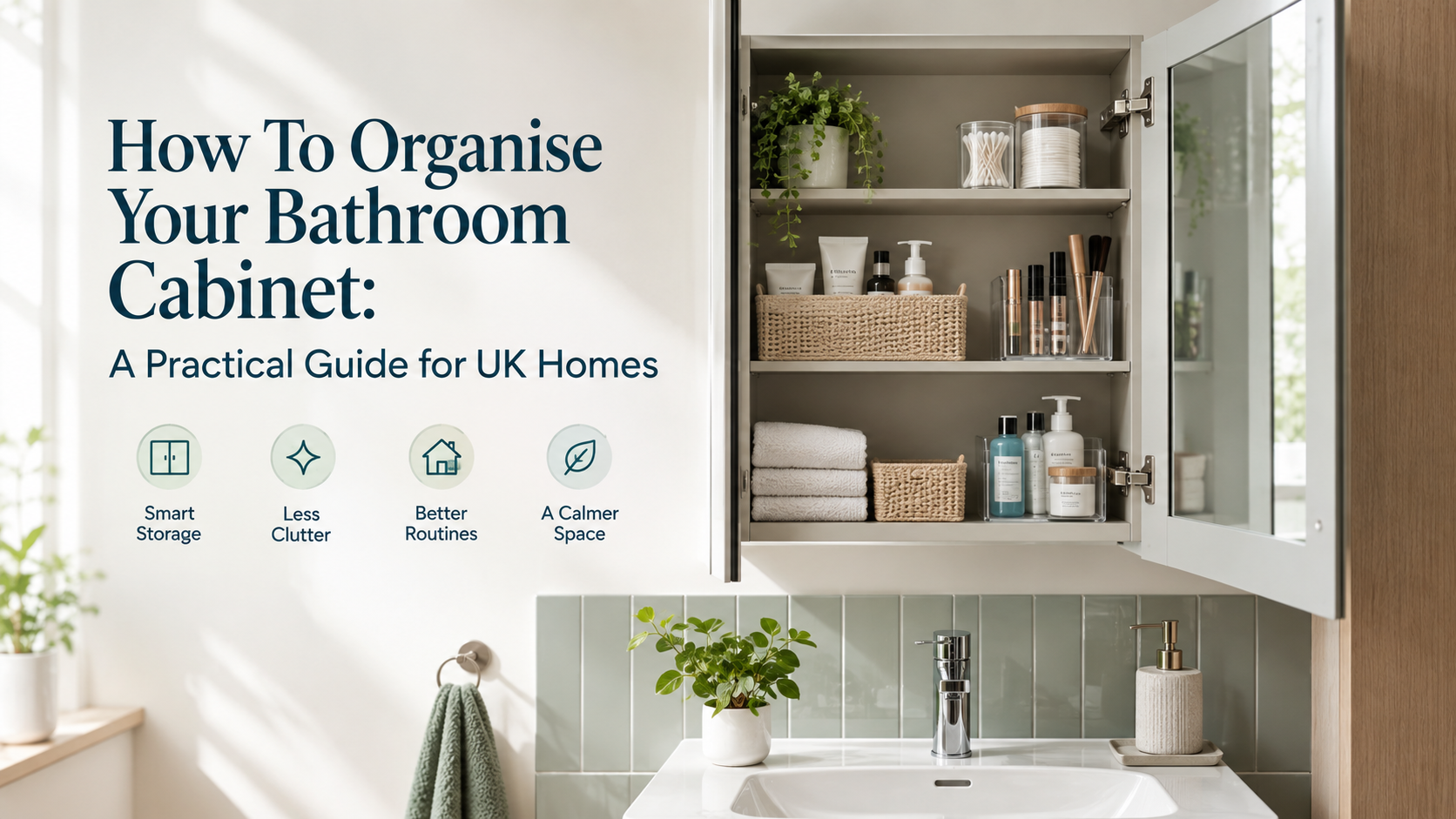
How To Organise Your Bathroom Cabinet: A Practical Guide for UK Homes
Somewhere between the toothpaste tube that never quite closes and the three half-used bottles of shampoo, most bathroom cabinets in the UK have quietly become a small drawer of chaos. It's not a design flaw, it's simply what happens when a compact space is asked to hold everything from daily skincare to first-aid kits, hair tools, and the odd travel-size bottle from a holiday two summers ago. Given that the average UK bathroom measures under five square metres according to housing surveys, and that a growing share of homes are flats, terraces, or period conversions with limited storage built in, the humble bathroom cabinet carries more weight than its size suggests.
This guide walks through a practical, room-by-room approach to bathroom cabinet organisation that suits the realities of UK homes: smaller footprints, shared households, humidity from limited ventilation, and the mix of old and new fittings that many properties have. Along the way, we'll look at how the right storage furniture, rather than just tidier habits, can make a lasting difference.
Why Bathroom Storage Deserves More Thought Than It Gets
Bathrooms are unusual rooms. They're used by every member of the household, often several times a day, under time pressure, and in a space that's rarely bigger than a box room. Unlike a kitchen or wardrobe, there's little room for trial and error with layout, a cabinet that doesn't work sits awkwardly for years because replacing it means retiling, replumbing, or at least redrilling.
In the UK specifically, a few factors make this more pressing:
- Older housing stock. A large proportion of UK homes were built before 1980, often with bathrooms retrofitted into what were once box rooms or converted cupboards. This means storage was rarely designed in from the start.
- Humidity and limited ventilation. Many UK bathrooms, particularly in flats and terraced houses, don't have external windows, relying instead on extractor fans. This affects what materials and finishes make sense for cabinets and shelving.
- Shared and multi-generational households. With house-sharing and multi-generational living on the rise, a single bathroom often serves several adults with entirely different routines and product needs.
- Rental restrictions. A significant share of the population rents, which limits permanent changes to plumbing or fixed units, making freestanding and semi-fitted storage more relevant than ever.
Organising a cabinet, then, isn't a cosmetic exercise. It's about making a small, high-traffic, high-humidity room function properly for however many people rely on it.
Step One: Take Stock Before You Tidy
It's tempting to jump straight to buying baskets and dividers, but the first useful step is simply emptying the cabinet and sorting what's inside into rough categories. Most households find their bathroom contents fall into a handful of groups:
- Daily essentials (toothbrushes, cleanser, moisturiser, razors)
- Haircare and styling tools
- Medicines and first aid
- Occasional-use items (shaving kits, hair dye, special-occasion skincare)
- Cleaning products
- Spare or backup stock (extra toothpaste, unopened shampoo)
Once everything is grouped, it becomes much easier to see what's genuinely needed close at hand versus what can live elsewhere, a hallway cupboard, an under-sink unit, or simply the bin, in the case of expired products. A good rule many organisers use: if a product hasn't been touched in six months and isn't a seasonal item, it's probably safe to let go of it.
This decluttering step matters for a second reason too, it directly affects how much cabinet capacity a household actually needs, which in turn shapes what storage furniture makes sense when renovating or upgrading a bathroom.
Step Two: Understand the Type of Storage You're Working With
Not all bathroom storage serves the same purpose, and mixing up the roles of different units is one of the most common causes of clutter. Broadly, UK bathrooms tend to feature some combination of:
| Storage Type | Best Suited For | Typical Location |
|---|---|---|
| Mirror cabinet | Daily-use items, medicines, small bottles | Above the basin |
| Vanity unit | Larger items, spare stock, cleaning products | Under the basin |
| Wall-mounted shelving | Towels, decorative items, frequently reached-for products | Alongside the basin or over the bath |
| Freestanding cabinet | Overflow storage, linens, family-sized households | Corner or unused wall space |
| Recessed/niche storage | Shower essentials | Inside the shower enclosure |
A mirror cabinet is arguably the hardest-working piece of bathroom furniture in most UK homes, since it combines a mirror (a fixture almost every bathroom needs anyway) with concealed storage directly at eye level. Jaquar UK's range of mirror cabinets and mirrors is designed with exactly this dual purpose in mind, offering shelving that suits daily essentials without adding visual clutter to a small room.
Meanwhile, a vanity unit beneath the basin tends to be better suited to bulkier or less frequently used items, cleaning supplies, spare toiletries, hairdryers, simply because it usually offers more depth and often includes a mix of shelving and drawer space. Jaquar's vanity units are built with practical UK bathroom layouts in mind, offering a range of sizes that work in smaller cloakrooms as well as larger family bathrooms.
Step Three: Zone the Cabinet by Use, Not Just by Category
Once you know what you're storing and where, the next step is arranging items within each unit so that daily routines are quick and intuitive. Professional organisers often use a "zone" approach rather than simply grouping by product type:
- Eye-level zone, items used every single day: toothbrushes, cleanser, daily moisturiser
- Reach-up zone (top shelf), occasional-use or backup items that don't need frequent access
- Reach-down zone (bottom shelf or under-basin), heavier or bulkier items: cleaning products, spare bottles, hair tools
- Door-mounted or side storage, smaller items like cotton pads, nail care tools, or travel bottles
This is where the internal layout of a cabinet matters as much as its size. Adjustable shelving, for instance, allows a household to reconfigure the zones as needs change, a young couple's bathroom storage needs look very different five years later once children, or ageing parents, or new routines enter the picture. This is a detail worth checking when choosing between cabinet models, rather than assuming all mirror cabinets or vanity units offer the same internal flexibility.
Step Four: Choose Materials That Suit a Humid, Small-Space Environment
UK bathrooms, as noted, often run more humid than in countries with better natural ventilation, and this has a real effect on cabinet longevity. Chipboard or basic MDF units without proper sealing can swell, warp, or develop mould over a few years in a poorly ventilated bathroom. This is one of the less glamorous but genuinely important factors in choosing bathroom furniture.
A few practical points worth keeping in mind:
- Moisture-resistant finishes on cabinet exteriors and shelving reduce the risk of warping over time.
- Ceramic, glass, or treated finishes on countertops and basins associated with vanity units tend to hold up better than untreated surfaces.
- Good door seals and hinges prevent steam ingress into cabinet interiors, protecting stored items like cotton products or paper packaging from dampness.
- Ventilation around, not just inside, the cabinet matters, placing storage too close to a shower without adequate airflow can undo even the best-built unit over time.
Jaquar UK's bathroom furniture range is built with these UK-specific conditions in mind, using materials and finishes designed to hold up to daily steam and humidity rather than just looking good on day one.
Step Five: Organise for Your Household, Not a Generic Ideal
A single professional living alone has very different bathroom needs to a family of four sharing one bathroom, or a shared house with several housemates rotating through the same space each morning. It helps to organise with your actual household in mind:
For solo households or couples
A single mirror cabinet paired with a compact vanity unit is often enough, provided decluttering happens every few months. Assigning a shelf each within the cabinet avoids the classic problem of one person's items slowly taking over the whole space.
For families with children
Lower shelves or drawers can be designated for children's products, lower down, easier to reach, away from medicines and razors which belong higher up or in a lockable section. Clear labelling, even something as simple as small tags on shelves, helps children (and adults) put things back where they belong.
For shared houses
Splitting storage explicitly, one shelf per person, colour-coded baskets, or even separate small caddies within a larger cabinet, avoids the friction that often comes from communal bathroom storage. A larger vanity unit with multiple compartments can make this considerably easier than trying to divide a single small mirror cabinet between three or four people.
For smaller cloakrooms or ensuites
Where floor and wall space is genuinely limited, a well-designed mirror cabinet that combines mirror, lighting, and storage in one footprint often makes more sense than trying to fit separate elements in. This is a common scenario in UK new-builds, where ensuites and downstairs cloakrooms are frequently compact by design.
Step Six: Build a Maintenance Routine, Not a One-Off Reset
Even the best-organised cabinet drifts back into clutter without some form of ongoing routine. A few habits that organising specialists commonly recommend:
- A quick weekly reset, a couple of minutes putting stray items back into their designated zones
- A seasonal deep declutter, roughly every three to four months, checking use-by dates on medicines and skincare, and removing anything unused
- A one-in, one-out approach for consumables, when a new bottle of shampoo is opened, the empty one goes straight in the recycling rather than lingering on a shelf
- Wiping down shelves during the seasonal declutter, particularly in humid UK bathrooms where residue and light mould can build up unnoticed behind bottles
None of this requires elaborate systems, the goal is simply to make maintaining order easier than letting clutter build back up, which is largely a function of how intuitive the original zoning was in step three.
A Note on Sustainability and Long-Term Value
There's a growing awareness among UK homeowners that bathroom renovations shouldn't mean replacing furniture every few years. Choosing cabinets and vanity units built from durable, moisture-resistant materials, rather than the cheapest available option, tends to work out better both financially and environmentally over a ten-year horizon, since it avoids the cycle of replacing swollen or damaged units. This is worth factoring in during any renovation or refit, alongside purely aesthetic considerations.
Frequently Asked Questions
How often should I declutter my bathroom cabinet?
Most organising professionals suggest a light check-in monthly, alongside a more thorough declutter every three to four months, when it's easier to notice expired medicines or unused skincare that's built up.
What's the difference between a mirror cabinet and a vanity unit?
A mirror cabinet is typically wall-mounted above the basin, combining a mirror with enclosed shelving for daily essentials. A vanity unit sits beneath the basin, usually offering more storage volume for bulkier or less frequently used items.
Is it worth choosing moisture-resistant bathroom furniture in the UK?
Yes, particularly in bathrooms without external windows or strong ventilation, which describes a significant portion of UK properties. Moisture-resistant finishes reduce the risk of warping, swelling, and mould build-up over time.
How can I organise a small ensuite or cloakroom with limited storage?
Prioritise combined units, a mirror cabinet that includes storage and lighting in one fitting, over multiple separate pieces, and keep only frequently used items in the main cabinet, storing overflow elsewhere in the home.
Should bathroom storage be divided by household member?
In shared households or families, yes, assigning individual shelves, drawers, or baskets significantly reduces the daily friction of communal storage and makes it easier to maintain order over time.
Bringing It All Together
Organising a bathroom cabinet isn't really about achieving a picture-perfect shelf for a single afternoon. It's about understanding what a household actually needs day to day, choosing storage furniture that suits the realities of UK bathrooms, smaller spaces, higher humidity, shared use, and building light routines that keep things that way. Done well, it turns a small, often-overlooked room into one that quietly works, morning after morning, without anyone having to think about it too hard.


-54x36.jpg)


