
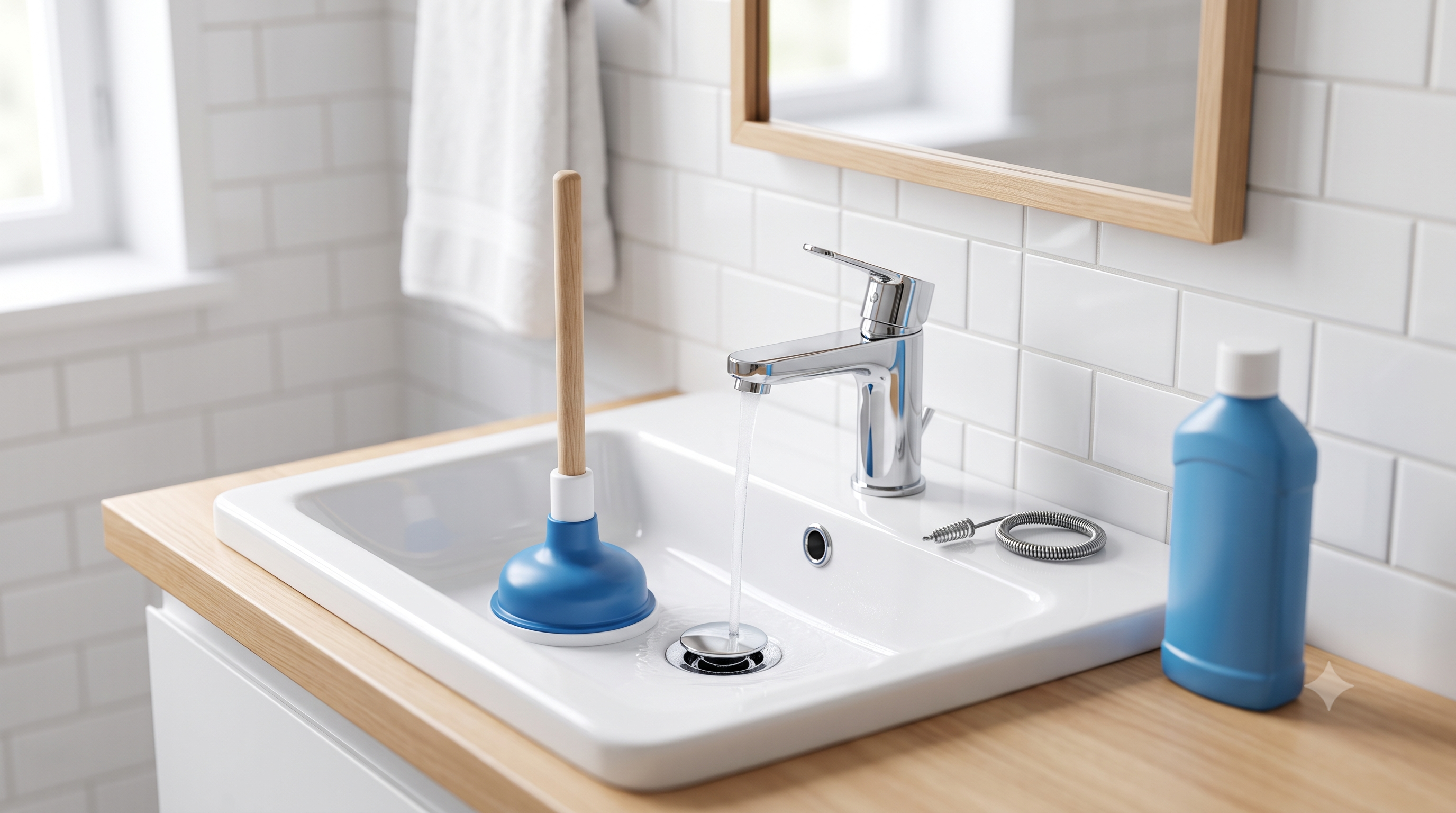
A bathroom sink rarely gives much warning before a drainage problem becomes noticeable. One day the water disappears normally, and the next it starts pooling around the plughole while brushing your teeth or washing your hands. A slow-draining basin may seem like a minor inconvenience, but it can be an early sign that hair, soap residue, toothpaste, limescale or other debris is accumulating inside the waste or trap.
The good news is that many bathroom sink blockages can be dealt with using simple methods before they develop into a more serious plumbing problem. The key is to identify what is causing the restriction, start with the least aggressive method and escalate only when necessary.
This guide explains how to diagnose and clear a blocked bathroom sink, including methods for standing water, stubborn blockages and waste traps. It also covers what to avoid, when professional help is appropriate and how regular maintenance can reduce the likelihood of another blockage.
What Causes a Bathroom Sink Drain to Block?
Bathroom sink blockages usually develop gradually. Unlike some kitchen drains, bathroom basins are not typically exposed to large quantities of food waste, but they regularly receive hair, soap, toothpaste, skincare products and other materials that can accumulate over time.
Hair and Personal Care Products
Hair is one of the most common contributors to bathroom basin blockages. Individual strands can become caught around the waste mechanism or inside the trap. Soap and other bathroom products then stick to the hair, gradually forming a larger mass.
Even short strands of hair can contribute to a blockage when they accumulate over weeks or months.
Soap Residue
Soap residue can combine with hair, mineral deposits and other debris to create a sticky layer inside the drainage system. Traditional bar soaps can leave more residue than some liquid products, although either can contribute to build-up.
Toothpaste and Cosmetics
Small quantities of toothpaste, shaving products, moisturiser and cosmetics are routinely washed into a bathroom basin. Individually, these materials are unlikely to cause an immediate problem, but repeated accumulation can contribute to slower drainage.
Limescale and Mineral Deposits
Mineral deposits can build up around the waste opening and inside plumbing over time. This can reduce the effective diameter of the drainage passage and make it easier for hair and other debris to become trapped.
Homes with harder water may experience mineral build-up more readily, making regular cleaning particularly useful.
Objects Falling Into the Basin
Small objects such as jewellery, bottle caps or pieces of packaging can occasionally enter the waste opening. Unlike gradual build-up, a foreign object can cause a sudden blockage or significantly restrict drainage.
Problems Further Along the Pipework
Not every slow basin is blocked directly beneath the plughole. A restriction may be present further along the waste pipe or within a shared drainage connection.
If cleaning the basin waste and trap does not improve drainage, the problem may require further investigation.
How Do You Know If a Bathroom Sink Is Blocked?
A completely blocked basin is easy to identify because water remains in the bowl. However, many blockages begin as partial restrictions.
| Symptom | Possible Cause | Recommended First Step |
|---|---|---|
| Water drains slowly | Hair, soap or residue build-up | Clean the waste opening and use a plunger |
| Water does not drain | Significant blockage | Remove standing water and inspect the waste |
| Gurgling sound | Restricted or poorly flowing pipework | Investigate the waste and trap |
| Unpleasant smell | Organic debris or trap issue | Clean the waste and inspect the trap |
| Water backs up quickly | Severe restriction | Use a plunger or drain snake |
| Recurring blockage | Deeper plumbing issue or repeated build-up | Consider professional inspection |
How to Unclog a Bathroom Sink Drain
The best approach is to start with simple physical cleaning before moving to more intensive methods. There is no advantage in immediately using aggressive chemicals if the blockage can be removed by clearing the waste or trap.
1. Remove Visible Debris
Start by inspecting the basin waste.
Remove the plug or open the waste mechanism if possible. Look for visible hair, soap residue or other debris around the opening.
Wear rubber gloves and remove anything you can reach safely. A small plastic drain-cleaning tool, tweezers or a suitable hook can help remove hair close to the surface.
Do not push the debris further into the pipe. The objective is to pull the material out rather than compacting it deeper inside the drainage system.
2. Clean Around the Basin Waste
Once the visible debris has been removed, clean the area surrounding the waste opening.
Residue can accumulate around the underside of the plug or inside the waste fitting. Removing this build-up can improve drainage where the restriction is close to the basin.
If the basin uses a click-clack waste, operate it gently and inspect the mechanism for accumulated residue. Never force a mechanism that feels stuck.
3. Try Hot Water
For a minor build-up, hot water may help soften soap residue and other deposits.
Use hot water rather than automatically pouring boiling water into the basin. Extremely hot water may not be suitable for every type of plumbing installation, seal or connected component.
Pour the water gradually and observe whether drainage improves.
If the water remains in the basin, move to a mechanical method rather than repeatedly adding hot water.
4. Use a Plunger
A plunger is one of the most useful tools for dealing with a blocked bathroom sink.
For a basin, a small cup-style sink plunger is generally more practical than a large toilet plunger.
Before plunging, remove enough standing water to leave a manageable amount covering the plunger cup. Place the plunger firmly over the waste opening to create a seal.
Push down gently at first, then pull upwards while maintaining the seal. Repeat the movement several times.
The pressure changes created inside the waste pipe can help loosen material restricting the flow.
5. Use Bicarbonate of Soda and White Vinegar
A combination of bicarbonate of soda and white vinegar is a commonly used household method for dealing with minor organic residue and build-up.
However, it should not be treated as a guaranteed solution for every type of blockage. It is unlikely to remove a solid object or a dense mass of hair, for example.
Use the method only when appropriate and never combine it with commercial chemical drain cleaners.
6. Clean the Basin Trap
If the blockage is located below the basin, cleaning the trap can be more effective than treating the waste opening from above.
The trap is the section of plumbing beneath the basin designed to retain water and prevent unpleasant drainage gases from entering the room.
Place a suitable container beneath the trap before disconnecting it. Water and debris can be released when the trap is opened.
Remove the trapped debris, clean the components and reconnect the trap carefully. Check all connections for leaks before returning the basin to normal use.
7. Use a Drain Snake
A drain snake can help when the blockage is further inside the waste pipe.
Feed the tool into the drainage opening carefully and follow the manufacturer's instructions. Avoid excessive force, particularly if you do not know the construction of the pipework.
The objective is to break up or retrieve the obstruction rather than damage the plumbing.
8. Inspect the Pipework if the Problem Continues
If the basin remains blocked after cleaning the waste, trap and accessible pipework, the restriction may be further downstream.
At this stage, repeatedly trying household remedies may not solve the underlying problem. A qualified plumber can investigate the drainage system and determine whether the blockage is isolated to the basin or connected to a wider plumbing issue.
How to Unclog a Bathroom Sink With Standing Water
Standing water makes a blocked basin more difficult to work on because you cannot easily access the waste opening or create a clean working area.
Step 1: Remove Some of the Water
Use a cup, container or suitable household tool to remove excess water from the basin.
Transfer the water into another suitable drain rather than allowing it to spill over the basin or surrounding furniture.
Step 2: Check the Waste Opening
Once the water level is low enough, inspect the waste opening.
Look for hair, soap residue or an obvious object blocking the opening. Remove anything accessible without forcing it further into the pipe.
Step 3: Use a Plunger
Add enough water to cover the plunger cup and create a seal.
Place the plunger over the waste and use controlled up-and-down movements. Keep the seal intact throughout the process.
After several movements, remove the plunger and check whether the water starts to drain.
Step 4: Inspect the Trap
If plunging does not work, the blockage may be located in the trap.
Cleaning the trap can remove accumulated hair, soap residue and other debris that a plunger cannot dislodge.
Step 5: Escalate if Necessary
If standing water remains after these steps, particularly if the blockage is severe or recurring, professional investigation may be the most appropriate option.
How to Unclog a Bathroom Sink With Bicarbonate of Soda and Vinegar
This method is best suited to minor build-up rather than solid obstructions or severe blockages.
What You Will Need
- Bicarbonate of soda
- White vinegar
- Warm water
- Rubber gloves
- A cloth or drain stopper
Step 1: Clear Standing Water
Remove as much standing water as practical before beginning. The ingredients work more effectively when they can reach the waste opening rather than being heavily diluted.
Step 2: Clean the Waste Opening
Remove visible hair and debris first. Household mixtures should not be used as a substitute for physically removing an obstruction that is already accessible.
Step 3: Add Bicarbonate of Soda
Place a suitable quantity of bicarbonate of soda into the waste opening.
Step 4: Add White Vinegar
Pour white vinegar into the opening. The mixture will react and fizz.
This reaction can help loosen some residue around the waste and pipework, although it should not be expected to dissolve every type of blockage.
Step 5: Allow It to Work
Leave the mixture for a short period while keeping the area undisturbed.
Step 6: Flush With Warm Water
Flush the basin carefully with warm water and check whether drainage has improved.
If the blockage remains, use a plunger or inspect the trap rather than repeatedly applying the same mixture.
Can You Use Chemical Drain Cleaner in a Bathroom Sink?
Chemical drain cleaners can be effective for certain types of blockages, but they should be treated with caution.
Always read and follow the manufacturer's instructions, including guidance regarding the materials and plumbing systems with which the product is compatible.
Most importantly, never mix different drain-cleaning chemicals or combine chemical drain cleaner with household substances such as vinegar, bleach or other cleaning products. Dangerous chemical reactions can occur.
If a chemical cleaner has already been used, tell a plumber before they work on the drainage system. Residual chemicals may present a hazard.
How to Clean a Bathroom Sink Trap
The trap is an important part of the basin drainage system and can become a collection point for debris.
A typical cleaning process involves:
- Place a container beneath the trap.
- Protect the surrounding cabinet or floor from spilled water.
- Disconnect the trap according to its design and installation instructions.
- Allow trapped water and debris to drain into the container.
- Remove accumulated material.
- Clean the accessible components.
- Reconnect the trap securely.
- Run water through the basin.
- Check every connection for leaks.
If you are unfamiliar with plumbing connections, do not force fittings or attempt to dismantle components that you cannot confidently reconnect.
Understanding the Main Bathroom Sink Drain Components
| Component | Purpose |
|---|---|
| Basin waste | Connects the basin opening to the drainage system and controls water flow depending on the waste design. |
| Plug or click-clack mechanism | Allows the waste opening to be opened or closed on compatible designs. |
| Overflow | Provides an additional route for water when the basin reaches the overflow level. |
| Bottle trap or waste trap | Connects the waste to the drainage system and retains water to help prevent unpleasant gases from entering the room. |
| Waste pipe | Carries water away from the basin towards the drainage system. |
Understanding these components makes it easier to identify where a blockage may be located.
How Basin Waste Design Can Affect Drain Maintenance
The waste is a small component, but its design can influence how easily the basin is cleaned and maintained.
Jaquar UK's basin waste range includes slotted and unslotted options, as well as click-clack mechanisms and bottle traps in a range of finishes. The correct configuration depends on the basin design, particularly whether it has an overflow.
A slotted waste is designed for a basin with an overflow, while an unslotted waste is intended for a basin without one. Click-clack wastes use a push-operated mechanism to open and close the drain.
This distinction is important when replacing a waste. The correct fitting should be selected based on the basin's specifications rather than appearance alone.
How to Prevent Bathroom Sink Drain Blockages
Preventing a blockage is generally easier than dealing with a completely blocked basin.
Use a Hair Catcher Where Appropriate
A suitable hair catcher can reduce the amount of hair entering the drainage system. It should be cleaned regularly so that it does not itself become a restriction.
Clean the Waste Regularly
Remove visible debris from the waste opening as part of your normal bathroom cleaning routine.
Do Not Wash Large Debris Into the Basin
A bathroom basin should not be used to dispose of tissues, cotton pads, wipes, packaging or other materials that can accumulate inside the waste pipe.
Clean Around the Plug Mechanism
Click-clack wastes and other closing mechanisms can collect hair and residue around their moving parts. Regular inspection can prevent build-up from becoming significant.
Deal With Slow Drainage Early
A slow basin is often easier to clear than a completely blocked one. If you notice that water is taking increasingly longer to disappear, investigate the cause rather than waiting for the drain to stop completely.
Keep the Basin and Surrounding Area Clean
Regular cleaning reduces the amount of residue entering the waste and makes it easier to notice changes in drainage performance.
Bathroom Sink Drain Maintenance Checklist
| Task | Suggested Frequency |
|---|---|
| Remove visible hair from the waste | Weekly |
| Clean the basin waste opening | Weekly |
| Check for slow drainage | Regularly |
| Inspect the click-clack mechanism | Monthly |
| Check accessible plumbing for leaks | Monthly |
| Clean the trap | As required |
| Professional inspection | When blockages repeatedly return |
These are general maintenance intervals rather than strict requirements. The appropriate frequency depends on how heavily the basin is used and how quickly debris accumulates.
What Not to Do When Unclogging a Bathroom Sink
Do Not Mix Cleaning Chemicals
Never mix different drain cleaners or combine drain chemicals with bleach, vinegar or other household cleaning products.
Do Not Use Excessive Force
Forcing a plunger, snake or fitting can damage components. Apply controlled pressure and stop if something does not move as expected.
Do Not Keep Adding More Products
If one treatment has not worked, repeatedly adding more of the same product is unlikely to solve a physical obstruction.
Do Not Ignore Leaks
A basin that drains correctly but leaks underneath still requires attention. Water around plumbing connections can damage cabinetry, flooring and surrounding materials.
Do Not Pour Boiling Water Without Considering the Plumbing
Very hot water is not universally appropriate for every drainage installation. Warm or hot water is generally a more cautious option where appropriate, but manufacturer's guidance should take priority.
When Should You Call a Plumber?
Not every blockage should be treated as a DIY job.
Professional help is advisable when:
- The basin remains completely blocked after reasonable cleaning attempts.
- The blockage returns repeatedly.
- Several bathroom fixtures are draining slowly.
- Water is backing up into another fixture.
- There is a persistent sewage smell.
- The waste or trap is leaking.
- Pipework needs to be altered.
- You cannot safely identify the cause of the blockage.
- Chemical drain cleaner has already been used and further work is required.
- You suspect a blockage within concealed pipework.
Recurring blockages can be particularly important to investigate because the underlying problem may be further along the drainage system rather than at the basin itself.
How Long Does It Take to Unclog a Bathroom Sink?
A minor blockage close to the waste opening may take only a few minutes to clear once the cause has been identified.
A blockage inside the trap may take longer because the plumbing needs to be accessed and cleaned.
More serious restrictions inside concealed or shared drainage pipework can require professional investigation.
The important point is not to judge the severity of the problem solely by how long it has existed. A blockage that developed gradually can eventually become completely restrictive.
Can a Blocked Sink Be Prevented Completely?
No drainage system can be guaranteed to remain completely free from blockages indefinitely. Bathroom sinks are used every day, and small quantities of hair, soap and personal-care products inevitably enter the drainage system.
However, good maintenance can significantly reduce the likelihood of serious build-up.
Regularly clearing visible debris, cleaning the waste, responding to slow drainage and avoiding unsuitable materials are simple measures that can make a noticeable difference.
How Bathroom Product Selection Supports Easier Maintenance
Drainage should be considered as part of the complete basin installation rather than as an afterthought.
The basin, waste, trap and surrounding plumbing need to be compatible and correctly installed. Where plumbing remains visible, components such as bottle traps can also contribute to the overall appearance of the washbasin area.
Jaquar UK's bathroom collection includes basins, taps, basin wastes and bottle traps, allowing these elements to be considered together when planning a washbasin installation.
The practical priority should always be compatibility, correct installation and accessibility for future maintenance. Appearance comes after those requirements have been satisfied.
Quick Guide: The Best Way to Unclog a Bathroom Sink
| Situation | Recommended Approach |
|---|---|
| Hair visible at waste | Remove it manually |
| Minor soap residue | Clean waste and flush with warm water |
| Slow drainage | Clean waste and try a plunger |
| Standing water | Remove excess water and use a plunger |
| Blockage in trap | Clean the trap if safely accessible |
| Deeper blockage | Use a suitable drain snake or seek professional help |
| Recurring blockage | Arrange professional inspection |
Frequently Asked Questions
What is the quickest way to unclog a bathroom sink?
Start by removing visible hair and debris from the waste opening. If the basin is still slow or blocked, a suitable sink plunger is often the next practical step. If the blockage is inside the trap, cleaning the trap may be necessary.
How do you unclog a bathroom sink with standing water?
Remove as much standing water as possible, inspect the waste opening and remove visible debris. Then use a sink plunger while maintaining a good seal over the waste. If this does not work, inspect the trap if it can be accessed safely.
Can bicarbonate of soda and vinegar unclog a bathroom sink?
Bicarbonate of soda and white vinegar can help loosen some minor residue, but they are not suitable for every blockage. They are unlikely to remove a solid object or a dense mass of hair. Never combine this method with chemical drain cleaners.
Can hot water unclog a bathroom sink?
Hot water can help soften some soap residue and minor build-up. However, it is not a universal solution for blocked drains. Avoid assuming that boiling water is suitable for every plumbing installation and follow relevant manufacturer's guidance.
Can bleach unclog a bathroom sink?
Bleach should not be relied upon as a general solution for blocked drains. It is primarily a disinfecting and cleaning product rather than a reliable method for removing physical blockages. More importantly, bleach must never be mixed with other cleaning or drain-cleaning chemicals.
What is the best tool for unclogging a bathroom sink?
A suitable sink plunger is one of the most useful first-line tools for a bathroom basin. For blockages located further inside the pipe, a drain snake may be more appropriate. The correct tool depends on the location and nature of the obstruction.
How do you remove hair from a bathroom sink drain?
Remove the waste cover or plug where possible and pull out accessible hair using gloves or a suitable cleaning tool. Avoid pushing the hair further down the pipe. Regular removal of visible hair can help prevent larger blockages.
How do you clean a bathroom sink trap?
Place a container beneath the trap, disconnect it according to its design and allow the trapped water and debris to drain into the container. Clean the components, reconnect them securely and check for leaks. If you are not confident working with plumbing connections, use a qualified plumber.
Why is my bathroom sink draining slowly?
Slow drainage is commonly caused by accumulated hair, soap residue, toothpaste, mineral deposits or debris in the waste or trap. If cleaning the accessible components does not improve drainage, the restriction may be further along the pipework.
Why does my bathroom sink smell even after cleaning it?
An unpleasant smell may indicate accumulated organic material, a dirty trap, a drainage problem or an issue with the plumbing arrangement. If cleaning the accessible components does not resolve the smell, professional inspection may be appropriate.
Can a click-clack basin waste become blocked?
Yes. Hair, soap residue and other debris can accumulate around the waste mechanism or below it. The mechanism should be kept clean and operated gently. If it becomes difficult to operate, avoid forcing it and investigate the cause.
Does a bottle trap prevent sink blockages?
A bottle trap is designed primarily to form a water seal and connect the basin waste to the drainage system. It can collect debris, which means it may also require cleaning when a blockage develops. It should not be considered a substitute for regular drain maintenance.
How often should I clean my bathroom sink drain?
Visible debris should be removed regularly, particularly hair around the waste opening. Deeper cleaning can be carried out when drainage becomes slower or as part of routine bathroom maintenance. The appropriate frequency depends on how often the basin is used and how quickly residue accumulates.
When should I call a plumber for a blocked bathroom sink?
Call a qualified plumber if the blockage does not respond to reasonable cleaning attempts, repeatedly returns, affects multiple fixtures, causes leaks or appears to be located within concealed or shared pipework.
Final Thoughts
A blocked bathroom sink is usually easier to resolve when it is addressed early. Start by identifying whether the problem is caused by visible debris, build-up around the waste, a blocked trap or a deeper restriction in the drainage system.
For minor blockages, manual cleaning, warm water and a suitable plunger are sensible first steps. Bicarbonate of soda and white vinegar may help with limited residue, while a drain snake or trap cleaning can be useful when the obstruction is located further inside the plumbing.
Just as importantly, avoid making the problem worse. Do not mix chemicals, force plumbing components or repeatedly apply treatments without identifying the cause.
Good bathroom maintenance is largely about small, consistent actions. Keeping the basin waste clean, removing hair before it enters the drain and responding to slow drainage early can help keep everyday basin use running smoothly.
When planning or upgrading a bathroom, the basin, waste, trap and tap should also be considered as connected parts of the same installation. Choosing compatible components and ensuring that plumbing remains accessible for maintenance can make future cleaning and troubleshooting considerably easier.


-54x36.jpg)


