
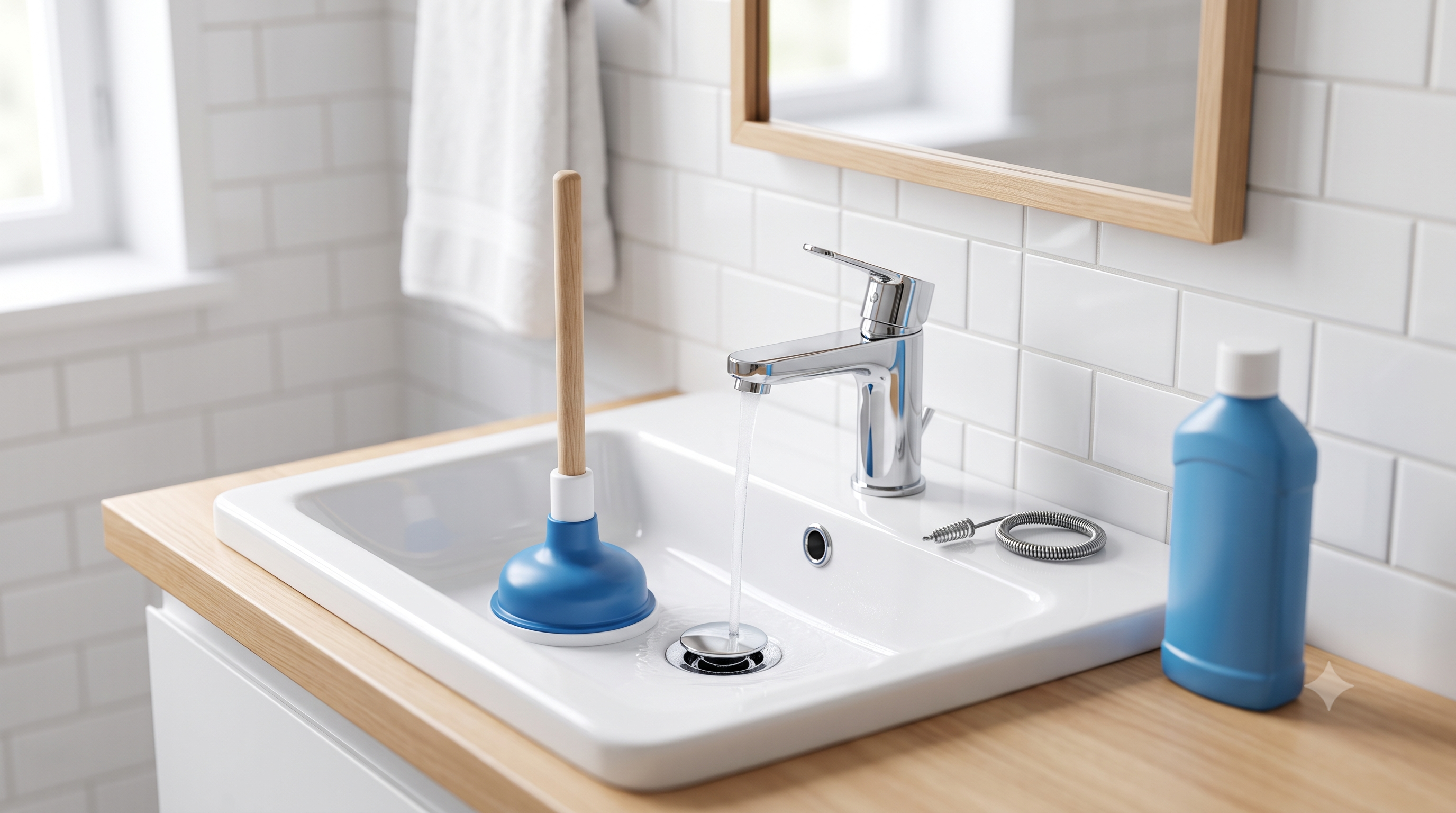
A slow-draining basin or shower can start as a minor inconvenience and quickly become part of your daily routine. Water takes longer to disappear, standing water collects around your feet in the shower, or a familiar bathroom sink suddenly becomes difficult to use. In most cases, the cause is relatively simple, but the right solution depends on where the blockage is located and what is causing it.
Bathroom drains deal with a mixture of hair, soap residue, toothpaste, skin oils, limescale and everyday debris. Over time, these materials can collect around the waste opening or further inside the pipework. Knowing how to identify the likely cause before reaching for a chemical cleaner can make unblocking the drain safer, easier and more effective.
This guide explains how to unclog a drain using practical methods suitable for common UK bathrooms. It covers shower drains, bath wastes and basin drains, explains what to do when there is standing water, and outlines when a blockage has moved beyond a straightforward DIY job.
What Causes a Blocked Drain?
A drain rarely becomes completely blocked without warning. More often, water begins draining slowly because material has gradually accumulated inside the waste or pipework.
Hair and soap residue
Hair is one of the most common causes of bathroom drainage problems. It can become caught around the waste opening and combine with soap, shampoo and conditioner residue. The resulting mass can become increasingly difficult for water to pass through.
Shower drains are particularly susceptible because loose hair is washed directly towards the waste during bathing.
Limescale and mineral build-up
Hard water areas can experience greater mineral deposits within bathroom fittings and pipework. Limescale itself may not always create a complete blockage, but deposits can make surfaces less smooth and provide places for hair, soap and other debris to collect.
Soap, toothpaste and personal-care products
Basins regularly receive toothpaste, shaving residue, skincare products and soap. Small quantities may wash away easily, but repeated build-up can eventually restrict the flow of water.
Foreign objects and debris
Small objects can occasionally fall into a basin, bath or shower waste. Bathroom cleaning cloth fibres, packaging fragments and other debris may also contribute to a blockage.
Problems further along the pipework
If cleaning the waste opening does not improve drainage, the restriction may be further inside the waste pipe. A recurring blockage can also indicate an issue with the pipe's fall, connection or wider drainage system.
How to Tell If Your Drain Is Blocked
The clearest sign is slow drainage. However, there are several other symptoms worth noticing:
- Water remains in the basin after normal use.
- Water pools around your feet while showering.
- The bath takes noticeably longer to empty.
- You hear gurgling sounds from a waste.
- An unpleasant smell comes from the drain.
- Water rises when another bathroom fitting is used.
- A blockage disappears temporarily and then returns.
A single slow drain is often easier to investigate than several drains becoming slow at the same time. If multiple fixtures are affected, the issue may be further along the drainage system and professional advice may be appropriate.
How to Unclog a Drain: 8 Effective Methods
The best approach is to start with the simplest method and increase the level of intervention only when necessary. There is little benefit in immediately using aggressive chemicals when a blockage is sitting around the waste opening and can be physically removed.
1. Remove visible debris
Start by removing the waste cover or stopper if it is designed to be removed. Check for visible hair and other debris around the opening and remove it carefully.
Wear suitable household gloves and dispose of the material rather than pushing it further into the pipe.
This simple step can sometimes restore normal drainage without requiring any additional treatment.
2. Flush the drain with hot water
Hot water can help loosen some soap and greasy residue. Pour it gradually into the waste rather than tipping a large volume in at once.
However, avoid assuming that boiling water is suitable for every installation. Very high temperatures may not be appropriate for all pipe materials, seals or bathroom components. Warm or hot tap water is a more cautious option where the pipework specification is unknown.
3. Use a plunger
A plunger creates pressure and suction that can help dislodge a localised blockage.
- Add enough water to cover the plunger's rubber cup.
- Position the plunger firmly over the waste opening.
- Create a good seal around the opening.
- Pump the plunger several times using controlled movements.
- Lift it and check whether the water begins to drain.
For a basin with an overflow opening, covering the overflow temporarily with a damp cloth can help maintain pressure during plunging.
Do not use excessive force. The objective is to move the blockage, not to place unnecessary stress on the waste assembly or pipe connections.
4. Try bicarbonate of soda and vinegar
A combination of bicarbonate of soda and white vinegar is a commonly used household method for dealing with light organic residue and odours.
It should not be treated as a guaranteed solution for a solid blockage. If hair, an object or a substantial accumulation is physically obstructing the pipe, mechanical removal is usually more appropriate.
5. Use bicarbonate of soda and salt
A mixture of bicarbonate of soda and salt can be used as a simple household cleaning approach before flushing the waste with warm water.
This method is more appropriate for maintenance and minor residue than for a severely blocked drain with standing water.
6. Clean the waste trap
Some basin blockages occur in the trap directly beneath the basin. If you are comfortable accessing the plumbing and the installation allows it, the trap can be removed and cleaned.
Place a suitable container underneath before loosening the connections because water and debris will remain inside the trap.
Once cleaned, check the seals before reassembling the trap and run water slowly to confirm that there are no leaks.
7. Use a drain snake or auger
A suitable drain snake can help reach blockages that are located further inside the pipe. Feed the tool carefully rather than forcing it through resistance.
This method can be particularly useful when a plunger has not cleared the restriction and the blockage is believed to be caused by hair or accumulated debris.
8. Clean the waste and surrounding components
Regularly cleaning the waste opening, plug or stopper and surrounding area can prevent small deposits from becoming larger restrictions.
This is particularly useful in bathrooms used by several people, where showers and basins experience frequent daily use.
How to Unclog a Drain With Bicarbonate of Soda and Vinegar
This household method is best considered for light build-up rather than severe blockages. It is also important to understand that combining household substances does not make every blocked drain safe or easy to clear.
What you will need
- Bicarbonate of soda
- White vinegar
- Warm water
- A cloth or drain cover
- Household gloves
Step 1: Remove standing water
If the basin or bath contains standing water, remove as much as practical before starting. This allows the ingredients to reach the waste opening rather than becoming heavily diluted.
Step 2: Clear visible debris
Check the waste opening first. If hair or other material is visible, remove it manually rather than relying on the mixture to dissolve it.
Step 3: Add bicarbonate of soda
Place bicarbonate of soda into the waste opening.
Step 4: Add white vinegar
Follow with a measured amount of white vinegar. The ingredients will react and begin to fizz.
Step 5: Allow the solution to work
Leave the mixture for a short period so that the reaction can work on light residue around the waste.
Step 6: Flush with warm water
Flush the drain gradually with warm water and check whether the drainage has improved.
If the blockage remains, avoid repeatedly adding household ingredients. Move to a mechanical method such as a plunger or suitable drain snake, or seek professional assistance if the blockage appears more serious.
How to Unclog a Drain With Standing Water
Standing water makes drain cleaning more difficult because it can prevent cleaning solutions from reaching the blockage effectively. It also provides an indication that the restriction is significant enough to require a more targeted approach.
Remove excess water
Use a container or suitable household tool to remove as much standing water as possible. Dispose of it appropriately and avoid splashing contaminated water around the bathroom.
Check the waste opening
Look for visible hair, soap residue or debris. Removing the obstruction manually may be enough to restore flow.
Use a plunger
A plunger is often the most practical next step. Ensure that the rubber cup forms a good seal and use controlled pumping movements.
Use a drain snake if appropriate
If plunging does not work, a drain snake can be used to reach material that is further inside the pipe. Follow the tool manufacturer's instructions and do not force it through a blockage.
If standing water continues to return or water backs up from another fixture, stop attempting repeated DIY treatments and consider contacting a qualified plumber.
How to Unblock Different Types of Bathroom Drains
Not every bathroom waste behaves in the same way. The location of the blockage, accessibility of the waste and type of fixture should influence the method you choose.
How to Unblock a Shower Drain
Shower wastes frequently collect hair, particularly in households with long hair or several regular shower users.
Start by removing the shower waste cover where accessible. Remove visible hair and debris, then rinse the surrounding area. If water remains slow, try a plunger or suitable drain snake.
A shower that repeatedly develops standing water despite regular cleaning may have a blockage further along the pipework. Persistent odours or recurring slow drainage are also reasons to investigate the wider waste system.
Good bathroom planning can make maintenance easier. Accessible waste components and sensible cleaning routines can reduce the amount of debris that remains around the drain.
How to Unblock a Bathtub Drain
Bath wastes can collect hair, soap, bath oils and other residue. Because bath water often carries larger quantities of product residue than a basin, the waste should be checked regularly.
Remove visible debris first. A plunger can then be used if the blockage is localised. For a more persistent obstruction, a suitable drain snake may help.
When maintaining a bath, take care not to damage the waste cover, overflow fitting or surrounding surface. If the waste is difficult to access, professional assistance may be preferable to forcing the component apart.
How to Unblock a Bathroom Sink Drain
Basins can develop blockages from toothpaste, shaving residue, soap, hair and skincare products.
Start at the waste opening. If the blockage is not visible, check whether the basin trap can be safely accessed. Cleaning the trap can remove accumulated debris without introducing chemical products into the drainage system.
Jaquar UK offers basin wastes and bottle traps in different configurations, including slotted and unslotted basin wastes. The correct configuration depends on the basin and whether it has an overflow arrangement.
Understanding the waste assembly is useful when maintaining or replacing a basin because the visible plug or waste opening is only one part of the complete drainage arrangement.
Bathroom Drain Components: What Do They Do?
| Component | Purpose | What to watch for |
|---|---|---|
| Waste | Allows water to leave the basin, bath or shower | Hair, soap and debris around the opening |
| Trap | Holds water and helps prevent drainage odours entering the room | Accumulated residue or a poor connection |
| Overflow | Provides an additional route for excess water on suitable basins and baths | Build-up and restricted flow |
| Waste pipe | Carries water away from the fixture | Recurring or deeper blockages |
| Waste cover or stopper | Controls or protects access to the waste opening | Hair and debris collecting underneath |
Jaquar UK's bathroom range includes basin wastes and bottle traps alongside basins, taps, showers, baths and other bathroom fittings. Considering these components together is useful when planning a bathroom because drainage performance depends on the complete installation rather than the visible fixture alone.
How to Prevent Bathroom Drain Blockages
Preventing a blockage is generally easier than clearing one. A few simple habits can significantly reduce the amount of material entering the drainage system.
Use a hair catcher where appropriate
A suitable hair catcher can prevent larger strands from entering a shower waste. Clean it frequently so that it does not itself become a restriction.
Clean the waste regularly
Remove visible hair and residue before it travels further into the pipe. A quick check during regular bathroom cleaning can prevent a much larger blockage later.
Do not wash unsuitable materials down the drain
Bathroom drains are designed for wastewater, not for disposing of wipes, cotton buds, packaging, excessive tissue or other solid materials.
Deal with slow drainage early
A slow drain is often easier to resolve than a completely blocked one. If the water begins taking noticeably longer to disappear, investigate the waste rather than waiting until the bathroom cannot drain properly.
Keep bathroom fittings easy to maintain
Maintenance should be considered when choosing bathroom products. A well-planned bathroom allows homeowners to access the areas that require routine cleaning without unnecessarily dismantling fittings.
Choosing Bathroom Products With Maintenance in Mind
Drainage is easy to overlook when choosing bathroom products because much of the plumbing sits beneath or behind the visible fittings. Yet everyday usability depends on how the basin, waste, trap and pipework work together.
For a compact cloakroom, a wall-hung basin can help maintain a more open floor area while still providing a practical washing point. For a family bathroom, a larger basin may be more appropriate where several people use the room throughout the day.
Jaquar UK's basin collection includes wall-hung, countertop, undercounter and pedestal configurations. The choice should be based on available space, storage requirements, installation arrangement and how the basin will be used.
The same principle applies to showering. A bathroom used primarily for quick daily showers may have different requirements from a family bathroom that combines bathing, showering and multiple users.
Jaquar UK's showering collection includes shower heads, handsets, shower hoses, shower outlets, concealed shower valves and other shower components. Selecting products as part of the complete bathroom layout can make both everyday use and long-term maintenance more straightforward.
What Not to Do When Unclogging a Drain
Some common DIY approaches can create more problems than they solve.
Do not mix different chemical drain cleaners
Never mix different drain-cleaning chemicals or combine chemical cleaners with household substances unless the product instructions specifically state that it is safe. Chemical reactions can produce hazardous fumes, heat or splashing.
Do not repeatedly pour chemicals into a blocked drain
If a drain cleaner has not resolved the blockage, adding more does not necessarily make it more effective. Residual chemicals can also create additional risks for anyone who later needs to dismantle the trap or pipework.
Do not force tools through a blockage
Excessive force can damage waste components or connections. Use a suitable tool and follow its instructions.
Do not ignore recurring blockages
A drain that repeatedly blocks may have an underlying problem. Clearing the symptom without addressing the cause can result in the same issue returning.
Do not pour inappropriate liquids down the drain
Bathroom drainage systems are not designed for disposing of paint, solvents, oils, strong cleaning chemicals or other substances that are not intended for wastewater systems.
When Should You Call a Plumber?
DIY methods are suitable for many simple, localised blockages, but not every drainage problem should be handled without professional help.
Consider contacting a qualified plumber if:
- Several bathroom drains are blocked at the same time.
- Water backs up into another fixture.
- The blockage returns shortly after cleaning.
- There is persistent sewage odour.
- You hear repeated gurgling from multiple wastes.
- Water is leaking from a pipe or trap.
- You suspect damaged or incorrectly installed pipework.
- A chemical drain cleaner has already been used and the blockage remains.
- You cannot safely access the waste or trap.
If chemical products have been used, tell the plumber which product was used before they work on the pipework. This allows them to take appropriate precautions.
How Often Should You Clean Your Bathroom Drains?
There is no single schedule that suits every household. A busy family bathroom may need more frequent waste cleaning than a lightly used guest bathroom.
Instead of waiting for a fixed interval, use drainage performance as an indicator. If water begins draining more slowly, inspect the waste. Shower wastes generally deserve particular attention because of hair accumulation, while basin wastes may require more frequent cleaning where skincare, shaving and grooming products are used regularly.
A simple routine is to inspect visible waste openings during normal bathroom cleaning, remove hair and debris as soon as they appear, and investigate slow drainage before it becomes a complete blockage.
Drain Maintenance Checklist
| Task | How often to consider it | Why it matters |
|---|---|---|
| Remove visible hair | Regularly | Reduces the chance of hair moving into the pipework |
| Clean shower waste | Frequently in busy bathrooms | Helps prevent hair and soap build-up |
| Check basin waste | During routine cleaning | Identifies early signs of restricted drainage |
| Inspect trap where accessible | When drainage slows | Can reveal accumulated debris |
| Check for leaks | Periodically | Helps identify plumbing problems early |
| Investigate recurring blockages | As soon as they recur | May indicate a deeper drainage issue |
FAQs About Unclogging a Drain
What is the quickest way to unclog a drain?
Start by removing visible debris from the waste opening. If the blockage is still present, a correctly positioned plunger is often a practical next step. The quickest solution depends on the cause and location of the blockage.
How do you unclog a drain with standing water?
Remove as much standing water as possible, check for visible debris and then use a suitable plunger. If the blockage remains, a drain snake may help reach material further inside the pipe. Persistent standing water should be assessed professionally.
Can bicarbonate of soda and vinegar unblock a drain?
They can help with light residue and odours, but they are not a guaranteed solution for a solid blockage such as a large accumulation of hair. Mechanical methods are generally more appropriate when physical material is obstructing the pipe.
Can hot water unclog a drain?
Hot water may help loosen some soap and residue. Use caution with very high temperatures, particularly where the material and condition of the pipework are unknown. Warm or hot tap water is a more cautious option.
Can bleach unclog a drain?
Bleach is not a reliable general-purpose solution for blocked drains. More importantly, it should never be mixed with other cleaning products or drain chemicals because hazardous reactions can occur.
What is the best tool for unclogging a bathroom drain?
For a simple localised blockage, a plunger is a useful starting point. A suitable drain snake can be helpful when the obstruction is further inside the pipe. The correct tool depends on the type and location of the blockage.
How do you unblock a shower drain full of hair?
Remove the waste cover if accessible and take out as much hair as possible manually. A suitable hair catcher can also help prevent future build-up. If the blockage has moved further into the pipe, a drain snake may be useful.
How do you unblock a bathtub drain?
Start by removing visible hair and residue from the bath waste. Try a plunger if the blockage remains. If necessary, use a suitable drain snake or have the waste and trap inspected by a professional.
When should I call a plumber for a blocked drain?
Professional help is advisable when several fixtures are affected, water backs up elsewhere, the blockage keeps returning, there is persistent sewage odour, or you suspect damaged or incorrectly installed pipework.
Conclusion
Knowing how to unclog a drain is useful for any UK household, but the most effective approach is usually the simplest one that addresses the actual cause. Start by checking the waste opening, remove visible debris, and then progress to methods such as plunging or using a suitable drain snake when necessary. Household mixtures such as bicarbonate of soda and vinegar can have a role in dealing with light residue, but they should not be treated as a universal solution.
Good drainage also begins with sensible bathroom design and regular maintenance. Choosing appropriate wastes, traps, basins, baths and shower fittings as part of a coordinated installation can make everyday cleaning and maintenance easier.
Jaquar UK offers a broad range of bathroom products, including basins, taps, showering products, baths and basin wastes and bottle traps, allowing different elements of the bathroom to be considered together. A well-planned bathroom is not only about how it looks on installation day, but also how easily it can be used, cleaned and maintained over time.


-54x36.jpg)


