
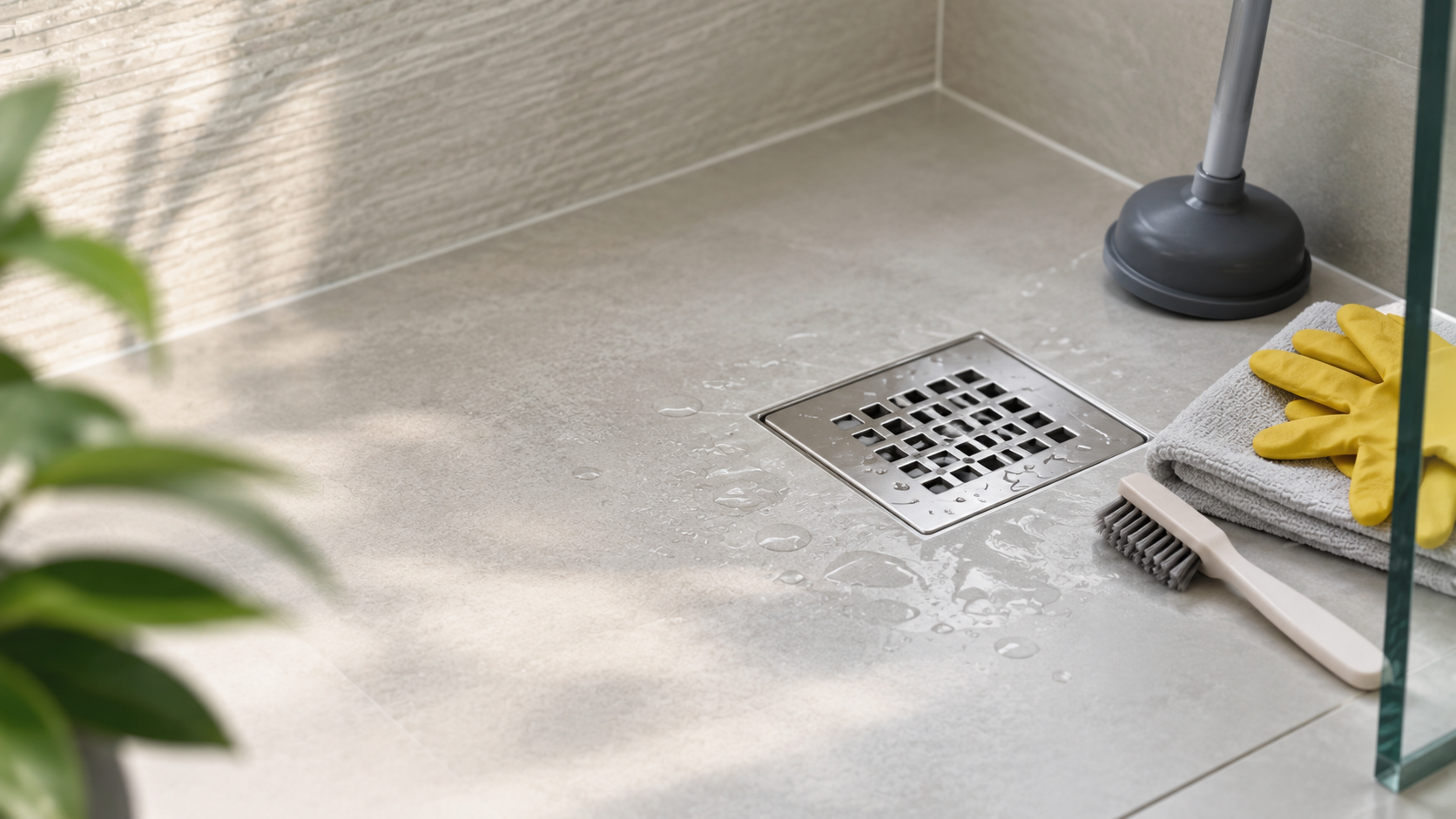
A shower should be a place to relax and refresh, but standing water around your feet can quickly turn an ordinary morning into a frustrating experience. If water takes longer than usual to disappear, collects around the shower tray or produces an unpleasant smell, a blocked shower drain may be the cause.
Fortunately, many shower drain blockages can be cleared at home using a few simple tools and careful cleaning. Hair, soap residue and everyday bathroom debris are common causes, and removing them early can help prevent more serious drainage problems.
However, not every blockage is located near the drain opening. Some develop deeper inside the waste pipe, while others may indicate a wider plumbing issue. Understanding the cause will help you choose the right solution without damaging the shower tray, drain fittings or pipework.
This guide explains how to unclog a shower drain step by step, which cleaning methods are worth trying, what to avoid and how to prevent blockages from returning. It also covers the signs that indicate when professional plumbing assistance may be necessary.
What Causes a Shower Drain to Become Blocked?
Before attempting to clear a blockage, it helps to understand what is preventing the water from flowing freely. Shower drains deal with a mixture of water, hair, soap, skin cells and personal care products. Over time, these materials can accumulate inside the drain and waste pipe.
1. Hair collecting inside the drain
Hair is one of the most common causes of a blocked shower drain. Individual strands can become trapped around the drain cover, waste fitting or internal pipework. As more hair collects, it forms a tangled mass that catches other debris.
Long hair can create particularly stubborn blockages, although short hair can also accumulate over time. A drain cover or removable hair catcher can help prevent much of this material from entering the pipe.
2. Soap scum and shampoo residue
Soap, conditioner, shampoo and body wash can leave residues on the surfaces inside a shower waste. When these residues combine with hair and mineral deposits, they may form a sticky layer that gradually restricts water flow.
This is why a shower that drains normally for months may eventually begin to empty more slowly, even when there is no obvious clump of hair near the opening.
3. Mineral deposits from hard water
Hard water contains dissolved minerals, including calcium and magnesium. These minerals can contribute to scale deposits on bathroom fittings and inside plumbing components.
Mineral build-up is not always the main cause of a blocked shower drain, but it can contribute to restricted flow, particularly when combined with soap residue and other debris.
4. Dirt and other bathroom debris
Small amounts of dirt, skin cells and fibres can enter the drain during everyday showering. Individually, these materials may not cause a problem, but they can become trapped in an existing accumulation of hair and residue.
5. A deeper blockage in the waste pipe
If the drain remains slow after you have cleaned the visible area, the obstruction may be farther down the pipe. A blockage can also develop where the shower waste connects to the wider drainage system.
If several bathroom fixtures drain slowly at the same time, or you notice gurgling sounds and persistent foul smells, the issue may extend beyond the shower itself.
Signs That Your Shower Drain Is Blocked
A blockage often develops gradually. Recognising the early warning signs makes it easier to address the problem before water begins pooling around your feet.
Look out for the following symptoms:
- Slow drainage: Water takes longer than usual to disappear after you turn off the shower.
- Standing water: Water collects around the drain or across the shower tray during use.
- Unpleasant smells: Trapped hair, soap residue and other organic material may produce a musty or unpleasant odour.
- Gurgling noises: Air moving through a partially obstructed pipe can create unusual sounds.
- Recurring blockages: The drain becomes slow again shortly after cleaning.
- Water backing up: Water rises around the drain rather than flowing away normally.
A single symptom does not always confirm a blockage. However, if several occur together, it is worth inspecting the drain and clearing any visible debris.
What You Need to Unclog a Shower Drain
Most minor blockages can be tackled with basic household tools. Prepare the following items before you begin:
| Tool or item | Purpose |
|---|---|
| Rubber gloves | Protect your hands when handling debris. |
| Old towel or cloth | Absorb splashes and protect nearby surfaces. |
| Screwdriver, if required | Remove a cover secured with screws. |
| Torch | Help you inspect the drain opening. |
| Plastic drain-cleaning tool | Reach and remove trapped hair. |
| Small container or bucket | Collect standing water or debris. |
| Rubber cup plunger | Help dislodge suitable blockages. |
| Warm water | Rinse away loose residue. |
| Soft cleaning brush | Clean the removable cover and surrounding area. |
You may not need every item. Start with the simplest method and only move on to another technique if the blockage remains.
Before beginning, check whether the drain cover can be removed safely. Some shower drains have removable grates, while others use specialised fittings that should not be forced or dismantled unnecessarily.
How to Unclog a Shower Drain: Step-by-Step Instructions
The best approach is to work from the drain opening towards the waste pipe. This allows you to remove accessible debris first and reduces the need for more aggressive methods.
Step 1: Remove standing water
If water has collected in the shower tray, allow as much as possible to drain away before you start. If it is not moving at all, use a small container to remove the excess water and transfer it to a suitable sink or other functioning drain.
Avoid splashing contaminated water onto bathroom surfaces. Dry the area around the drain with an old towel so you can see what you are doing.
If water is backing up significantly or appears to be coming from another drain, stop using the shower until the problem has been investigated.
Step 2: Remove the shower drain cover
Inspect the drain cover to determine how it is attached. Some covers lift out, while others require a screw to be removed. Follow the fitting's instructions if available.
Lift the cover carefully and place it on a towel. Do not force it with a screwdriver or other tool if it does not move easily, as this may scratch the finish, damage the fitting or affect the seal.
If the drain is part of a modern shower tray or a concealed drainage arrangement, check the manufacturer's guidance before removing internal components.
Step 3: Remove visible hair and debris
Put on rubber gloves and inspect the drain opening with a torch. If you can see a clump of hair, carefully remove it using your fingers or a suitable plastic drain-cleaning tool.
Pull debris out rather than pushing it farther into the pipe. Dispose of the collected hair in the bin, not down the toilet or another drain.
A flexible plastic hair-removal tool can be helpful for reaching just below the opening. Use it gently and avoid forcing it around bends or through components that might be damaged.
Once the visible debris has been removed, inspect the opening again. Sometimes this simple step is enough to restore normal drainage.
Step 4: Clean the drain cover and surrounding area
Hair and soap residue can collect on the underside of the cover as well as inside the waste fitting. Wash the removable cover with warm water and a mild bathroom cleaner that is suitable for its material.
Use a soft brush to remove residue from accessible surfaces. Avoid abrasive pads, sharp metal tools and harsh chemicals that may damage the finish.
Wipe the area around the drain opening, taking care not to disturb any seals or fittings. Clean bathroom surfaces regularly to help prevent soap residue from accumulating around the waste.
Step 5: Flush with warm water
Once the visible blockage has been removed, slowly pour warm water into the drain to check whether the flow has improved.
Use warm water rather than boiling water. Extremely hot water can damage certain plastic components, seals or shower-tray materials, depending on their construction.
Do not pour a large volume of water into a drain that is completely blocked. If the water cannot escape, it may simply collect in the tray and make the problem harder to manage.
If the drain empties freely, replace the cover according to its fitting instructions and monitor the drainage during the next shower.
Step 6: Try a plunger if the blockage remains
A rubber cup plunger may help dislodge a blockage that cannot be removed by hand. Choose one that can form a seal around the drain opening.
First, ensure there is enough water to cover the edge of the rubber cup. Position the plunger over the drain and press it down gently to create a seal. Use controlled up-and-down movements rather than excessive force.
Lift the plunger and check whether the water begins to drain. Repeat a few times if necessary, then inspect the opening for loosened debris.
Plunging may be less effective on shower drains with unusual shapes or designs that prevent a proper seal. If your shower has a specialised waste fitting, follow its instructions before trying this method.
Step 7: Use a suitable drain-cleaning tool for deeper hair
If the blockage is below the visible opening, a hand-operated drain snake or flexible cleaning tool may help reach it.
Insert the tool slowly, following the direction of the pipe. Avoid forcing it if you encounter resistance. Depending on the tool, you may be able to rotate it gently or withdraw it to collect trapped hair.
Remove the tool carefully and dispose of any debris in the bin. Repeat only if the tool moves freely and the pipework appears undamaged.
Do not use improvised sharp wire, coat hangers or other makeshift tools. They can scratch fittings, become lodged in the pipe or damage vulnerable components.
If the blockage cannot be reached easily, professional equipment may be needed.
Step 8: Test the drainage
After cleaning, run the shower briefly and observe how quickly the water disappears. Check that it does not collect around the drain or return when the flow increases.
If drainage has improved but remains slower than normal, there may still be residue farther down the pipe. You can repeat the safe cleaning steps once, but persistent problems should not be treated by continually forcing tools or chemicals into the drain.
Once the water flows away normally, replace all removable components securely and clean the shower area.
Can Baking Soda and Vinegar Unclog a Shower Drain?
Baking soda and vinegar are commonly suggested as household remedies for blocked drains. When combined, they produce a fizzing reaction that may help loosen some surface residue. However, this reaction does not reliably dissolve a dense mass of hair or remove every type of blockage.
If you decide to try this method, first remove any visible hair and debris. Pour a modest amount of baking soda into the drain, followed by a small amount of vinegar. Allow the mixture to fizz briefly, then rinse with warm water if the drain can accept it.
Treat this as an optional cleaning method rather than a guaranteed solution. For a blockage caused mainly by tangled hair, physically removing the material is usually more effective.
Important precautions when cleaning a shower drain
- Never mix vinegar with bleach or products containing chlorine, as this can release hazardous gases.
- Do not combine different commercial drain cleaners.
- If you have already used a chemical drain cleaner, do not add vinegar, baking soda or another cleaning product unless the product instructions explicitly confirm it is safe.
- Keep cleaning products away from children and pets, and follow the manufacturer's safety instructions.
- Avoid pouring boiling water into a shower drain, particularly where plastic pipework, seals or acrylic components may be present.
If you are unsure which cleaning method is suitable for your drainage system, stick to removing visible debris and seek professional advice for persistent blockages.
Should You Use a Chemical Drain Cleaner?
Chemical drain cleaners are available in liquid, gel and other formulations. Some are designed to break down organic material, including hair and soap residue. However, they are not suitable for every plumbing system or every type of obstruction.
Before using a product, read its label carefully and check that it is suitable for shower drains and the materials in your bathroom. Incorrect use can expose you to corrosive chemicals, create dangerous reactions or damage certain components.
A chemical cleaner is also unlikely to resolve every drainage problem. If an object is lodged in the pipe, a component has become damaged or the blockage lies farther along the drainage system, the product may have little effect.
For most minor shower blockages, start with physical removal of hair and debris. Use chemical products only when their instructions and your plumbing arrangements make them appropriate.
How to Unclog Different Types of Shower Drains
Not every shower uses the same drainage arrangement. The design of your shower tray, drain cover and waste fitting can influence how easily you can access a blockage.
1. Standard shower tray drain
A conventional shower tray typically has a waste fitting beneath a removable drain cover.
Start by removing visible hair from the opening and cleaning the cover. If the blockage remains, a suitable plastic hair-removal tool or plunger may help.
Avoid dismantling the waste fitting unless you understand how it is assembled and can restore its seals correctly. An incorrectly refitted component can cause leaks beneath the shower tray.
2. Linear shower drain
A linear drain is a long, narrow drainage channel, often positioned along one side of a walk-in shower. It may include a removable grate and a hair-catching insert.
Lift the grate according to the manufacturer's instructions and remove any accessible hair or residue from the channel and strainer. Clean these parts with a soft brush and a suitable bathroom cleaner.
Pay attention to the entire length of the channel rather than focusing only on the outlet. Debris can accumulate at several points along the drain.
If the outlet remains slow after cleaning, the obstruction may be inside the waste pipe rather than in the channel itself.
3. Walk-in shower with a floor-level drain
Walk-in showers often have a minimalist appearance, with the drainage system integrated into the floor. Depending on the installation, the drain may use a linear channel, a central waste or another concealed arrangement.
Start by checking the accessible cover and hair trap. Remove debris carefully and avoid disturbing the waterproofing or surrounding floor finish.
If the drain is concealed beneath tiles or forms part of a specialised waterproofing system, do not attempt to access the pipework by removing tiles or breaking the floor. A qualified plumber can investigate the problem while minimising the risk of damage.
For ideas on planning a practical shower space, explore the Jaquar UK shower collection and shower enclosure range.
4. Shower over a bathtub
A shower fitted above a bathtub usually drains through the bath waste. Hair and soap residue may collect around the plug, waste opening or inside the connected waste pipe.
Remove visible debris from the plug and waste opening first. If the bathtub has a removable strainer, clean it according to the manufacturer's instructions.
A bath waste may have a different internal arrangement from a standard shower tray, so avoid forcing tools into the opening. If the blockage persists, a plumber can inspect the waste and trap.
You can also explore built-in bathtubs from Jaquar UK when planning a bathroom that combines bathing and showering.
Why Does My Shower Drain Keep Getting Blocked?
If you have to clear the same drain every few days or weeks, removing the immediate blockage may not be enough. Recurring problems can have several causes.
Hair is continuing to enter the waste
Without a suitable hair catcher, strands can enter the drain every time the shower is used. Even after a thorough cleaning, the next accumulation begins almost immediately.
A removable strainer or hair trap can reduce the amount of hair entering the pipe. Choose one that fits the drain correctly and does not interfere with the shower's normal drainage.
Soap residue is building up
Shampoo, conditioner and body wash can leave a film that traps hair and other debris. Regularly cleaning the drain cover and accessible parts of the waste can help reduce this accumulation.
If several household members use the same shower, more frequent cleaning may be necessary.
The blockage is deeper in the pipe
A drain that improves briefly after cleaning but quickly becomes slow may have a deeper obstruction. A plumber can use appropriate tools to inspect and clear the waste pipe without relying on repeated chemical treatments.
The waste pipe or drainage system has a fault
Incorrect pipe gradients, damaged pipework or problems with the wider drainage system can affect how water flows away. These issues cannot necessarily be resolved by removing hair from the drain opening.
If you experience repeated blockages despite regular maintenance, arrange a professional inspection rather than continuing to use increasingly aggressive cleaning methods.
How to Prevent Shower Drain Blockages
Prevention is generally easier than dealing with a drain that has stopped working altogether. A simple cleaning routine can reduce the build-up of hair, soap residue and other debris.
1. Install a suitable hair catcher
A drain strainer or hair catcher traps strands before they enter the waste pipe. Choose a design that fits your drain and is compatible with the shower's drainage arrangement.
Clean it regularly. A hair catcher that becomes covered in debris can itself restrict water flow.
2. Remove hair after showering
Check the drain cover after each shower and remove any visible hair before it becomes tangled with soap residue.
Dispose of the hair in the bin rather than washing it down the drain. This small habit can reduce the amount of debris entering the pipe.
3. Clean the drain every week
Include the drain cover and accessible hair trap in your regular bathroom cleaning routine. Remove debris, wash the removable parts and wipe the surrounding area with a suitable cleaner.
You do not need to dismantle the drainage system for routine maintenance. Focus on the parts designed to be accessed and cleaned.
4. Rinse away soap residue
Where appropriate, use warm water to rinse away loose soap residue after cleaning the shower. Avoid excessive quantities of water if drainage is already slow.
Cleaning the shower tray, walls and drain cover regularly can also help prevent residue from accumulating around the waste.
5. Use bathroom products sensibly
Hair, cotton pads, wipes and other personal care products should never be deliberately washed into the shower drain. Even items that appear small can become trapped and contribute to a blockage.
Avoid pouring oils or thick products into the drain in large quantities, as these can contribute to residue build-up.
6. Check the drain for early warning signs
Notice whether the shower begins draining more slowly than usual. Addressing a small accumulation of hair is simpler than dealing with water that has stopped draining altogether.
If you notice recurring odours, gurgling or drainage problems in multiple fixtures, investigate the cause rather than relying solely on surface cleaning.
7. Maintain the wider shower area
A clean shower is not just about the drain. Regularly wipe the shower tray, enclosure and fittings to prevent soap residue and mineral deposits from accumulating.
For additional guidance, read Jaquar's bathroom cleaning and maintenance information, which includes advice on caring for bathroom products and resolving common shower-related concerns.
When Should You Call a Professional Plumber?
Many minor blockages can be cleared without professional help. However, continuing to experiment with cleaning products or tools can make a more serious drainage problem harder to resolve.
Contact a qualified plumber if you notice any of the following:
- The drain remains blocked: Removing visible debris and trying an appropriate plunger or cleaning tool has not restored normal drainage.
- Water backs up into the shower: Water rises rapidly or fails to drain, increasing the risk of an overflow.
- Several fixtures drain slowly: A slow shower, basin and bathtub may indicate a problem in a shared waste pipe or wider drainage system.
- Persistent foul smells: A recurring sewage-like smell may point to a drainage fault rather than a simple hair blockage.
- Gurgling continues: Persistent noises may indicate restricted flow or an issue with the drainage system.
- You suspect a damaged pipe: Leaks, damp patches or water appearing beneath the shower may require investigation.
- The blockage returns repeatedly: Recurring problems may indicate a deeper obstruction or a problem with the pipework.
If sewage is backing up into the shower, stop using affected fixtures and seek prompt professional assistance. Avoid direct contact with contaminated water.
Similarly, if a chemical drain cleaner has already been used and the blockage remains, tell the plumber which product was applied. This helps them take appropriate precautions.
Does Shower Design Affect Drainage and Maintenance?
The appearance of a shower is only one part of its design. Drain placement, access for cleaning, the shower tray and the waste arrangement also influence how practical the space is to maintain.
A well-planned shower should provide convenient access to the components that need routine cleaning. Hair traps and removable drain covers can make maintenance easier, while suitable installation helps water flow towards the waste as intended.
Consider accessibility when choosing a shower
A drain that can be cleaned without dismantling several components is generally easier to maintain. Before choosing a shower arrangement, consider where the waste will be positioned and whether the drain cover or strainer can be accessed conveniently.
Choose a shower arrangement suited to the bathroom
Walk-in showers, enclosed showers and shower-over-bath arrangements each have different space and installation requirements. The best option depends on the room layout, the needs of the household and the existing plumbing.
Explore Jaquar UK's shower range and shower enclosures for options when planning or updating your bathroom.
Keep maintenance in mind during renovation
During a bathroom renovation, discuss drainage access, pipe routing and cleaning requirements with your installer. Concealed pipework can create a clean appearance, but the installation should still allow appropriate access for inspection and maintenance.
A qualified installer can help ensure that the shower, tray and waste components work together correctly.
Common Mistakes to Avoid When Unclogging a Shower Drain
Even a straightforward blockage can become more difficult to resolve if the wrong method is used. Avoid these common mistakes when cleaning your shower drain.
Pouring boiling water into the drain
Boiling water may seem like a quick solution, but it can damage some plastic pipes, seals and shower components. Use warm water instead, provided the drain can accept it safely.
Forcing sharp objects into the pipe
Coat hangers, knives and improvised metal hooks can scratch fittings, damage pipework or become lodged in the drain. Use a suitable drain-cleaning tool and stop if it encounters resistance.
Using several chemical cleaners together
Combining cleaning products can cause dangerous chemical reactions. Never mix drain cleaners with bleach, vinegar or other household products.
Ignoring the drain cover
Debris often collects on the underside of the cover or in the removable strainer. Cleaning only the visible surface may leave much of the blockage in place.
Continuing to use a blocked shower
Repeatedly running the shower while water is backing up can cause an overflow and increase the risk of water escaping onto the bathroom floor. Clear the blockage or arrange professional help before using the shower again.
Treating every blockage as a surface problem
If hair removal does not improve drainage, the obstruction may be deeper in the pipe. Repeating the same cleaning method will not necessarily resolve it.
Frequently Asked Questions About Unclogging a Shower Drain
What is the quickest way to unclog a shower drain?
For a minor blockage, removing the drain cover and extracting visible hair and debris is often the quickest approach. Clean the accessible strainer, then test the drain with a small amount of warm water. If the blockage remains, a suitable plunger or drain-cleaning tool may help.
How do I unclog a shower drain full of hair?
Wear gloves, remove the drain cover if it is designed to be removed, and use your fingers or a plastic hair-removal tool to pull out the accumulated hair. Dispose of it in the bin, clean the strainer and test the drainage. Avoid pushing the hair farther into the pipe.
Does baking soda and vinegar dissolve hair in a shower drain?
Not reliably. Baking soda and vinegar produce a fizzing reaction that may help loosen some surface residue, but it will not consistently dissolve a dense mass of tangled hair. Physically removing the hair is generally more effective.
Is it safe to use boiling water to clear a shower drain?
Boiling water is not recommended because it may damage certain plastic pipes, seals or shower components. Warm water is a safer option for rinsing loose residue, provided the drain is not completely blocked.
Can I use a plunger on a shower drain?
Yes, a suitable rubber cup plunger may help dislodge some blockages. It needs to form a seal around the drain opening, and the method must be appropriate for the drain design. Use controlled movements and avoid excessive force.
Why does my shower drain smell even when the water drains normally?
An unpleasant smell may come from hair, soap residue or other organic material trapped in the drain. Clean the accessible cover and strainer thoroughly. If the odour persists, particularly if it resembles sewage, a plumber should investigate possible drainage or trap problems.
Why does my shower drain keep blocking after I clean it?
Recurring blockages may result from hair continuing to enter the waste, soap residue accumulating or an obstruction farther down the pipe. If regular cleaning does not resolve the problem, professional inspection may be necessary.
How often should I clean my shower drain?
Remove visible hair after showering and clean the drain cover or hair catcher regularly. A weekly check is a useful starting point, but the ideal frequency depends on how often the shower is used and how much hair enters the drain.
Can a blocked shower drain cause water damage?
Yes. If water backs up and overflows the shower tray, it can escape onto the bathroom floor and potentially damage nearby surfaces or rooms below. Stop using the shower if water is accumulating and address the blockage promptly.
When should I stop trying to clear the drain myself?
Stop if the blockage does not respond to basic cleaning, tools encounter resistance, water backs up into several fixtures, or you suspect a damaged pipe. Seek a qualified plumber rather than risking damage through repeated attempts.
Final Thoughts
A blocked shower drain is often caused by a build-up of hair, soap residue and everyday debris. In many cases, removing the visible blockage, cleaning the drain cover and testing the flow with warm water can restore normal drainage without specialist equipment.
The most effective approach is to start with simple, low-risk methods. Use a suitable hair-removal tool or plunger if necessary, avoid harsh or mixed chemicals, and never force sharp objects into the pipe. If the blockage persists, returns repeatedly or affects multiple fixtures, professional inspection can help identify the underlying cause.
Regular maintenance makes a significant difference. Removing hair after showering, cleaning the accessible parts of the drain and addressing slow drainage early can help keep your bathroom working as it should.
When planning a new bathroom or updating an existing one, consider drainage access and ease of maintenance alongside the appearance of your shower. Explore Jaquar UK's bathroom solutions for showering products, enclosures and coordinated bathroom fittings designed to bring practicality and considered design together.


