
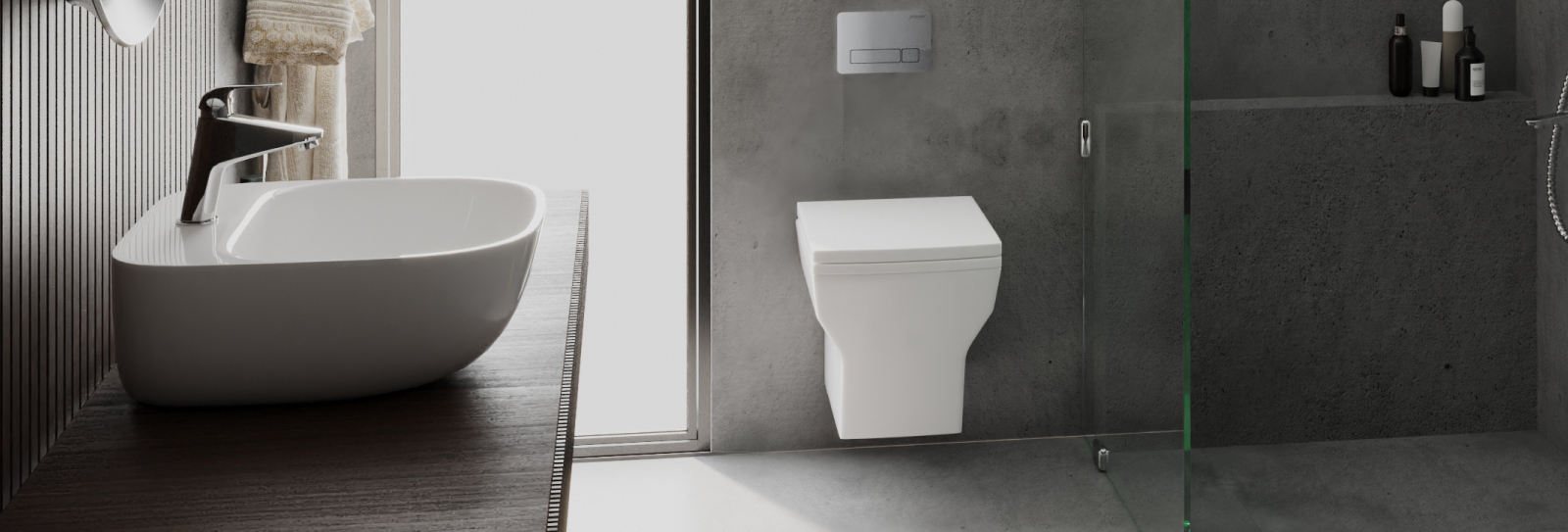
Making the most of a small bathroom requires careful planning. When space is limited, every fixture needs to serve a purpose without making the room feel crowded. The position of the toilet is particularly important because it affects how easily you can move around the bathroom, access other fittings and make use of otherwise awkward corners.
A corner toilet can be a practical solution when a conventional toilet does not fit comfortably into the available layout. Designed to sit in a corner, this type of WC can help make use of space that might otherwise remain unused. It can be especially useful in compact cloakrooms, downstairs toilets and bathrooms with unusual layouts.
However, a corner toilet is not always the best choice for a small bathroom. Wall-hung, back-to-wall and other compact toilet designs can also help create an efficient layout, sometimes with a more contemporary appearance.
The right option depends on your room dimensions, existing plumbing, preferred design and installation requirements.
In this guide, we explain what a corner toilet is, its main advantages and disadvantages, how to measure your bathroom, what to consider before buying and which alternatives may be worth exploring. By understanding the differences between toilet types, you can choose a solution that makes your bathroom more practical without compromising on comfort or design.
What Is a Corner Toilet?
A corner toilet is a WC designed to fit into the corner of a bathroom. Unlike a conventional toilet that typically sits along a straight wall, a corner toilet is positioned where two walls meet.
Many traditional corner toilets use a triangular or angled cistern that fits into the corner, while the toilet pan projects into the room. This arrangement can make use of a part of the bathroom that might otherwise be difficult to utilise.
Corner toilets are particularly relevant when planning a compact cloakroom or a bathroom with an awkward floor plan. For example, the room may have a window, radiator, door or existing pipework that limits where a conventional toilet can be installed.
The main purpose of a corner toilet is to offer another way of arranging the bathroom. It does not automatically make every room feel larger, but it can provide a useful option when a standard toilet would interfere with movement or compete for space with other fittings.
Before choosing one, check the exact dimensions and installation requirements of the model. Corner toilets vary in shape, projection, cistern design and overall footprint.
How Does a Corner Toilet Work?
A conventional toilet is usually installed against a wall, with its cistern positioned behind or above the pan, depending on the design. A traditional corner toilet adapts this arrangement to fit into a corner.
Its cistern is designed to sit against the two adjoining walls, while the pan faces into the bathroom. The exact shape and connection arrangement depend on the model.
The toilet still requires a suitable waste connection, water supply and enough space for comfortable use. Its corner positioning changes the way the fixture occupies the room, but it does not remove the need for careful plumbing and layout planning.
Some corner toilet installations may be easier to accommodate in a room where the waste connection and water supply already suit the intended position. In other cases, moving the plumbing can add complexity and cost.
If you are considering a corner toilet as part of a renovation, ask your installer to assess the existing connections before purchasing the product.
What Are the Benefits of a Corner Toilet?
A corner toilet can solve particular layout challenges, especially in bathrooms where a conventional WC would take up valuable wall space. However, the benefits depend on the room's dimensions and the design of the selected toilet.
1. Make Use of an Awkward Corner
One of the main advantages of a corner toilet is its ability to occupy a corner that might otherwise be difficult to use.
In a compact cloakroom, the available wall space may already be taken up by a basin, radiator, window or door opening. Positioning the WC in a corner can create another possible layout.
This can be particularly helpful in older properties, where bathroom dimensions and plumbing positions do not always match modern standard layouts.
Before committing to a corner installation, consider whether the space genuinely benefits from this arrangement. A corner toilet may free up a wall for another fitting, but it can also project farther into the room than expected.
2. Provide an Alternative for Small Cloakrooms
Downstairs toilets and cloakrooms often have limited floor area. In these rooms, choosing the right WC can make a noticeable difference to everyday comfort.
A corner toilet may work well when the room has two suitable adjoining walls and the existing plumbing can accommodate the installation.
It is particularly worth considering when the available layout makes a conventional toilet difficult to position without restricting the doorway or access to the basin.
However, compact bathrooms do not always require a corner toilet. A wall-hung or back-to-wall WC may provide a more suitable alternative, depending on the room shape.
Explore the toilet collection to compare different installation styles and identify options that may suit your space.
3. Help Improve the Overall Bathroom Layout
The position of the toilet influences the arrangement of every other fixture. Moving the WC into a corner may allow the basin, storage or other fittings to be positioned more effectively.
For example, a corner installation might leave a longer wall available for a narrow basin or create a clearer route between the doorway and the main bathroom area.
The benefit comes from considering the room as a whole rather than selecting each fixture independently.
Draw a simple floor plan before making a purchase. Mark the door, window, radiator, basin, shower and toilet, then compare how each layout affects movement and access.
4. Offer a Practical Option for Unusual Room Shapes
Not every bathroom is a neat rectangle. Some have angled walls, boxed-in pipework, chimney breasts or other architectural features that limit the available space.
A corner toilet may help work around these constraints when the corner provides enough room for the pan and cistern.
Nevertheless, unusual layouts require careful measuring. The angle between the walls, the position of the waste pipe and the available projection can all affect whether a particular model will fit.
A qualified installer can help determine whether a corner toilet is practical or whether adapting the layout around a different WC design would be simpler.
5. Support a More Efficient Use of Wall Space
In a small bathroom, usable wall space is often just as important as floor area. A conventional toilet can occupy a substantial section of one wall, particularly when its cistern is exposed.
A corner toilet changes the position of this fixture, potentially making another wall available for storage or a basin.
However, the result depends on the complete installation. The cistern still occupies space, and the pan needs sufficient room in front and around its sides.
Do not assume that placing the WC in a corner will automatically create more usable space. Compare the complete footprints of the available options before deciding.
What Are the Disadvantages of a Corner Toilet?
Although corner toilets can be useful in certain layouts, they are not suitable for every bathroom. Understanding their limitations helps you decide whether the arrangement is worth considering.
1. Fewer Design Options May Be Available
Corner toilets are a more specialised category than conventional WCs. Depending on your preferred dimensions and appearance, you may find fewer suitable models than you would when looking at wall-hung, back-to-wall or coupled toilets.
This can make it harder to match the WC to a particular bathroom style or coordinate it with other sanitaryware.
If design choice is a priority, compare corner toilets with compact alternatives before making a decision.
2. The Cistern May Affect the Appearance
Traditional corner toilets often have an angled or triangular cistern. This shape is functional, but it may not suit every contemporary bathroom design.
If you prefer clean lines, concealed fittings or a visually minimal interior, a wall-hung or back-to-wall toilet may be more appropriate.
The right choice depends on the overall look you want to achieve. A corner toilet can still work well in a practical bathroom, but its appearance should be considered alongside its space-saving potential.
3. Installation May Be More Complicated Than Expected
A corner toilet must fit the geometry of the room and connect correctly to the water supply and waste pipe.
If the existing connections are not in the right position, plumbing alterations may be necessary. The angle of the walls and the available space behind the cistern can also influence installation.
A corner toilet is therefore not automatically a simpler or less expensive option than a conventional WC.
Before purchasing, confirm the installation requirements with a qualified plumber and compare the total cost with alternative toilet configurations.
4. Cleaning Access Needs Consideration
The area behind and around a toilet can be difficult to clean when the space is restricted.
A corner toilet may create narrow gaps where the pan, cistern and adjoining walls meet. Depending on the model and layout, these areas may require additional attention during routine cleaning.
Look at how easily you can reach the floor, wall surfaces and exposed connections. If cleaning access is a concern, a wall-hung toilet may be worth considering because the floor beneath the pan remains open.
5. The Pan Can Still Project Into the Room
The cistern's corner position does not necessarily mean the toilet occupies less floor space overall.
The pan projects forward from the corner, and its projection may restrict movement if the room is particularly narrow.
Always compare the total dimensions and check the available space in front of the toilet. A compact back-to-wall or wall-hung model may provide a better result in some bathrooms.
Corner Toilet vs Wall-Hung Toilet: Which Is Better?
Both corner toilets and wall-hung toilets can be considered for compact bathrooms, but they address different layout challenges.
A corner toilet uses the angle between two walls, while a wall-hung toilet is fixed to a suitable concealed installation frame, leaving the floor beneath the pan open.
| Feature | Corner Toilet | Wall-Hung Toilet |
|---|---|---|
| Main design feature | Positioned in a corner, often with an angled cistern | Pan is suspended from a suitable concealed installation system |
| Floor appearance | Pan usually sits on the floor | Floor beneath the pan remains visible |
| Cistern arrangement | Often a specially shaped exposed cistern | Usually concealed behind the finished wall |
| Cleaning access | Depends on the surrounding layout | Floor beneath the pan is easier to access |
| Installation | Depends on the corner geometry and plumbing | Requires a compatible frame, cistern and supporting structure |
| Design style | Often selected for a specific space constraint | Commonly used in contemporary bathroom designs |
| Best starting point | Bathrooms with a useful, accessible corner | Bathrooms where a streamlined appearance and open floor area are priorities |
When Should You Choose a Corner Toilet?
A corner toilet may be worth considering when the room has a suitable corner but limited uninterrupted wall space.
It can be particularly useful if moving the WC to a conventional wall position would interfere with the doorway, basin or another fitting.
When Should You Choose a Wall-Hung Toilet?
A wall-hung toilet may be more suitable when you want a clean, contemporary appearance and easier access to the floor beneath the pan.
The concealed installation system needs to be planned properly, including the frame, cistern, wall construction and maintenance access.
Explore the wall-hung toilet range to compare available styles and installation formats.
For more information, read the concealed cistern buying guide.
Corner Toilet vs Back-to-Wall Toilet
A back-to-wall toilet is another option for bathrooms where a conventional exposed cistern may feel bulky.
With this arrangement, the toilet pan sits on the floor against a wall or suitable furniture unit. The cistern and associated pipework can be concealed behind the finished wall or within an appropriate unit.
Unlike a corner toilet, a back-to-wall WC does not need to occupy the corner of the room. It can be positioned along a suitable wall, which may make it easier to coordinate with the basin and other fittings.
| Consideration | Corner Toilet | Back-to-Wall Toilet |
|---|---|---|
| Position | Designed for a corner | Positioned against a suitable wall or unit |
| Cistern | Often exposed and angled | Can be concealed |
| Visual appearance | Depends on the corner cistern design | Typically streamlined |
| Plumbing | Must suit the corner installation | Must suit the chosen concealed or furniture-based arrangement |
| Layout flexibility | Useful when a corner solves a specific problem | Useful when the room benefits from a clean wall-mounted arrangement |
A back-to-wall toilet may be a better choice if your main aim is to create a visually uncluttered bathroom rather than to use a particular corner.
Explore the toilet collection to compare available back-to-wall formats with other WC designs.
How to Measure Your Bathroom for a Corner Toilet
Accurate measuring is essential before ordering any toilet, but it is particularly important when the product is designed to fit into a corner.
The shape of the room, the angle between the walls and the position of the waste connection all affect whether the installation will work.
Step 1: Measure Both Walls
Measure the available length along each wall where the cistern and toilet are intended to sit.
Do not assume that the walls meet at a perfect right angle. Older properties may have uneven walls, so take measurements carefully and check the corner itself.
Compare your measurements with the manufacturer's technical drawing.
Step 2: Measure the Toilet's Projection
Projection is the distance the toilet extends into the room from its installation position.
For a corner toilet, this measurement is especially important because the pan projects diagonally or forwards from the corner.
Check how much space remains between the front of the pan and the opposite wall, basin, door or other fitting.
Step 3: Check the Available Width
Consider the space needed around both sides of the pan.
The toilet should not be so close to the basin, wall or furniture that it becomes uncomfortable to use or difficult to clean.
The required clearance depends on the room and the applicable installation guidance. Ask your installer to confirm the appropriate spacing.
Step 4: Identify the Waste Connection
Locate the existing toilet waste pipe and determine whether it can connect to the selected corner toilet.
Waste connections vary between models, so a toilet that appears to fit the room may not suit the existing pipework.
If the waste needs to be moved, establish the implications for cost, installation time and access before ordering.
Step 5: Check the Water Supply
Confirm the position of the water inlet and whether it suits the chosen cistern.
Any changes to the supply should be planned by a qualified installer, who can also check the required connections and operating arrangements.
Step 6: Check the Door Opening
The bathroom door can have a significant effect on a compact layout.
Open the door fully and check whether it interferes with the toilet, basin or the route into the room. If the door opens inwards, compare the available space with the door closed and open.
A corner toilet is only useful if the finished layout remains comfortable to enter and use.
Step 7: Check the Complete Bathroom Layout
Mark the positions of the toilet, basin, shower, storage and other fittings on a simple floor plan.
This helps you assess whether the corner position improves the overall arrangement or simply moves the space problem elsewhere.
Before ordering, confirm all dimensions against the technical drawing for the exact product.
What to Consider Before Buying a Corner Toilet
Once you know that a corner toilet could fit, compare the practical features that will affect everyday use.
1. Cistern Design
The cistern is one of the defining features of a conventional corner toilet.
Check its shape, dimensions, water inlet position and access requirements. The cistern should fit the corner properly without interfering with other fittings.
Consider how the cistern lid or internal components can be accessed for routine maintenance.
2. Toilet Pan Shape
The pan influences comfort, projection and the overall appearance of the WC.
Compare the external dimensions and seating area of the available models. Do not select a toilet based solely on its cistern shape.
3. Flushing Mechanism
Check the flushing mechanism and confirm that the cistern and pan are designed to work together.
The operating mechanism should be accessible for maintenance, and replacement components should be sourced according to the manufacturer's guidance.
4. Toilet Seat Compatibility
Make sure the seat is compatible with the selected pan. Seat shape, fixing arrangement and dimensions can differ between models.
If a replacement seat is required in the future, having the product details available will make it easier to identify the correct part.
Read the guide on how to choose the best toilet seat for further advice on fit, materials and practical features.
5. Cleaning and Maintenance
Consider how easy it will be to clean the pan, cistern and surrounding floor.
Smooth surfaces and accessible areas can make routine cleaning more straightforward, while narrow gaps may require additional attention.
If cleaning access is a major concern, compare the corner toilet with wall-hung and back-to-wall alternatives before deciding.
6. Installation Costs
The price of the toilet is only one part of the total project cost.
Installation may involve plumbing alterations, waste connections, water supply changes, finishing work and the removal of the existing WC.
Ask for a detailed estimate so you can compare the complete cost of a corner toilet with other suitable designs.
Are Corner Toilets Suitable for Modern Bathrooms?
Corner toilets are often associated with practical space-saving layouts, but suitability is not determined by bathroom style alone.
A contemporary bathroom can accommodate different toilet types, including corner, wall-hung and back-to-wall designs. The most suitable option depends on how the room is arranged and the appearance you want to achieve.
Minimalist Bathroom Designs
Minimalist bathrooms typically favour uncluttered surfaces, coordinated fittings and simple visual lines.
A traditional corner toilet with an exposed angled cistern may not be the first choice for this style. A wall-hung or back-to-wall toilet could be a better match if the installation allows it.
Compact Contemporary Bathrooms
In a compact modern bathroom, a corner toilet may still be practical if the room's geometry makes the corner the most efficient location.
However, compare the complete layout with a compact wall-hung or back-to-wall model. The best option is the one that preserves comfortable movement and fits the design.
Traditional Bathrooms
A corner toilet may be suitable for a functional cloakroom or a bathroom where the existing plumbing and layout make a corner installation convenient.
Consider the shape and finish of the pan, cistern and surrounding sanitaryware to ensure the result feels coordinated.
The overall bathroom should guide the decision rather than assuming that a particular toilet type belongs to one design style.
Alternatives to a Corner Toilet for Small Bathrooms
If a corner toilet does not suit your space or preferred design, several alternatives may help you achieve an efficient layout.
Wall-Hung Toilets
Wall-hung toilets are fixed to a suitable concealed frame, leaving the floor beneath the pan open.
This can create a visually lighter appearance and make floor cleaning easier. The concealed frame and cistern need appropriate planning, and the wall construction must suit the installation.
Back-to-Wall Toilets
Back-to-wall toilets sit on the floor with the rear of the pan close to the wall. The cistern can be concealed behind a wall or within a suitable furniture unit.
This design can provide a streamlined appearance without suspending the pan above the floor.
Compact-Projection Toilets
A compact-projection toilet extends less far into the room than a comparable deeper model.
This can be useful in a narrow cloakroom where the distance between the WC and opposite wall is limited.
Always compare the exact dimensions and ensure the selected toilet remains comfortable to use.
Tankless Toilets
Tankless toilets do not use the conventional visible cistern arrangement. Depending on the design, they may provide a streamlined appearance and a different way of using the available space.
However, tankless toilets have their own installation requirements. Check the flushing arrangement, water supply and product specifications before deciding whether this format is appropriate.
Reconsidering the Complete Layout
Sometimes the best solution is not a different toilet but a revised arrangement of the bathroom.
A narrower basin, a different door opening or a more carefully positioned storage unit may improve the layout without requiring a corner WC.
For more ideas, explore these small bathroom ideas.
How to Maintain a Corner Toilet
A corner toilet can be maintained using the same basic principles as other WCs, but its position may make some areas more difficult to reach.
Regular cleaning and early attention to minor problems can help keep the toilet working properly.
Clean the Pan and Cistern Regularly
Use a suitable toilet cleaner and follow the manufacturer's care instructions. Clean the pan, seat, cistern exterior and the accessible areas around the installation.
Avoid abrasive tools or harsh products that may damage the surface finish.
Keep the Surrounding Corner Clean
Dust, moisture and cleaning residue can accumulate where the cistern meets the walls.
Wipe accessible surfaces regularly and use cleaning tools that can reach behind and around the toilet without damaging the fittings.
Check for Leaks
Inspect the visible connections and the floor around the WC for signs of water.
If you notice persistent dampness, unexplained water or a leak around the cistern, arrange an inspection rather than assuming that the issue is harmless.
Monitor Flushing Performance
If the flush becomes weak, the cistern takes unusually long to refill or water continues running after flushing, the mechanism may need attention.
Follow the manufacturer's guidance and use compatible replacement components. If the cause is unclear, consult a qualified plumber.
Maintain the Toilet Seat
Check the seat fixings periodically and clean the seat according to the manufacturer's recommendations.
If the seat becomes loose, damaged or difficult to operate, identify the correct replacement for the pan rather than choosing a seat based only on appearance.
Common Mistakes to Avoid When Buying a Corner Toilet
A corner toilet can be a useful solution, but poor planning may reduce its benefits.
Assuming Every Corner Toilet Is Compact
The fact that a toilet is designed for a corner does not guarantee that it has a short projection. Measure the complete unit and compare it with the available space.
Ignoring the Waste Connection
The waste pipe position can determine whether a corner installation is practical. Check compatibility before buying to avoid unexpected plumbing alterations.
Overlooking the Bathroom Door
A toilet may fit the corner but still obstruct the door or reduce access to the basin. Include the door swing in the floor plan.
Choosing Appearance Over Usability
A toilet should be comfortable to use and easy to maintain. Consider the pan dimensions, available clearance and access to the cistern as well as the overall design.
Forgetting About the Rest of the Bathroom
The WC needs to work alongside the basin, shower, storage and other fittings. Assess the complete layout before committing to a corner installation.
Assuming a Corner Toilet Is Always Cheaper
Installation costs depend on the product, existing plumbing and work required. Compare the total project cost with suitable alternatives rather than considering the purchase price alone.
Frequently Asked Questions About Corner Toilets
What is a corner toilet?
A corner toilet is a WC designed to fit into the corner where two bathroom walls meet. Many traditional models use an angled or triangular cistern, with the pan projecting into the room. The purpose is to provide an alternative layout when conventional toilet positioning is difficult.
Are corner toilets good for small bathrooms?
They can be useful in small bathrooms and cloakrooms where a corner provides a practical position for the WC. However, the pan still needs sufficient projection and clearance. A wall-hung, back-to-wall or compact-projection toilet may be a better alternative in some layouts.
Do corner toilets save space?
They can help make use of a corner and may free up part of another wall. However, the total floor space occupied depends on the dimensions of the pan and cistern. Always compare the complete footprint with other toilet options.
Are corner toilets difficult to install?
Installation difficulty depends on the existing plumbing, waste connection, wall arrangement and product design. If the water supply or waste pipe needs to be moved, additional work may be required. A qualified installer should assess the bathroom before the toilet is purchased.
Can I replace a conventional toilet with a corner toilet?
It may be possible, but the existing waste connection and water supply must suit the new position. Moving the WC can require plumbing alterations and changes to the surrounding finishes. Obtain professional advice before deciding.
What is the difference between a corner toilet and a wall-hung toilet?
A corner toilet is positioned in a corner and often uses a specially shaped cistern. A wall-hung toilet is fixed to a concealed installation frame, leaving the floor beneath the pan open. The two designs solve different layout challenges and have different installation requirements.
Is a corner toilet suitable for a modern bathroom?
Yes, if it suits the room's layout and overall design. However, wall-hung and back-to-wall toilets may be more suitable when a clean, minimalist appearance is the priority. Compare the styles before making a decision.
How do I measure for a corner toilet?
Measure both adjoining walls, the toilet's projection, the available clearance around the pan and the position of the existing waste connection. Check the door opening and nearby fittings, then compare your measurements with the manufacturer's technical drawing.
Are corner toilets comfortable to use?
Comfort depends on the dimensions and shape of the pan, its projection and the available room around it. A corner toilet should provide sufficient space for comfortable access rather than being selected solely because it fits into a corner.
What alternatives are available if a corner toilet does not fit?
Consider a wall-hung toilet, a back-to-wall toilet, a compact-projection model or a tankless WC. The best alternative depends on the bathroom dimensions, plumbing arrangements and installation requirements. Jaquar UK's toilet collection includes several different WC formats that can be compared for this purpose.
Final Thoughts: Is a Corner Toilet Right for Your Bathroom?
A corner toilet can be a practical option when a bathroom has limited wall space, an awkward layout or a corner that is difficult to use for other purposes. By changing the position of the WC, it may help create a more functional arrangement in a compact cloakroom or small bathroom.
However, the corner position alone does not guarantee a space-saving result. The pan's projection, cistern dimensions, plumbing connections, door clearance and access to other fittings all need to be considered.
Before making a decision, measure the room carefully and compare the complete footprint of a corner toilet with alternatives such as wall-hung, back-to-wall and compact-projection WCs. If the installation requires changes to the plumbing, discuss these with a qualified installer before ordering.
Explore the toilet collection to compare different toilet styles and installation formats. For a complete bathroom renovation, consider the WC alongside the basin, shower, storage and overall room layout. Choosing the right combination will help you create a bathroom that makes efficient use of available space while remaining comfortable, practical and visually consistent.


